

Maddy summaryHR 2113, the America Supports Taiwan Act, requires all U.S. federal agencies to replace the term "Chinese Taipei" with "Taiwan" in official communications and agency websites, effective within 14 days of enactment. This change applies broadly to all agency materials, except when explaining historical context of China's pressure on Taiwan or when coordinating with international organizations that use a different name for Taiwan. The bill aims to avoid the connotation that Taiwan is part of China, as the "Chinese Taipei" term may imply PRC sovereignty. It does not alter U.S. military or economic support for Taiwan but focuses solely on official U.S. government terminology. The legislation is driven by findings of increased Chinese military activity near Taiwan and a preference for terminology that aligns with U.S. policy supporting Taiwan's self-defense capability.
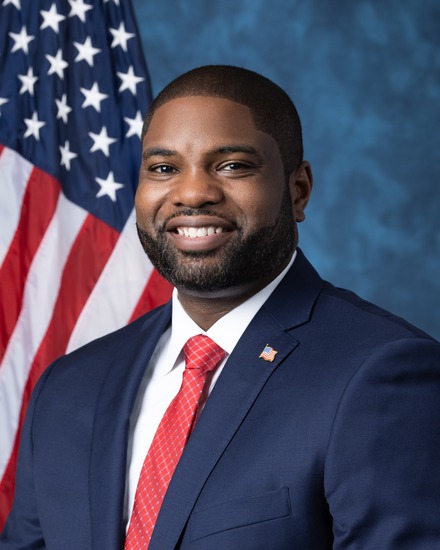
Rep. Byron Donalds
Sponsored bills
Homes for Every Local Protector, Educator, and Responder Act of 2025 or the HELPER Act of 2025 This bill establishes a program administered by the Department of Housing and Urban Development to provide mortgage assistance to law enforcement officers, elementary and secondary school teachers, firefighters, or other first responders. Specifically, these individuals may be eligible for a first-time mortgage on a primary family residence with no down payment. Instead, the mortgage is subject to a one-time, up-front mortgage insurance premium.
Maddy summaryThis bill changes how individual investors in mutual funds (regulated investment companies) are taxed on certain dividends. It allows investors to defer paying tax on capital gain dividends that are automatically reinvested in additional fund shares through a dividend reinvestment plan. The deferred tax is recognized later when the investor sells shares or upon their death. It also establishes that shares acquired through this reinvestment are treated as held for over one year from the start, potentially qualifying for long-term capital gains rates. The rule applies only to individual investors (not estates, trusts, or dependents claimed by others).
Maddy summaryHR 2060, the Traveler’s Gun Rights Act, clarifies where individuals are considered residents for gun background checks when traveling. It defines "State of residence" to include active-duty military members' duty station or commute location, and people using a private mailbox or PO box without a physical home. The bill requires background checks to include either a physical address or a PO box address for gun buyers. This directly affects travelers, military personnel, and those without a fixed residence who purchase firearms across state lines. The change modifies existing federal background check procedures under Title 18, U.S. Code.
Maddy summaryHR 2039, the Protecting the Right to Keep and Bear Arms Act of 2025, prevents the President and Health Secretary from using emergency declarations (under the National Emergencies Act or Public Health Service Act) to implement gun control measures. It amends disaster relief law to explicitly prohibit future rules that would ban firearm possession, sales, or accessories during emergencies. The bill directly affects federal agencies and future emergency declarations, blocking them from being used as a tool for gun regulation. It does not change existing gun laws but restricts how emergency powers can be applied to firearms policy.
Maddy summaryHR 2006, the DOGE Act, makes Executive Order 14210 a permanent law. This order directs the executive branch to implement the President's "Department of Government Efficiency workforce optimization initiative." The bill directly affects federal government operations by legally binding the executive branch to follow this specific workforce optimization plan. It does not create new programs but elevates an existing executive order to statutory force.
Maddy summaryH.J.Res. 74 disapproves a rule by the Bureau of Consumer Financial Protection (BCFP) that would have prohibited creditors and consumer reporting agencies from using medical information - such as unpaid medical bills - in credit reports and credit scoring. The rule, published in the Federal Register on January 14, 2025, aimed to prevent medical debt from affecting credit scores. If enacted, this resolution would block the rule from taking effect, maintaining the current practice where medical debt can influence credit decisions. This disapproval follows standard Congressional Review Act procedures for overturning agency rules.
Maddy summaryThe Stop the Cartels Act (HR 1915) aims to combat drug trafficking and human smuggling by enhancing U.S. intelligence efforts focused on Mexico and Central American countries. It requires regular reports on drug trafficking organizations, designates specific cartels (including the Sinaloa Cartel and Jalisco New Generation Cartel) as "Special Transnational Criminal Organizations," and withholds federal grants from jurisdictions that violate immigration laws. The bill also establishes refugee application centers in Mexico and Central America, increases immigration judge staffing by 500 positions, and reforms asylum processing to address fraud while ending family separation policies. It repurposes federal drug program funding by increasing substance abuse prevention and treatment grants while repealing several existing programs. The legislation directly affects U.S. immigration enforcement, federal funding allocation to state and local governments, and the processing of asylum claims and refugee applications.
Maddy summaryHR 856, the Safe and Smart Federal Purchasing Act, requires the Director of the Office of Management and Budget (OMB) to review whether the federal government's "lowest price technically acceptable" procurement method creates national security risks for Defense and Civilian agencies. The review must assess practices under Federal Acquisition Regulation section 15.101-2 and be completed within 180 days of the bill's enactment. OMB must then submit a report to the House Oversight Committee and Senate Homeland Security Committee detailing the findings. This bill does not change procurement rules but mandates a review of an existing process affecting federal agency purchasing decisions.
Maddy summaryHR 1792 prohibits U.S. federal funds from being provided to three United Nations agencies: the International Organization for Migration (IOM), the High Commissioner for Refugees (UNHCR), and the Relief and Works Agency for Palestine Refugees (UNRWA). The bill requires the Government Accountability Office (GAO) to conduct a study identifying all U.S. funding to these agencies from 2021-2025, including amounts and restrictions, and to assess any funds owed to the U.S. government. It also mandates an audit of the State Department’s Refugee Travel Loan Program. The GAO must submit a report to Congress within 180 days of the bill’s enactment detailing these findings. This bill directly affects federal funding mechanisms for international refugee and migration programs.