

This concurrent resolution declares that Congress should not impose any new performance fee, tax, royalty, or other charge relating to the public performance of sound recordings on a local radio station for broadcasting sound recordings over the air, or on any business for such public performance of sound recordings.
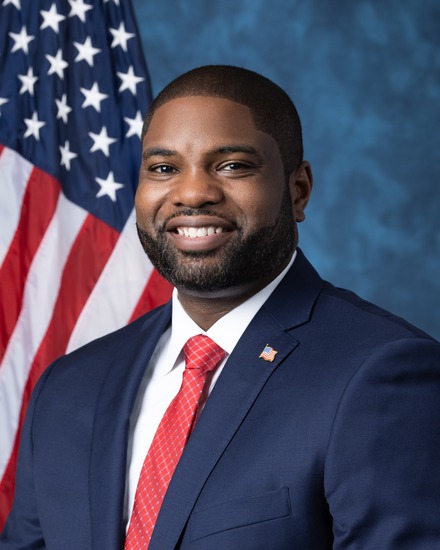
Rep. Byron Donalds
Sponsored bills
Maddy summaryHR 1301, the Death Tax Repeal Act, would eliminate the federal estate tax and generation-skipping transfer tax for estates of individuals dying on or after its enactment date. It directly affects individuals inheriting significant assets, as it removes taxes on estates exceeding $10 million (adjusted for inflation) and repeals taxes on large transfers between generations. The bill modifies the gift tax by establishing a $10 million lifetime exemption with annual inflation adjustments, replacing previous tax brackets. It applies to estates, gifts, and transfers occurring on or after the bill's effective date.
Maddy summaryHR 1313, the "One Flag for All Act," prohibits displaying any flag other than the U.S. flag on the exterior or in publicly accessible areas (like lobbies or hallways) of covered public buildings, including government offices, military bases, and embassies. The bill allows specific exceptions, such as POW/MIA flags, state flags for congressional offices, historical U.S. flags (like the Betsy Ross flag), and flags representing military units or tribal governments. This law directly affects how flags are displayed in federal and public spaces, requiring exclusive use of the U.S. flag in those designated areas while preserving established exceptions.
Maddy summaryHR 1232, the National Right-to-Work Act, would make union membership voluntary for workers in most private-sector jobs by removing legal requirements for employees to join a union or pay dues as a condition of employment. It directly affects workers in unionized workplaces covered by the National Labor Relations Act (including most private employers) and railroad workers covered by the Railway Labor Act. The key change eliminates provisions that allowed "union security agreements" (requiring dues or membership), meaning workers could no longer be forced to pay union fees to keep their jobs. This bill does not change other labor rights or create new programs - it only modifies existing laws to allow workers to opt out of union membership and financial obligations.
Maddy summaryHR 1268 updates the legal definition of U.S. customs waters in two key laws (the Tariff Act of 1930 and the Anti-Smuggling Act) to align with current international maritime standards. It replaces the outdated "four leagues from the coast" language with specific references to the U.S. territorial sea (per Presidential Proclamation 5928, 1988) and contiguous zone (per Presidential Proclamation 7219, 1999). This change directly affects U.S. Customs and Border Protection enforcement activities in coastal waters. The bill makes no new policy or tax changes - it only clarifies existing legal boundaries for customs jurisdiction. The update takes effect upon the bill's enactment.
Security And Fairness Enhancement for America Act of 2025 or SAFE for America Act of 2025 This bill eliminates the diversity visa program. This program provides up to 55,000 visas annually to individuals from countries with low rates of immigration to the United States.
Stop Human Trafficking of Unaccompanied Migrant Children Act of 2025 This bill establishes requirements relating to placing unaccompanied alien children with sponsors. (Under federal law, an unaccompanied alien child is a minor with no lawful immigration status and no parent or legal guardian in the United States to provide care and physical custody.) Before the Department of Health and Human Services (HHS) may release such a child to a sponsor, the sponsor must complete a fingerprint background check and vetting that includes (1) a public records check, (2) a National Sex Offender Registry check, (3) a Federal Bureau of Investigation National Criminal History Check, (4) a child abuse and neglect check, and (5) state and local criminal history checks. Each adult in the sponsor's household must also undergo such vetting before the placement. The bill also requires HHS to visit the home of a proposed sponsor before the placement and to conduct periodic home visits after. A child may not be placed with a sponsor who is unlawfully present in the United States unless the sponsor is the child's parent, relative, or legal guardian. HHS must retroactively apply these vetting standards to all sponsors for placements made since January 20, 2021.
Maddy summaryHR 1184, the "Stop CCP Land Act," requires states to ban purchases of agricultural land by entities from designated countries (like China and Russia) to receive certain federal agricultural and environmental funds. It mandates states to prohibit such foreign purchases and require annual reporting from existing foreign landholders. The bill also directs the Agriculture Secretary to update federal reporting rules for foreign agricultural investment and the GAO to assess national security impacts and suggest safeguards. This directly affects states receiving specific federal programs and foreign entities from listed countries.
This bill prohibits the Big Cypress National Preserve in Florida from being designated as wilderness or as a component of the National Wilderness Preservation System. The National Park Service currently manages Big Cypress National Preserve, which is a freshwater swamp ecosystem of 729,000 acres. In general, development activities, commercial activities, permanent structures, and roads are prohibited in wilderness areas. In contrast, natural preserves typically allow some development activities, such as hunting or oil and gas exploration.
This bill repeals the Impoundment Control Act of 1974 (ICA). The ICA generally limits the authority of the President to impound (i.e., withhold from obligation or expenditure) funds that have been appropriated by Congress and establishes related procedures. It also establishes expedited legislative procedures that Congress may use to consider legislation to enact rescissions proposed by the President.