

Maddy summaryThis bill directs the U.S. Treasury to mint commemorative coins marking the Marine Corps' 250th anniversary in 2025. It authorizes three coin types: $5 gold coins (max 50,000), $1 silver coins (max 400,000), and half-dollar coins (max 750,000), with surcharges of $35, $10, and $5 respectively. The surcharge proceeds will fund the Marine Corps Heritage Center's educational programs, with no net cost to taxpayers as the Treasury must recover all minting costs through the surcharges. The coins can only be issued during 2025, and the Treasury must ensure all costs are covered before distributing funds to the Heritage Foundation.
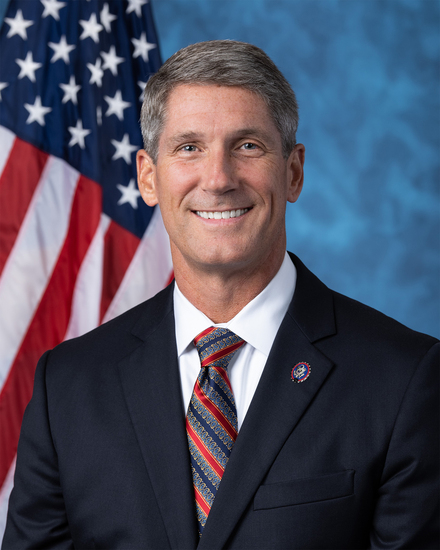
Rep. Scott Franklin
Sponsored bills
Maddy summaryHR 4860, the PROTECT the Second Amendment Act, prevents landlords in specific federally assisted housing from banning or restricting residents' lawful possession of firearms in their private units or during travel between units and common areas. It directly affects tenants in housing funded by HUD or USDA programs, including public housing, Section 8 vouchers, and housing for veterans or people with disabilities. The bill prohibits landlords from imposing firearm bans or additional conditions on residents who lawfully carry firearms within their dwelling units or while moving through common areas to reach their units. This changes current policies in these housing programs by explicitly allowing firearm possession where state law permits.
Stop China’s Continuous Purchase of Land Act or the Stop CCP Land Act This bill requires states that receive certain federal program funds to restrict the purchase of agricultural land by a covered foreign country. Covered foreign country means a country included in Department of State regulations as subject to certain prohibitions (i.e., Belarus, Burma, China, Cuba, Iran, North Korea, Syria, and Venezuela), as well as Russia. Specifically, a state may not receive funds for certain programs funded by the Inflation Reduction Act of 2022 (e.g., certain energy efficiency and conservation programs) unless that state has a law prohibiting a covered foreign country (or persons acting on behalf of the country) from purchasing agricultural land in the state. Further, a state must require that a person from a covered foreign country that holds agricultural land in the state prior to the state law's enactment submit an annual report to the state on the agricultural holdings. The Department of Agriculture must submit a report to Congress on how the Agricultural Foreign Investment Disclosure Act of 1978 should be updated to ensure accurate documentation and monitoring of foreign investment in agricultural land. The Government Accountability Office must submit a report to Congress that includes (1) an assessment of this bill's impact on national security, and (2) any measures that can be taken to better secure U.S. real estate from foreign manipulation.
Maddy summaryHR 4721, the Main Street Tax Certainty Act, makes a permanent the 20% tax deduction for eligible small business owners under Section 199A of the tax code. This provision directly affects pass-through business owners (like S-corps, partnerships, and sole proprietorships) who qualify for the deduction. The bill achieves this by removing the temporary expiration language (subsection (i)) from the existing tax code provision. The key change is ending the need for annual congressional extensions of this deduction, providing long-term tax certainty for small businesses.
Maddy summaryThis bill, HR 1282 (Major Richard Star Act), expands benefits for certain military retirees by allowing them to receive both veterans' disability compensation and military retirement pay simultaneously. It specifically affects combat-related disabled retirees under Chapter 61 of the military retirement system who have fewer than 20 years of service. The key change removes the automatic reduction of military retirement pay when these retirees also receive disability compensation, as amended in Section 1413a(b)(3) of Title 10. Technical updates to the law’s structure and effective date (starting after enactment) complete the provisions.
Maddy summaryHR 3952 limits the flags that can be flown over Department of Veterans Affairs (VA) facilities to just six specific flags: the U.S. flag, any state flag, any federally recognized tribal government flag, the VA department flag, any military branch flag, and the POW/MIA flag. This applies directly to all VA buildings and properties nationwide. The bill explicitly restricts all other flags, including political or commemorative flags, from being displayed on these facilities.
Maddy summaryThis bill prohibits entities controlled by Iran, North Korea, China, or Russia from purchasing or leasing agricultural land in the United States, including both public land managed by federal agencies and private land. It also bars such entities from participating in most U.S. Department of Agriculture programs (with exceptions for food safety, health, and labor safety initiatives). The bill expands reporting requirements to include leases and security interests in foreign land ownership, mandates public online disclosure of foreign ownership data with specific details, and imposes penalties like liens on land for violations. Additionally, it requires annual reports to Congress on risks of foreign ownership, enforcement effectiveness, and foreign investment motives.
Maddy summaryThis bill requires the District of Columbia to annually remove voters who haven't participated in two consecutive District of Columbia elections from the official voter list. It mandates that the District send a notice to such voters and remove them if they don't respond within 4 years or two election cycles after the notice is sent. The bill also prohibits same-day voter registration, requiring all voters to be registered at least 30 days before an election. These rules apply to all District of Columbia elections, including local, federal, and ballot initiatives. The changes update the Help America Vote Act to specifically address District of Columbia voter registration maintenance procedures.
Maddy summaryThe EHR Program RESET Act of 2023 establishes a new program to modernize the Department of Veterans Affairs' electronic health record system, creating a dedicated program office within the Veterans Health Administration. The bill sets specific performance metrics that facilities must meet before continuing EHR deployment, requires termination of the current Oracle-Cerner contract for training and change management, and mandates new reporting requirements on system stability, staff satisfaction, and interoperability. It also creates an advisory subcommittee of health care experts to provide guidance on the EHR modernization strategy and requires detailed reports on contract savings, system performance, and alternatives to the current EHR technology. The legislation aims to improve veteran care quality, provider satisfaction, and system security while reducing costs and preventing vendor lock-in.
Maddy summaryHR 4380, the "Protecting Endowments from Our Adversaries Act," imposes a 50% excise tax on private colleges and universities acquiring investments tied to entities on specific U.S. government lists (like the Commerce Department's Entity List or Defense's CMIC List) and a 100% tax on net income from those investments. It targets large private institutions with over $1 billion in non-exempt assets (excluding public schools and smaller colleges), requiring them to pay these taxes on investments in entities deemed national security risks. The bill defines "listed investments" as stocks, debt, or derivatives in companies on designated government lists, with tax calculations based on fair market value. This is a direct tax on investment income and acquisitions, not a spending or regulatory measure, affecting only institutions meeting the asset threshold.