

Maddy summaryHR 4831, the Fair Pay for Federal Firefighters Act, increases pay for wildland firefighters employed by the Forest Service or Department of the Interior during fiscal years 2024-2025. It establishes special pay rates (ranging from 1.5% to 42% above standard General Schedule rates, depending on grade) that replace regular pay for these workers. The bill also creates a new "incident response premium pay" provision, entitling eligible firefighters to 450% of their hourly rate for each day deployed on qualifying wildfires or fire-related incidents, capped at $9,000 annually per employee. This premium pay is excluded from calculations for benefits like leave accruals, overtime, or retirement. The bill directly affects federal wildland firefighters whose duties focus on forest, range, or wildland fires (not structural fires).
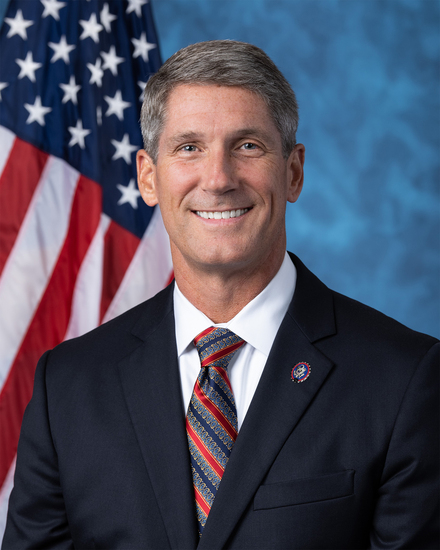
Rep. Scott Franklin
Sponsored bills
Maddy summaryHR 5465, the Congressional Access to Bureaucratic Offices Act (CABO Act), requires federal agency heads to allow Members of Congress and their staff access to agency headquarters buildings during regular business hours. It mandates that access be granted upon presentation of valid congressional identification (for Members) or a staff badge while accompanied by the employing Member (for staff), with exceptions for areas requiring secret-level security clearance. The bill also ensures this access applies during declared emergencies (like national emergencies under the National Emergencies Act or public health emergencies), without imposing additional costs by using existing agency funds. This directly affects how federal agencies manage physical access for congressional personnel.
Maddy summaryHR 3152, the "Fight CRIME Act," aims to maintain international restrictions on Iran's missile-related activities by requiring diplomatic efforts to extend these restrictions before they expire in October 2023. The bill mandates annual reports detailing U.S. diplomatic strategies, potential impacts of expiration, and measures to deter missile technology transfers to Iran. It establishes sanctions against foreign individuals or entities that knowingly support Iran's missile or drone programs, including asset freezes and visa restrictions. These sanctions apply regardless of whether UN restrictions remain in effect after their expiration, directly affecting foreign entities involved in these activities.
Maddy summaryHR 4464, the RAISE Act of 2023, creates a new federal program to provide emergency payments to farmers who suffer revenue or production losses for high-value crops like citrus due to natural disasters including droughts, wildfires, hurricanes, floods, and extreme weather events. The program allows the Secretary of Agriculture to make direct payments to affected producers or distribute funds to states and territories through block grants for local administration. It specifically covers losses from events such as wildfires, freezes, floods, and smoke exposure that impact crop quality or yield. This legislation directly supports agricultural producers in high-value crop sectors facing climate-related disruptions.
Maddy summaryHR 5239, the Gulf of Mexico Commerce Protection Act, prohibits the National Oceanic and Atmospheric Administration (NOAA) from creating a vessel slowdown zone in the Gulf of Mexico until the Commerce Secretary completes and reports on a study. The study must prove that any proposed whale protection measures (specifically for Rice’s whales) would not harm supply chains or maritime commerce. The bill requires the Commerce Secretary to develop and report findings within 60 days to specific congressional committees, and explicitly bans nighttime transit bans or fixed slowdown zones in the required mitigation protocols. This bill directly affects NOAA’s regulatory authority and the Commerce Department’s study process, delaying potential environmental rules pending congressional review.
Maddy summaryHR 4162, the Land Grant Research Prioritization Act of 2023, adds four new research priorities to existing agricultural funding under the Food, Agriculture, Conservation, and Trade Act of 1990. The bill directs the Secretary of Agriculture to prioritize grants for land-grant universities (as defined in 7 U.S.C. 3103) to develop: mechanized harvesting technologies for specialty crops, artificial intelligence applications in agriculture, methods to manage invasive species, and sustainable aquaculture techniques. These provisions expand funding opportunities for research projects addressing specific agricultural challenges. The bill directly affects land-grant colleges and universities by creating new, targeted grant categories for their research programs.
This resolution honors and recognizes the patriotism and contributions made by generations of veterans service organizations, veteran advocacy groups, and volunteers and commends the members of such organizations for their dedicated service to members of the Armed Forces, veterans, their families, and their communities. The resolution also encourages the people of the United States to promote awareness of the contributions and dedication of members of veterans service, organizations, veteran advocacy groups, and volunteers to members of the Armed Forces, veterans, and their families. Additionally, the resolution calls on citizens to follow the example of such groups and volunteer support and services to those who have served the country.
Passport Notification Act of 2023 This bill requires the Bureau of Consular Affairs to notify U.S. citizens at least 180 days prior to the date on which their passport is scheduled to expire. The notification must include information on the process for renewal and identify locations where renewal applications may be submitted. The notification may be in electronic or paper form.
Fair Access to Agriculture Disaster Programs Act This bill waives the adjusted gross income limitations for payments or benefits under specific Department of Agriculture (USDA) disaster assistance programs for a person or legal entity that derives a portion of their income from agriculture. (Currently, a person or entity is not eligible to receive certain benefits during a crop, fiscal, or program year if their average gross income exceeds $900,000.) Specifically, in the case of an excepted payment or benefit, the adjusted gross income limitation is waived if 75% or more of the average adjusted gross income for the person or entity is derived from farming, ranching, or silviculture activities. These activities include agritourism, direct-to-consumer marketing of agricultural products, and the sale of agricultural equipment owned by such person or entity. The bill applies to the USDA Livestock Indemnity Program; Livestock Forage Disaster Program; Emergency Assistance for Livestock, Honey Bees, and Farm-Raised Fish Program; Tree Assistance Program; and Noninsured Crop Disaster Assistance Program.
This resolution condemns Iran for the 1988 massacre of political prisoners. It also urges the Biden Administration and U.S. allies to publicly condemn the massacre and to pressure Iran to provide information to the families of the victims.