

Maddy summaryHR 4321 prohibits the U.S. government from providing any federal loans, grants, or financial assistance to state or local governments that enact reparations programs based on slavery, race, ethnicity, national origin, or related historical practices. This bill directly affects state and local governments that pass such reparations laws by blocking access to federal funds for those specific programs. The key provision bans all forms of federal financial aid - including from the Federal Reserve and independent agencies - to the jurisdiction enacting the reparations program, without applying to other government functions. The bill focuses solely on restricting federal funding for these programs, not on creating or funding reparations themselves.
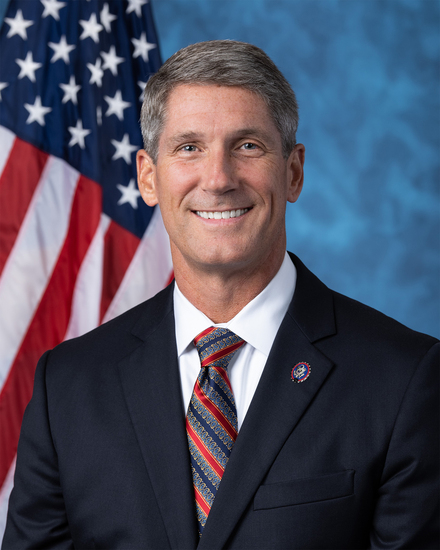
Rep. Scott Franklin
Sponsored bills
Maddy summaryHR 4335, the VA Loan Informed Disclosure Act of 2023, requires mortgage lenders to include specific information about VA home loan programs in standard mortgage disclosures. The bill amends the National Housing Act to mandate that lenders provide details on VA loans (guaranteed under Title 38) alongside other loan options, including assumptions about prevailing interest rates. This change directly affects lenders processing VA-guaranteed mortgages, ensuring borrowers receive clearer comparisons between VA loans and other financing. The law does not require lenders to verify borrower eligibility for VA loans, only to include the specified disclosure language.
Maddy summaryHJRES 44 is a congressional resolution seeking to block a 2021 rule by the Bureau of Alcohol, Tobacco, Firearms, and Explosives (ATF). The rule classified firearms with stabilizing braces as "short-barreled rifles," which would have required additional licensing and regulation. This resolution uses a specific legal process (under Title 5, U.S. Code) to formally disapprove the ATF rule, meaning the rule would no longer be in effect. It directly affects firearm owners, manufacturers, and dealers who would have been subject to the rule’s requirements.
Maddy summaryHRES 536 is a ceremonial resolution designating the week of June 18-24, 2023, as "National Women's Sports Week." It celebrates the anniversary of Title IX (passed June 23, 1972), which prohibits sex discrimination in education and athletics. The resolution urges the House to observe this week through programs highlighting female athletes, coaches, and parents, while emphasizing equal athletic opportunities for women. It does not create new laws or alter existing policies - it is a symbolic gesture to recognize Title IX's impact on women's sports participation.
Maddy summaryHJRES 45 is a congressional disapproval resolution targeting a specific Department of Education rule about federal student loans. It seeks to block the rule implementing "One-Time Federal Student Loan Debt Relief" (including modifications to Perkins, FFEL, and Direct Loan programs) by invoking the Congressional Review Act. If passed, this resolution would nullify the rule, preventing the Department of Education from using it to modify or waive student loan obligations. The bill directly affects borrowers who might have qualified for debt relief under the targeted rule.
Maddy summaryHR 277 would require Congress to approve major federal regulations before they take effect. Major rules are defined as those with significant economic impact ($100 million+ annually), major cost increases for consumers or industries, or significant adverse effects on competition, employment, or innovation. Agencies must submit detailed information about these rules to Congress, including cost-benefit analyses, before they can take effect. Congress would have 70 session days to approve the rule with a joint resolution; if they don't act within that timeframe, the rule would not take effect. This would increase congressional oversight of federal regulations and require more detailed information about proposed rules before they become law.
Maddy summaryHR 4038, the POPP Act, blocks the Environmental Protection Agency (EPA) from finalizing, implementing, or enforcing a specific proposed rule about greenhouse gas emissions from power plants. This rule, published in May 2023, aimed to set new standards for emissions from fossil fuel-fired power plants and replace an earlier rule. The bill prohibits the EPA from moving forward with this rule or any substantially similar rule, directly affecting the EPA's regulatory authority and power plant operators who would have been subject to the proposed standards. The bill bases this prohibition on arguments that the proposed rule violates the Clean Air Act by not demonstrating that required emission reduction technologies are commercially viable and cost-effective.
This bill includes phosphate and potash on the Department of the Interior's final list of critical minerals. (Under current law, Interior and other departments are required to conduct a variety of efforts to ensure a secure and reliable supply chain of critical minerals.) Interior must evaluate current policies relating to permitting and leasing of projects to develop critical minerals and issue recommendations to Congress to support domestic production of such commodities.
Maddy summaryHR 4086 directs the U.S. government to use its influence at the United Nations to extend the mandate of the UN Human Rights Council's independent fact-finding mission on Venezuela. The bill requires the Secretary of State to support efforts to continue this mission until Venezuela holds free elections, ends authoritarian rule, restores democracy, frees political prisoners, and allows humanitarian aid. It also directs the U.S. to urge the UN to condemn Venezuela's use of political prisoners, support humanitarian aid for vulnerable Venezuelans, and assist in releasing detained individuals. The bill mandates annual reports to Congress on these diplomatic actions. This legislation directly affects the UN mission's work and U.S. diplomatic engagement regarding Venezuela's human rights situation.
Maddy summaryThis bill prohibits federal agencies from using government funds to purchase or operate drones (unmanned aircraft systems) made by "covered foreign entities," primarily targeting entities linked to foreign governments, especially those tied to China as defined in the bill. It directly affects federal agencies and contractors receiving federal funding for drone acquisitions or operations. Key provisions include specific exemptions for national security research, counterterrorism, or cybersecurity needs, and a waiver process requiring approval from Homeland Security or Defense. The law aims to reduce reliance on potentially risky foreign drone technology by restricting federal funding for such systems.