

Manatee Protection Act of 2023 This bill requires the Department of the Interior to include the West Indian manatee ( Trichechus manatus ) in the endangered species list and give the species protections provided to endangered species.
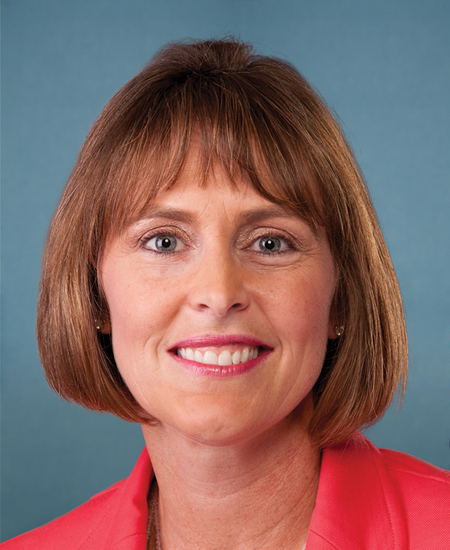
Rep. Kathy Castor
Sponsored bills
Maddy summaryHR 1088, the Shirley Chisholm Congressional Gold Medal Act, authorizes a posthumous Congressional Gold Medal to honor Congresswoman Shirley Chisholm, the first African-American woman elected to Congress (1968) and the first Black candidate for a major party's presidential nomination (1972). The bill directs the Treasury Secretary to design and strike a gold medal featuring Chisholm's image, which will be presented by Congress and then permanently displayed at the Smithsonian Institution. Duplicate bronze medals may be sold to the public to cover production costs, with proceeds deposited into the U.S. Mint fund. This bill commemorates Chisholm's legacy and achievements without creating new laws or affecting any current policies.
Maddy summaryHR 902, "Ellie’s Law," authorizes $10 million annually from fiscal years 2024 through 2028 for the National Institute of Neurological Disorders and Stroke to conduct broader research on unruptured brain aneurysms. The funding aims to study diverse patient populations by age, sex, and race, supplementing existing research budgets without replacing them. This bill directly affects researchers and future patients by increasing federal investment in a condition impacting 6.6 million Americans, with current federal spending at only $2.08 per affected person yearly. The legislation focuses on advancing scientific understanding to improve prevention and treatment, citing the high mortality rate (50% fatal) and significant healthcare costs ($4.1 billion annually in direct costs) associated with brain aneurysm ruptures.
Kids' Access to Primary Care Act of 2023 This bill modifies payments for Medicaid primary care services. Specifically, the bill applies a Medicare payment rate floor to Medicaid primary care services that are provided after the date of enactment of the bill and extends the payment rate to additional types of practitioners (e.g., obstetricians). The Centers for Medicare & Medicaid Services must conduct a study on the number of children enrolled in Medicaid, the number of providers receiving payment for primary care services, and associated payment rates before and after the bill's implementation.
Maddy summaryThe HELP Copays Act (HR 830) changes how health insurance plans calculate patient cost-sharing. It requires that payments made by third parties (like pharmacies, charities, or discount programs) toward medical costs count toward a patient's deductible, copay, or out-of-pocket limit. This directly affects insured individuals who receive financial assistance, discounts, or product vouchers for healthcare expenses. The law ensures these external payments reduce the patient's actual out-of-pocket costs more quickly, aligning with existing Affordable Care Act and Public Health Service Act requirements.
Bankruptcy Venue Reform Act This bill limits where a non-individual debtor (e.g., a corporate debtor) may file for bankruptcy to prevent forum shopping. Specifically, these debtors must file in the district court where their principal place of business or principal assets are located. Corporate debtors may also file in a district where there is a pending bankruptcy case concerning an affiliate that has a certain level of control over or ownership of the debtor (e.g., if the affiliate is a controlling shareholder of the debtor), if that pending case is in a proper venue under this bill. Under current law, these debtors may also file where they are domiciled (i.e., incorporated) or where there is a pending bankruptcy case concerning any affiliate, general partner, or partnership of the debtor. For corporate debtors that are issuers of securities, their principal place of business is defined in the bill as the address of the entity's principal executive office as provided in specified Securities and Exchange Commission filings.
Maddy summaryThis bill authorizes a single Congressional Gold Medal to honor all U.S. Army Dustoff crews who served during the Vietnam War (1962-1973). It recognizes their critical role in evacuating nearly 900,000 wounded personnel, including U.S., South Vietnamese, and allied forces, under extreme combat conditions. The medal, designed with input from the Secretary of Defense, will be presented to the U.S. Army Medical Department Museum for permanent display. Duplicate bronze medals may be sold to cover costs, but the primary action is the commemorative recognition of these crews' service.
Maddy summaryHR 987 authorizes the U.S. Mint to produce commemorative coins honoring Golda Meir, Israel's first female Prime Minister, and the 75th anniversary of U.S.-Israel relations. It specifies three coin types: $5 gold coins (max 50,000), $1 silver coins (max 400,000), and half-dollar clad coins (max 750,000), with detailed weight and composition requirements. All coins will include Golda Meir's image, her name, and commemorative inscriptions, and will be sold during 2026. A surcharge ($35 for $5 coins, $10 for $1 coins, $5 for half-dollars) will be paid to the American Friends of Kiryat Sanz Laniado Hospital Inc. to support its hospital operations.
Maddy summaryThis bill establishes the Office of Manufacturing Security and Resilience within the Department of Commerce to strengthen U.S. critical supply chains. It requires the development of a strategy to counter threats to critical supply chains, including reducing reliance on "countries of concern" for critical goods. The legislation mandates regular assessments of supply chain vulnerabilities, promotes partnerships with allied nations, and supports domestic manufacturing of critical goods. It directly affects domestic manufacturers, the Department of Commerce, and relevant federal agencies. The bill aims to improve supply chain resilience through monitoring, assessment, and strategic partnerships to ensure access to critical goods during disruptions.
Maddy summaryHR 782 prohibits state officials from interfering with abortion services provided across state lines. It specifically blocks states from restricting: (1) out-of-state patients traveling for legal abortions, (2) providers offering such services, (3) assistance for travel or care, or (4) the interstate shipment of FDA-approved abortion drugs. The bill allows the federal Attorney General or affected individuals to sue violators for injunctions, damages, and attorney fees. It directly affects patients seeking care in other states, healthcare providers, transportation services, and pharmacies handling FDA-approved abortion medications. The law focuses on preventing state laws from blocking access to legally permitted abortion services.