

Maddy summaryHR 6068, the PROTECT Florida Act, extends the existing moratorium on oil and gas leasing and exploration in the Gulf of Mexico through 2032 and adds a new, permanent ban on these activities off Florida’s Atlantic coast. It directly affects federal agencies (like the Department of the Interior), which cannot issue permits for oil/gas exploration, seismic testing, or related activities in two specific zones: the Straits of Florida and the South Atlantic Planning Area south of Florida’s coastline. The bill blocks all leasing, preleasing, and exploration permits in these areas from enactment until June 30, 2032. This policy change prevents new offshore drilling and seismic surveys in Florida’s coastal waters, aiming to protect marine environments and coastal communities.
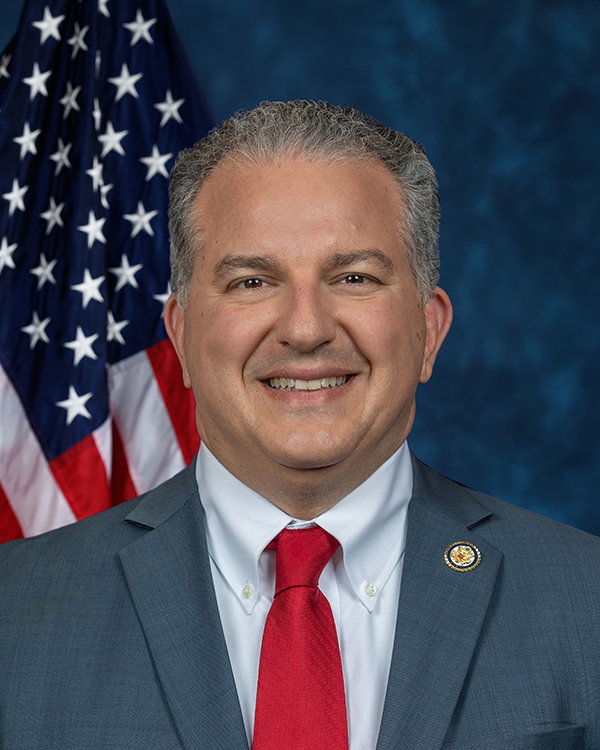
Rep. Jimmy Patronis
Sponsored bills
Maddy summaryThis bill requires the Transportation Secretary to prioritize highway projects that support national defense. It mandates a biennial list of the top 3 defense-focused highway projects in each state (developed with FEMA), and directs that projects designated for defense under existing law receive priority in federal funding decisions. States must ensure defense-designated projects get priority for both discretionary grants and apportioned highway funds under Title 23. The law updates existing highway funding rules to integrate civil defense planning into transportation project selection.
Maddy summaryThis bill ensures that critical firearm-related government operations continue during federal shutdowns. It designates background checks (via the FBI's National Instant Criminal Background Check System), Bureau of Alcohol, Tobacco, Firearms and Explosives enforcement, and firearm export licensing (handled by Commerce and State Departments) as essential services that must remain operational. These functions would be treated as "excepted" under federal law, meaning their employees would continue working even if other government services halt. The bill affects how background checks and firearm export licenses are processed during shutdowns but does not change gun ownership laws or eligibility.
Maddy summaryHRES 799 is a symbolic resolution (not a law) introduced by House members recognizing former President Donald J. Trump for his claimed diplomatic achievements. It states that Trump brokered a "historic peace agreement" ending Hamas-led hostilities in Gaza, securing hostage releases and disarming Hamas, and resolved other conflicts like Israel-Iran and India-Pakistan. The resolution urges the Norwegian Nobel Committee to award Trump the Nobel Peace Prize for these actions. It has no legal effect and serves solely as a ceremonial tribute to Trump's foreign policy record.
Maddy summaryHR 5738, the "No Budget, No Pay Act," requires Congress to approve a budget resolution and pass all annual appropriations bills by October 1 each fiscal year. If Congress misses this deadline, members of Congress (excluding the Vice President) lose pay for the period of non-compliance, as determined by the House and Senate Budget and Appropriations Chairs. The bill specifies that no retroactive pay is allowed for any period during which Congress was out of compliance. This directly affects all elected members of Congress by linking their pay to timely budget passage, creating a financial incentive for meeting the October 1 deadline.
Maddy summaryThis bill would require all states to recognize valid concealed carry permits issued by other states, allowing permit holders to carry concealed handguns (excluding machine guns) in any state that either issues such permits or doesn't prohibit concealed carry. It directly affects law-abiding gun owners with valid permits from their home state, ensuring they can carry in states with similar permit systems or no prohibitions. Key provisions include treating valid permit documents as proof of legal carry (reducing officer stops), shifting the burden of proof to prosecutors if challenged, and allowing civil lawsuits for violations with attorney's fee awards. The bill does not override state laws restricting firearms on private property or government land, nor does it affect federal gun restrictions like those in section 922(q).
Maddy summaryH.J.Res. 128 proposes a constitutional amendment to withhold salaries from members of Congress during government shutdowns. A government shutdown is defined as a period when federal agencies lack funding due to Congress failing to pass an appropriations bill or continuing resolution. The amendment would require Congress to pass implementing legislation to enforce this pay suspension. This policy would directly affect all current House and Senate members by stopping their regular salaries during any shutdown period.
Maddy summaryThis bill extends the National Flood Insurance Program (NFIP) through November 21, 2025, ensuring continued coverage for policyholders. It directly affects homeowners and businesses in flood-prone areas who rely on NFIP policies for protection against flood damage. The key provision changes the program's expiration date in two specific sections of the law, updating the end date from September 30, 2023, to November 21, 2025. This extension prevents the program from lapsing and maintains access to federal flood insurance.
Maddy summaryHR 5608 removes a restriction preventing private insurance companies participating in the "Write Your Own" program from selling competing private flood insurance policies alongside National Flood Insurance Program (NFIP) products. The bill amends federal law to prohibit the FEMA Administrator from requiring these companies to agree not to offer private flood insurance as a condition of participating in the NFIP program. This change directly affects private insurers currently in the Write Your Own program, allowing them to sell both NFIP-backed and standalone private flood insurance without contractual restrictions. The key provision eliminates non-compete clauses in agreements between FEMA and these insurers, enabling greater market competition for flood insurance products.
Maddy summaryHR 5607, the Flood Insurance Transparency Act of 2025, requires the National Flood Insurance Program (NFIP) to publicly share specific flood risk and claims data. It mandates the Administrator to make available, through an open-source system, property-level information (like loss ratios, claim amounts, and flood risk assessments) and community-level data (including flood hazard area statistics and multiple-loss property counts), while protecting personally identifiable information. This affects researchers, developers, and communities using NFIP data for flood risk analysis, but does not change insurance premiums or coverage. The bill establishes a searchable database for communities participating in the NFIP, detailing compliance status, flood hazard area construction dates, and historical claims data.