

Maddy summaryThis bill directs the U.S. Postal Service to assign ZIP Code 06264 exclusively for Scotland, Connecticut, within 180 days of enactment. It affects only the postal service operations for that specific town, eliminating the need for multiple or ambiguous codes. The bill creates no new policies or funding but streamlines mail delivery by designating a single, unique ZIP code for the area. It is purely administrative and does not impact residents, businesses, or broader postal regulations.
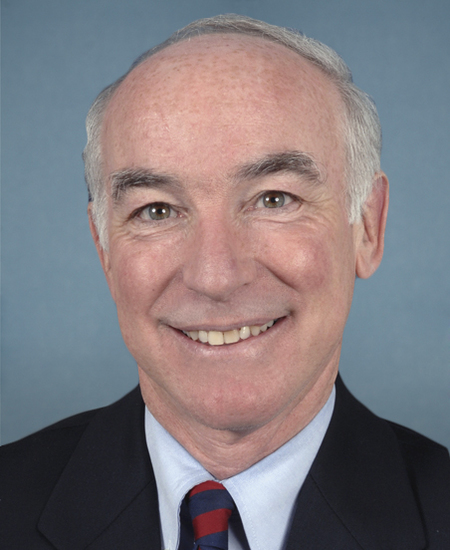
Rep. Joe Courtney
Sponsored bills
Maddy summaryHR 7698 establishes a new Office of Civic Bridgebuilding within the Corporation for National and Community Service to support programs reducing polarization and improving social cohesion. It authorizes $25 million annually (2025-2027) for competitive grants to nonprofits, community groups, and educational institutions to fund projects addressing local needs like healthcare gaps or environmental concerns through research-backed methods. Grantees must demonstrate how projects engage diverse communities, ensure participant safety (especially for marginalized groups), and use standardized metrics to track effectiveness. The Office will oversee grants, support training, and maintain a public research base on civic bridgebuilding best practices.
Maddy summaryThe Coast Guard Protection and Accountability Act of 2024 establishes new accountability measures to address sexual assault and harassment within the Coast Guard. It requires the Commandant to submit annual reports on implementing reforms from a 2023 Accountability and Transparency Review, mandates a Government Accountability Office review of Coast Guard efforts to address sexual assault, and creates a safe-to-report policy to protect victims who report sexual assault. The bill also requires maintaining work product related to misconduct investigations for 7+ years, provides for timely transfer of cadets who are victims of sexual assault, and establishes mechanisms for higher-level review of sexual assault cases and discharges related to such offenses. These provisions aim to improve transparency, victim support, and accountability within the Coast Guard.
Maddy summaryThe Increasing Access to Mental Health in Schools Act creates a federal grant program to increase mental health staff in low-income schools. It provides funding for partnerships between low-income schools (where at least 20% of students are from families below the poverty line) and graduate programs in school counseling, psychology, and social work. Grant funds can cover training costs, salary support for new mental health providers, recruitment of underrepresented students, and student loan repayment for mental health staff working in qualifying schools. The bill sets target ratios for staff-to-student ratios (like 1 counselor per 250 students) and requires annual reporting on program outcomes. The program is authorized for $200 million annually to address mental health staffing shortages in schools serving high-poverty communities.
Maddy summaryHR 533, the "Promoting a Resolution to the Tibet-China Dispute Act," establishes U.S. policy recognizing Tibetans' right to self-determination under international law and rejects China's historical claims about Tibet. It directs the State Department to counter Chinese disinformation about Tibet’s history and status, including claims that Tibet has been part of China "since ancient times," and amends the 2002 Tibetan Policy Act to require specific disinformation countermeasures. The bill defines "Tibet" to include the Tibet Autonomous Region and Tibetan areas in Qinghai, Sichuan, Gansu, and Yunnan provinces. These provisions aim to guide U.S. diplomatic efforts toward resolving the Tibet-China dispute through dialogue and factual representation.
Maddy summaryThe Price Gouging Prevention Act of 2024 prohibits businesses from charging "grossly excessive" prices for goods or services during exceptional market shocks (like natural disasters or pandemics), directly affecting large corporations with over $100 million in annual U.S. revenue. Key provisions include presuming violations if prices rise more than 20% above pre-shock averages without justification, allowing companies to defend against claims by proving legitimate cost increases, and requiring major corporations to disclose pricing changes in SEC filings. Enforcement will be handled by the Federal Trade Commission (FTC) and state attorneys general, with civil penalties up to 5% of a company’s revenue. The bill defines "unfair leverage" for dominant firms and mandates annual inflation adjustments to revenue thresholds starting in 2025.
Maddy summaryHR 7056, the Access to Family Building Act, establishes federal rights for individuals to access assisted reproductive technology (ART) like IVF without unreasonable restrictions, directly affecting patients seeking fertility treatments and health care providers offering ART services. The bill prohibits states from imposing limitations on ART that are more burdensome than those for comparable medical procedures, fail to advance safety, or unduly restrict access, while allowing health and safety regulations that are necessary and least restrictive. It creates federal enforcement mechanisms, including lawsuits by the Attorney General or affected individuals to challenge violating state laws, and preempts conflicting state regulations. The bill explicitly preserves state authority over health/safety regulations and does not alter existing state insurance coverage laws for ART.
Maddy summaryHRES 962 is a ceremonial resolution honoring Reverend Dr. Martin Luther King, Jr.'s legacy, specifically celebrating his 95th birthday on January 15, 2024. It symbolically affirms his teachings by condemning hate, discrimination, and prejudice against Black Americans, Indigenous people, Jewish, Asian-American/Pacific Islander, Muslim, Hispanic/Latino communities, and LGBTQ+ individuals. The resolution does not create new laws or affect any policies - it solely expresses the House's support for Dr. King's values of diversity, tolerance, and equality through non-binding statements. As a symbolic gesture, it has no legal effect or direct impact on any group or individual.
Maddy summaryThe Affordable Connectivity Program Extension Act of 2024 allocates $7 billion in funding for the Affordable Connectivity Program (ACP) during fiscal year 2024. The ACP provides subsidies to low-income households to help cover the cost of internet service and connected devices like laptops or tablets. This funding ensures the program can continue supporting eligible households throughout the year, with the money remaining available until fully spent. The bill extends existing program funding without changing eligibility criteria or service requirements.
Maddy summaryThe Bipartisan Workforce Pell Act creates a new grant program providing financial aid to students enrolled in short-term, career-focused educational programs (150-600 clock hours, 8-15 weeks) that prepare students for high-demand jobs. To qualify, programs must meet specific standards including alignment with industry needs, minimum job placement rates of 70%, and median earnings that exceed local wage benchmarks. The bill requires institutions to collect and publicly report data on program outcomes including completion rates, job placement, and student earnings through the College Scorecard website. It also establishes new accreditation standards for agencies evaluating these workforce programs, with $40 million authorized for fiscal year 2025 and $30 million for each of the next four years.