

Maddy summaryHR 3950, the TICKET Act, requires ticket sellers (including primary issuers and secondary markets like StubHub) to clearly show the total price and itemized fees (like service or delivery charges) before a customer selects a ticket. It also mandates sellers without actual ticket possession to disclose this upfront, preventing "speculative" sales. The bill applies to all event tickets sold online or through marketing, ensuring consumers see the full cost - including base price and all fees - before purchasing. The Federal Trade Commission enforces these rules under existing laws, treating violations as deceptive practices. This directly affects ticketing companies and secondary sellers by eliminating hidden fees and misleading sales tactics.
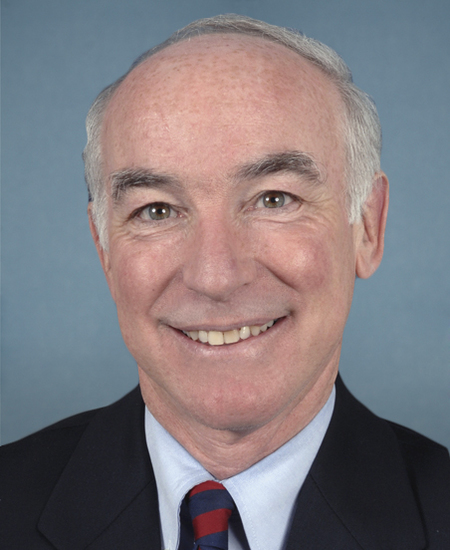
Rep. Joe Courtney
Sponsored bills
Maddy summaryThis bill provides $280 million in funding for the Department of Education's Office for Civil Rights (OCR) for fiscal year 2024, with funds available through September 2025. The OCR investigates school discrimination complaints related to race, sex, disability, and other protected characteristics. This funding directly supports the OCR's ability to handle civil rights cases involving students and schools nationwide, without creating new student requirements or altering existing laws.
Maddy summaryThis resolution (HRES 1169) is a symbolic House of Representatives commendment. It formally recognizes the University of Connecticut men’s basketball team for winning the 2024 NCAA Men’s Basketball Championship and the women’s team for reaching the NCAA Women’s Basketball Final Four. The resolution highlights the men’s team’s sixth national title and second consecutive championship, and the women’s team’s 11th national title and 23rd Final Four appearance. It specifically commends the teams, their coaches (Dan Hurley and Geno Auriemma), and requests copies be sent to university leadership and coaches. As a commemorative resolution, it has no binding policy effect.
Maddy summaryHRES 1151 is a symbolic resolution recognizing the Interstate Compact on Educational Opportunity for Military Children and designating April 2024 as "Month of the Military Child." It directly affects military-connected children (over 1.5 million in the U.S.) who face frequent school transitions due to parental service. The resolution expresses congressional support for the Compact - which helps streamline educational transitions for military students - and encourages nationwide recognition through events like "Purple Up!" to honor these children. As a non-binding resolution, it does not create new policies or funding but aims to raise awareness of military-connected students' educational challenges.
Maddy summaryHR 1083, the Caring for Survivors Act of 2023, increases financial support for surviving spouses of veterans. It amends Title 38 to raise dependency and indemnity compensation from a fixed $1,154 to 55% of the monthly compensation rate under section 1114(j), effective six months after enactment. The bill also modifies eligibility for survivors of veterans who died before 1993, ensuring they receive the greater of their current benefit or the new calculation. Additionally, it reduces the required continuous service rating period for survivors from 10 years to five years when a veteran was totally disabled at death. These changes directly affect surviving spouses, particularly those with veterans who died prior to 1993.
Maddy summaryHRES 1145 is a non-binding resolution recognizing April as "Community College Month" to celebrate over 1,000 U.S. community colleges. It highlights these institutions' role in providing affordable higher education, workforce training, and economic support - serving 10 million students annually and contributing significantly to national prosperity. The resolution cites their impact, including generating $898 billion in added income and returning $6.80 in tax revenue per public dollar invested. This symbolic gesture aims to acknowledge community colleges' nationwide contributions without creating new policies or funding.
Maddy summaryHR 2560 establishes a federal grant program to fund sea turtle rescue and rehabilitation efforts. The program, administered by the Commerce Secretary, provides grants to organizations in designated coastal "stranding regions" for activities like rescuing stranded turtles, providing medical care, collecting research data, and covering related facility costs. Grants are capped at $150,000 per year per recipient, require a 50% non-federal cost match, and must be distributed equitably based on past stranding events and species conservation needs. The bill authorizes $5 million annually (2024-2029) for this program, directly supporting coastal rescue groups, research institutions, and conservation organizations working with stranded marine turtles.
Maddy summary# Summary of Proposed WIOA Amendment This document proposes significant amendments to the Workforce Innovation and Opportunity Act (WIOA), with key changes including: 1. **YouthBuild Program Enhancement**: - Increased annual funding authorization to $108,150,000 - New performance reporting requirements - Added focus on opioid-related training and services 2. **New Reentry Employment Opportunities Program** (Section 172): - Creates a competitive grant program for justice-involved individuals - Requires evidence-based practices and performance metrics - Includes specific requirements for recidivism reduction - Defines "eligible adult" (age 25+) and "eligible youth" (age 14-24) 3. **Strengthening Community Colleges Program** (Section 173): - Creates new grant program with $65,000,000 annual funding - Requires industry partnerships for workforce development - Mandates evidence-based program design - Focuses on recognized postsecondary credentials and career pathways 4. **Performance Accountability System**: - Enhanced data collection and reporting requirements - New requirement for making data available in "linked, open, and interoperable data formats" - More detailed performance metrics for all programs 5. **Funding Increases**: - Increased authorizations for multiple programs: - Native American programs: $61,800,000 annually - Migrant and seasonal farmworker programs: $100,317,900 annually - Technical assistance: $5,000,000 annually - Evaluations and research: $12,720,000 annually 6. **Administrative Changes**: - New consultation requirement with labor organizations for on-the-job training - Revised definitions (e.g., "English language learners" changed to "English learners") - New requirements for public reporting of matching funds 7. **Data Infrastructure**: - New "Workforce Data Infrastructure" provisions (Section 174) - Requirements for interoperable data systems - Focus on credential registries and data sharing The proposed amendment emphasizes data-driven decision making, industry-aligned training, performance accountability, and expanded opportunities for underserved populations including justice-involved individuals, opioid treatment participants, and individuals with barriers to employment.
Maddy summaryThis bill protects licensed amateur radio operators' ability to install antennas for emergency communications by preventing homeowners' associations and private land use restrictions from blocking such installations. It requires communities to allow antennas that don’t impair emergency use, with exceptions only for safety, structural requirements, or minimal visual impact (e.g., screened enclosures). Small antennas (under 1 meter diameter), flagpoles (under 43 feet), and wire/vertical antennas don’t require prior approval, and communities must approve applications within 45 days. The law directly affects over 770,000 licensed amateur operators who rely on these antennas for life-saving emergency communications during disasters.
Maddy summaryHCONRES 102 is a non-binding symbolic resolution supporting International Transgender Day of Visibility, introduced by multiple House members. It formally encourages the U.S. to observe the day with ceremonies and programs, celebrates transgender community achievements, and recognizes their ongoing fight for equality amid documented discrimination in employment, healthcare, housing, and public spaces. The resolution highlights transgender representation in politics (including 21 state legislators) and historical context, while acknowledging rising anti-transgender legislation. It directly affirms the transgender community's visibility and rights without creating new policies or funding.