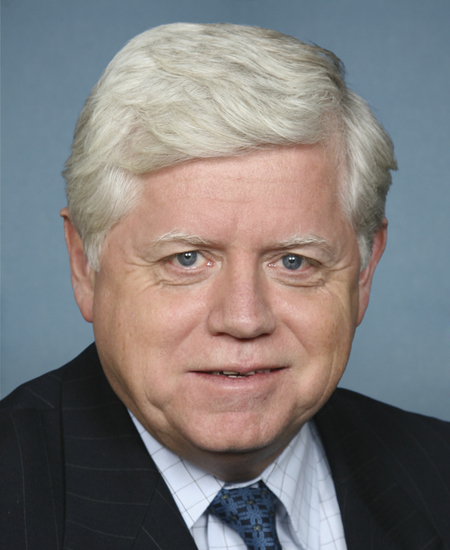
Photo of John B. Larson
D United States House · District 1 · Connecticut

Rep. John B. Larson

Compare
Total votes
2,837
all sessions
Attendance
97%
72 missed
Near the chamber average
With party
98%
of cast votes
Higher than 88% of chamber peers
Bipartisan score
1%
crosses aisle rarely
Lower than 89% of chamber peers
Sponsored
1,149
bills & resolutions
Near the chamber average
Committees
3
assignments
1,149 bills and resolutions

Sponsored bills

Total
1,149
Primary
39
Co-sponsor
1,110
This page
1,149
matching current filters
Co-sponsor HR 8679
In committee · Indiana House · Co-sponsor
To include the Czech Republic in the list of foreign states whose nationals are eligible for admission into the United States as E-1 nonimmigrants if United States nationals are treated similarly by the Government of the Czech Republic.

Maddy summaryThis bill would allow Czech citizens to apply for E-1 business visas to work in the United States for trade and business, but only if the Czech Republic grants similar visa access to U.S. citizens. It directly affects Czech nationals seeking to conduct business in the U.S. and U.S. citizens traveling to the Czech Republic for business. The bill conditionally adds the Czech Republic to the list of countries eligible for E-1 visas, requiring reciprocity in visa treatment between the two nations. This change would expand E-1 visa eligibility for Czech citizens if the Czech government meets the reciprocity condition.

In committee Jun 11, 2024 1 co-sponsor
Co-sponsor HR 8622
In committee · Indiana House · Co-sponsor
Preventing the Algorithmic Facilitation of Rental Housing Cartels Act of 2024

Maddy summaryThis bill bans rental property owners (with 4+ units) and software services from using algorithms that coordinate pricing or lease terms among landlords, which could enable price-fixing. It specifically prohibits "coordinating functions" like collecting and analyzing rental data to recommend prices or occupancy levels, deeming such use a per se violation of antitrust law. The Federal Trade Commission and state attorneys general can enforce these rules, and victims of violations can sue for triple damages. Pre-dispute arbitration agreements or waivers preventing class actions related to these violations are also invalidated.

In committee Jun 5, 2024 1 co-sponsor
Co-sponsor HR 8639
In committee · Indiana House · Co-sponsor
Warehouse Worker Protection Act

Maddy summaryHR 8639, the Warehouse Worker Protection Act, requires employers in covered warehouse facilities (including distribution centers, storage facilities, and delivery services) to provide workers with clear written descriptions of any quotas they're subject to, including how performance is measured and monitored. The bill prohibits quotas that interfere with breaks, safety compliance, or anti-discrimination protections, and mandates that employers provide employee work speed data in human-readable formats. It creates new anti-retaliation protections for workers who exercise these rights or file complaints, and establishes a Fairness and Transparency Office within the Department of Labor to oversee implementation. The act also amends the National Labor Relations Act to explicitly prohibit quotas that discourage workers from exercising their labor rights.

In committee Jun 5, 2024 1 co-sponsor
Co-sponsor HR 8565
In committee · Indiana House · Co-sponsor
Endometriosis CARE Act

Maddy summaryThe Endometriosis CARE Act (HR 8565) directs the National Institutes of Health to fund research and data collection on endometriosis, including $50 million annually from 2025-2029 for studies on treatments and potential cures. It requires the Department of Health and Human Services to analyze barriers to treatment access - like insurance coverage and provider shortages - and report findings within two years. The bill also mandates public education campaigns about endometriosis, with a focus on underserved racial/ethnic groups, and funds provider training on evidence-based care. Additionally, it authorizes a National Academies study on health disparities related to endometriosis diagnosis and treatment. The law directly affects people with endometriosis, healthcare providers, and research institutions through new federal funding and data collection requirements.

In committee May 31, 2024 1 co-sponsor
Co-sponsor HR 8525
In committee · Indiana House · Co-sponsor
George Floyd Justice in Policing Act of 2024

Maddy summaryThe George Floyd Justice in Policing Act of 2024 establishes a National Police Misconduct Registry to track complaints and disciplinary actions against officers, requiring all federal, state, and local law enforcement agencies to report use-of-force incidents with racial, gender, and age data. It bans chokeholds and carotid holds in police encounters, prohibits no-knock warrants in drug cases, and reforms qualified immunity to make it harder for officers to avoid accountability for misconduct. The bill mandates body cameras for federal officers, requires independent investigations of officer-involved shootings, and creates new data collection systems to monitor racial profiling and use-of-force patterns. It also includes provisions for civilian oversight boards, improved officer training on de-escalation and implicit bias, and restrictions on military equipment transfers to local police departments. This law affects all law enforcement agencies receiving federal funding under programs like Byrne and COPS grants.

In committee May 31, 2024 1 co-sponsor
Co-sponsor HR 8323
In committee · Indiana House · Co-sponsor
Comprehensive Addiction Resources Emergency Act of 2024

Maddy summary# Summary of Legislative Text This is a comprehensive legislative proposal focused on addressing substance use disorder through public health approaches, with significant funding and program requirements. Key elements include: 1. **Major Funding Programs:** - **Subtitle A (Local Grants):** $3.0 billion annually (2024-2033) for local entities to provide prevention, treatment, and recovery services - **Subtitle B (State/Regional Grants):** $4.6 billion annually (2024-2033) for state-level programs - **Subtitle C (Other Grants):** $1.0 billion annually (2024-2033) for specific entities and underserved populations - **Subtitle D (Innovation/Training):** $1.5 billion annually (2024-2033) for training, research, and capacity building 2. **Key Program Requirements:** - Mandates for evidence-based treatment services across multiple levels of care - Requirements for cultural competency, particularly for Native American communities - Specific focus on harm reduction, prevention, and recovery support - Provisions for naloxone distribution and overdose reversal programs 3. **Regulatory Changes:** - New certification requirements for covered manufacturers, distributors, and dispensers of Schedule II controlled substances - Penalties for failure to submit certifications or submitting false certifications - Creation of a "Comprehensive Addiction Resources Fund" for penalty revenues 4. **Focus Areas:** - Prevention services (including trauma-informed approaches) - Early intervention services - Recovery support services - Harm reduction programs - Workforce development for treatment providers - Special attention to underserved populations (rural communities, racial minorities, formerly incarcerated individuals) 5. **Funding Priorities:** - 10% of funds for Native American communities - Specific requirements for cultural competency and language access - Mandated data collection and reporting systems This legislation represents a significant shift toward public health approaches to substance use disorder, emphasizing prevention, treatment, and recovery support rather than punitive measures, with substantial funding commitments over a decade.


In committee May 17, 2024 1 co-sponsor
Co-sponsor HR 8426
In committee · Indiana House · Co-sponsor
Public Service Freedom to Negotiate Act of 2024

Maddy summaryThe Public Service Freedom to Negotiate Act of 2024 establishes federal minimum standards for collective bargaining rights for public employees and supervisory employees. The Federal Labor Relations Authority will determine if each state's laws "substantially provide" for these rights, and if not, federal standards will apply to that state. These standards include the right to self-organization, collective bargaining, recognition of labor organizations, and procedures for resolving disputes. The bill preserves existing collective bargaining agreements and excludes certain employee categories like emergency services workers from some provisions.

In committee May 16, 2024 1 co-sponsor
Co-sponsor HRES 1169
In committee · Indiana House · Co-sponsor
Commending and congratulating the University of Connecticut men's basketball team, the UConn Huskies, for winning the 2024 National Collegiate Athletic Association Men's Basketball Championship, and commending and congratulating the University of Connecticut's women's basketball team for securing a place in the Final Four.

Maddy summaryThis resolution (HRES 1169) is a symbolic House of Representatives commendment. It formally recognizes the University of Connecticut men’s basketball team for winning the 2024 NCAA Men’s Basketball Championship and the women’s team for reaching the NCAA Women’s Basketball Final Four. The resolution highlights the men’s team’s sixth national title and second consecutive championship, and the women’s team’s 11th national title and 23rd Final Four appearance. It specifically commends the teams, their coaches (Dan Hurley and Geno Auriemma), and requests copies be sent to university leadership and coaches. As a commemorative resolution, it has no binding policy effect.

In committee Apr 23, 2024 1 co-sponsor
Co-sponsor HR 3651
In committee · Indiana House · Co-sponsor
Love Lives On Act of 2023

Maddy summaryThe Love Lives On Act of 2023 modifies benefits for surviving spouses of military veterans and service members. It removes an expiration date on the Marine Gunnery Sergeant John David Fry Scholarship for surviving spouses, ensures remarriage doesn't automatically end eligibility for veterans' dependency and indemnity compensation, and expands access to commissary and exchange privileges for remarried surviving spouses. The bill also clarifies that remarried widows or widowers whose subsequent marriage ended (due to death, divorce, or annulment) can still be considered dependents under TRICARE. These changes directly affect surviving spouses of veterans and military members who have remarried or are considering remarriage, providing more consistent benefits regardless of marital status.

In committee Apr 16, 2024 1 co-sponsor
Co-sponsor HR 1083
In committee · Indiana House · Co-sponsor
Caring for Survivors Act of 2023

Maddy summaryHR 1083, the Caring for Survivors Act of 2023, increases financial support for surviving spouses of veterans. It amends Title 38 to raise dependency and indemnity compensation from a fixed $1,154 to 55% of the monthly compensation rate under section 1114(j), effective six months after enactment. The bill also modifies eligibility for survivors of veterans who died before 1993, ensuring they receive the greater of their current benefit or the new calculation. Additionally, it reduces the required continuous service rating period for survivors from 10 years to five years when a veteran was totally disabled at death. These changes directly affect surviving spouses, particularly those with veterans who died prior to 1993.

In committee Apr 16, 2024 1 co-sponsor
Showing 471 to 480 of 1,149 bills
Previous 1 … 47 48 49 … 115 Next