

Maddy summaryThe STAGE Act establishes a federal grant program to support professional nonprofit theaters. Eligible theaters (nonprofits producing live performances with fair wages, 3+ years of programming, and financial need or community focus) can receive grants covering payroll, facility repairs (prioritizing accessibility), marketing, and workforce training. Grants max out at $16 million per entity or 20% of its prior year's expenses, with $1 billion annually allocated for 2024-2028. The bill also mandates a federal study on sustaining the nonprofit arts sector, including input from artists and community stakeholders.
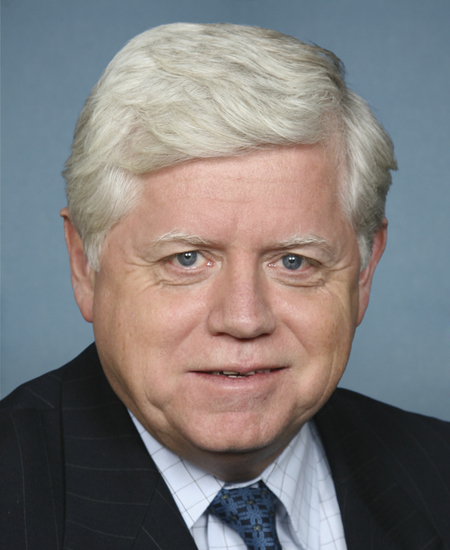
Rep. John B. Larson
Sponsored bills
Maddy summaryThis bill protects licensed amateur radio operators' ability to install antennas for emergency communications by preventing homeowners' associations and private land use restrictions from blocking such installations. It requires communities to allow antennas that don’t impair emergency use, with exceptions only for safety, structural requirements, or minimal visual impact (e.g., screened enclosures). Small antennas (under 1 meter diameter), flagpoles (under 43 feet), and wire/vertical antennas don’t require prior approval, and communities must approve applications within 45 days. The law directly affects over 770,000 licensed amateur operators who rely on these antennas for life-saving emergency communications during disasters.
Maddy summaryThis bill authorizes federal grants to expand maternal health services in underserved communities. It directly affects public and nonprofit health care providers serving minority, low-income, or medically underserved areas, requiring them to improve prenatal, postnatal, and postpartum care while reducing racial and economic disparities. Key provisions include prioritizing community-led providers, limiting administrative costs to 10% of grant funds, and mandating culturally appropriate care. The grants, funded for fiscal years 2025-2029, aim to enhance health outcomes for mothers and infants in these communities through coordinated service delivery.
Maddy summaryHR 7801, the Sultana Steamboat Disaster Commemorative Coin Act of 2024, authorizes the U.S. Mint to produce commemorative coins honoring the 1865 Sultana steamboat disaster - the worst maritime disaster in U.S. history, which killed nearly 1,200 people. The bill specifies three coin types ($5 gold, $1 silver, and half-dollar clad) to be minted between January 1, 2027, and December 31, 2027, with surcharges from sales directed to the Sultana Historical Preservation Society for museum development and artifact preservation. The coins will be sold at face value plus surcharges ($5-$35 per coin), and the funds must support constructing a museum, exhibits, and preserving disaster-related history. This bill does not create new laws but enables commemorative coin sales to fund a specific historical preservation effort.
Maddy summaryHR 7770, the Rosie the Riveter Commemorative Coin Act, authorizes the U.S. Mint to produce and sell three commemorative coins honoring women who worked on the U.S. home front during World War II. It specifies $5 gold coins (max 50,000), $1 silver coins (max 400,000), and half-dollar coins (max 750,000), all to be issued between January 1, 2025, and December 31, 2025. Each coin sale includes a surcharge ($35 for gold, $10 for silver, $5 for half-dollar), with all surcharge funds directed to the Rosie the Riveter Trust for maintaining the Rosie the Riveter WWII Home Front National Historical Park and educational programs. The coins will feature designs reflecting the legacy of diverse women workers and must meet specific weight, diameter, and composition standards.
Maddy summaryHR 7634, the Plastic Pellet Free Waters Act, prohibits plastic pellets and pre-production plastic materials from being discharged into water through wastewater, spills, or runoff from specific facilities. It directly affects plastic polymer production facilities, plastic molding and forming facilities, and any point source (like packaging or transport operations) handling plastic pellets. The bill requires the EPA to issue a final rule within 60 days of enactment banning these discharges and updating all relevant wastewater, stormwater, and performance standards in permits and regulations. This creates a legal requirement for facilities to prevent plastic pellet pollution in waterways, targeting a major source of ocean plastic pollution.
Maddy summaryThis concurrent resolution (HCONRES 97) recognizes the gender wage gap, noting that women working full-time earn 84 cents for every dollar earned by men. It highlights racial disparities (e.g., Latinas earn 57 cents, Black women 69 cents) and the economic impact of the gap, including $965 billion in annual lost wages for women. As a symbolic resolution, it does not create new laws or policies but formally acknowledges the issue and reaffirms Congress’s commitment to addressing wage inequality.
Maddy summaryHRES 1075 is a ceremonial resolution recognizing AmeriCorps members, alumni, and AmeriCorps Seniors volunteers for their community service. It highlights their contributions over 30 years, including supporting vulnerable populations, disaster response, education, and environmental protection through nearly 200,000 annual volunteers. The resolution encourages nationwide recognition during AmeriCorps Week (March 10-16, 2024), urging the public to salute volunteers and promote community service. It has no funding or policy changes - only symbolic acknowledgment of existing program impacts.
Maddy summaryHRES 1074 is a symbolic House resolution reaffirming congressional support for a two-state solution to the Israel-Palestine conflict. It explicitly states the House supports Israel's right to exist as a Jewish, democratic state and recognizes Palestinians' right to sovereignty through a separate state. The resolution identifies a two-state solution as the best path to lasting peace and condemns efforts opposing this approach. As a non-binding resolution, it does not create new law or policy but formally expresses the House's position on this issue. It was introduced by multiple House members on March 12, 2024.
Maddy summaryHRES 1032 is a symbolic resolution designating the week of February 26-March 1, 2024, as "Public Schools Week" in the U.S. House of Representatives. It expresses congressional support for public education, highlighting its role in preparing students and communities. The resolution has no legal effect or funding provisions - it solely serves as a formal expression of backing for public schools. It directly affects no individuals or entities but aims to raise awareness about public education. This is a non-binding gesture, not a policy change.