

Maddy summaryThe Weather Workforce Improvement Act (HR 3809) streamlines hiring for critical National Weather Service (NWS) positions directly affecting public safety, such as meteorologists, hydrologists, and technicians responsible for weather balloon launches and forecasting. It grants the NWS Director direct hiring authority for these roles without standard federal hiring rules, with this authority expiring after two years or once all critical vacancies are filled. The bill also mandates annual assessments on hiring progress and the health impacts of rotating shifts on NWS staff, requiring reports to Congress on workforce needs and strategies to improve employee well-being. These provisions aim to strengthen NWS staffing capacity without altering weather forecasting policies or outcomes.
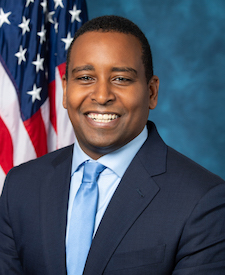
Rep. Joe Neguse
Sponsored bills
Maddy summaryThe Elder Pride Protection Act of 2025 establishes a federal task force (the ELDER Task Force) within the Department of Justice to address elder abuse targeting LGBTQI+ individuals. The task force, created within 90 days of the bill’s passage, will study the rise in such abuse, develop national best practices for law enforcement, and create educational materials for prevention and response. It will coordinate efforts across local, state, and federal agencies and submit a report to Congress within one year. The bill directly affects older LGBTQI+ adults (aged 60+) facing abuse, which includes physical, sexual, emotional, or financial harm, but does not create new funding or penalties.
Maddy summaryThis bill expands Medicare coverage for mental health services provided by clinical social workers to seniors in skilled nursing facilities. It removes an exclusion that previously prevented these services from being covered under Medicare's skilled nursing facility payment system. The bill specifically adds defined mental health service codes (including those for assessment and treatment) to Medicare's coverage, ensuring seniors can access these services without additional barriers. These changes will take effect for services provided on or after January 1, 2026.
Maddy summaryThe TRACE Act requires all new firearms manufactured in the U.S. to include a second, hidden serial number (inside the receiver or visible only under infrared light) within 12 months of enactment. It extends the retention period for background check records from 24 hours to 180 days and mandates that licensed firearm dealers conduct regular physical inventory checks of their stock. The bill also removes longstanding funding restrictions in federal appropriations laws that previously prohibited using funds to implement these measures. These changes directly affect firearm manufacturers, licensed dealers, and the Bureau of Alcohol, Tobacco, Firearms and Explosives (ATF), which must issue implementing regulations within 180 days.
Maddy summaryHR 3558, the Veteran Jobs Training Act, increases funding for programs helping homeless veterans reintegrate into the workforce. It amends Title 38 of the U.S. Code to authorize $75 million annually for fiscal years 2024 and beyond for homeless veterans' reintegration programs, replacing previous language that only covered 2024. This direct funding increase affects homeless veterans seeking employment assistance through federal programs. The bill’s key provision is the specific annual appropriation amount, ensuring sustained financial support for these services. It does not create new programs but expands existing funding mechanisms.
Maddy summaryHR 3560, the Veteran Wildland Firefighter Employment Act of 2025, creates a two-year pilot program to employ veterans in existing wildland firefighting roles within the U.S. Departments of Agriculture and the Interior. The program, administered by the Department of Veterans Affairs in coordination with Agriculture and Interior, will fill vacant positions for veterans transitioning from military service, focusing on roles like firefighting, forestry, and fire management. It requires quarterly reports tracking veteran applications, hires, and transitions to permanent federal positions, while incorporating best practices from existing VA training programs to identify cost-saving methods. The pilot aims to reduce veteran unemployment by connecting military skills to federal firefighting needs without creating new positions.
Maddy summaryHR 3791, the EMS Counts Act, requires the Bureau of Labor Statistics (BLS) to revise its job classification system to properly count dual-role firefighter/EMTs and firefighter/paramedics as EMS personnel. This directly affects how national workforce data on emergency medical services is collected, correcting a current undercount that excludes these workers. The bill mandates the Secretary of Labor to add specific occupational categories ("Firefighter/EMTs" and "Firefighter/Paramedics") to the BLS system within 120 days of enactment. A report detailing this change and past efforts to improve EMS counting must be submitted to Congress within 270 days. The law aims to ensure accurate data for federal agencies to better address EMS workforce needs during emergencies.
Maddy summaryHR 3777, the Public Land Search and Rescue Act, creates a federal grant program to fund remote search and rescue activities on public lands managed by the Interior or Agriculture Departments. The program provides up to 75% federal funding for eligible states or local teams to purchase equipment, maintain gear, and reimburse costs for locating and rescuing people lost or injured in remote areas. Priority is given to areas with high visitor-to-resident ratios, and grants require applicants to be legally authorized to conduct such rescues. This bill directly affects state/local search and rescue organizations operating on federal lands by providing new funding mechanisms for their remote operations.
Maddy summaryHR 3773 (PROTECT Act of 2025) amends federal law to recognize tribal courts as having authority equivalent to state courts for certain electronic evidence cases. It requires that warrants for electronic communications stored 180 days or less must follow procedures from the Indian Civil Rights Act (25 U.S.C. 1302(a)(2)) when issued by tribal courts. The bill also expands tribal jurisdiction over controlled substance offenses (like drug trafficking or possession) and firearms offenses (such as possession by domestic violence offenders) by defining these terms for tribal courts. This directly affects tribal courts and tribal law enforcement by standardizing legal procedures for evidence handling and broadening their authority under federal law. The changes align tribal court processes with federal and state standards for digital evidence and criminal jurisdiction.
Maddy summaryHR 3757, the Pride In Mental Health Act of 2025, provides $20 million annually (2026-2030) to fund grants for mental health services targeting LGBTQ+ youth, including nonbinary, intersex, and Two Spirit youth, and their families/caregivers. The bill mandates grantees to provide trauma-informed care, cultural competency training, school bullying prevention guidelines, and evidence-based practices while explicitly prohibiting the use of funds for conversion therapy or its promotion. It also requires the federal government to restore mental health reports on LGBTQ+ youth, conduct a national survey measuring mental health distress, and produce a report on mental health services for LGBTQ+ youth in foster care. The law directly affects these youth populations by expanding access to tailored mental health resources and data collection, with funding administered through the Substance Abuse and Mental Health Administration.