

Maddy summaryHR 4796, the Restoring Essential Healthcare Act, repeals a provision that blocked Medicaid payments to certain healthcare providers during a specific period. It directly affects Medicaid beneficiaries who received care from these providers between the enactment of the prior law (Public Law 119-21) and this bill's enactment. The key provision retroactively restores Medicaid payments for services already provided during that blocked period, treating the payment restriction as if it never existed. This change ensures eligible individuals and providers receive reimbursement for covered care delivered during the prohibited timeframe.
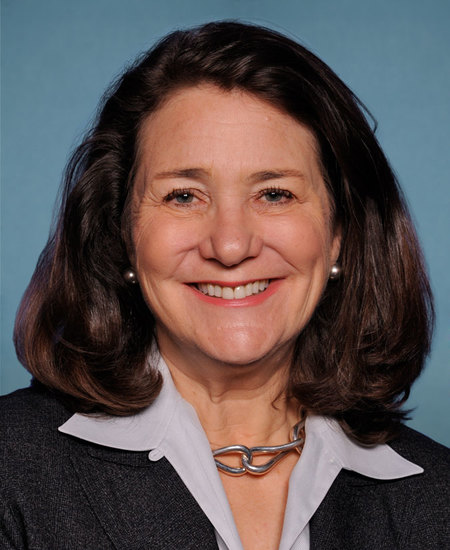
Rep. Diana DeGette
Sponsored bills
Maddy summaryHR 4778 grants permanent resident status (a green card) to Jeanette Vizguerra-Ramirez, bypassing standard immigration rules. It allows her to apply for permanent residency within two years of the bill's enactment, with a requirement that her country of birth loses one immigrant visa slot. The bill also explicitly prevents her parents, siblings, or other relatives from gaining immigration benefits based on her status. This is a case-specific bill affecting only Jeanette Vizguerra-Ramirez and her country's visa allocation.
Maddy summaryThis bill updates the TRICARE Young Adult Program to make healthcare coverage more accessible for military dependents. It directly affects young adults (ages 21-26) who are children of active-duty service members, by eliminating a separate premium they previously paid for coverage. Key changes include removing an extra cost for young adults and adjusting eligibility rules to simplify enrollment. These amendments aim to reduce out-of-pocket expenses and streamline access to health insurance under the program.
Maddy summaryHR 4667, the VISIBLE Act, requires U.S. Immigration and Customs Enforcement (ICE), U.S. Customs and Border Protection (CBP), and other authorized immigration officers to visibly display their agency name and either their last name or unique badge number during all public immigration enforcement activities (such as stops, arrests, raids, or checkpoints). This identification must be clearly legible from 25 feet away on outer clothing, not obscured by gear, and officers cannot wear face coverings that hide their face during public interactions unless for covert operations or hazardous conditions. The bill mandates DHS to discipline non-compliant officers and submit annual reports to Congress detailing enforcement activities, violations, and disciplinary actions. It also directs DHS’s Civil Rights Office to investigate public complaints about noncompliance.
Maddy summaryHRES 601 is a non-binding House resolution recognizing the Federal Government's duty to lead global biomedical research. It expresses Congress's position that NIH funding and scientific independence are critical national assets, emphasizing the need to protect research capacity and double biomedical investment over the next decade. The resolution lists specific goals, including reducing cancer deaths, advancing Alzheimer's research, and improving clinical trial representation, but does not create new laws or allocate funds. It directly addresses the National Institutes of Health (NIH), federal research policy, and the broader biomedical research community. As a symbolic resolution, it has no legal effect but aims to shape future policy discussions.
Maddy summaryThis bill would prohibit the detention of pregnant women, lactating women, and postpartum mothers (within one year of childbirth) in immigration custody, requiring their immediate release except in rare circumstances involving public safety threats. It bans the use of physical restraints on these individuals during pregnancy, labor, delivery, and postpartum recovery, with only extremely limited exceptions. The bill mandates that facilities provide comprehensive reproductive health care including prenatal care, labor and delivery services, postpartum care, and access to abortion services. It requires facilities to maintain medical records, obtain informed consent for medical procedures, and conduct weekly reviews of any detained individuals under exceptional circumstances. The bill also establishes reporting requirements for facilities and creates transparency through public reporting of detention practices.
Maddy summaryHR 4696 amends Section 249 of the Immigration and Nationality Act to update eligibility for a registry program that provides a pathway to legal status for long-term residents. It changes the requirement from entering the U.S. before January 1, 1972, to entering at least 7 years before the application date. This adjustment bases eligibility on a rolling 7-year window instead of a fixed historical cutoff, allowing more recent long-term residents to qualify. The bill directly affects individuals who entered the U.S. after 1972 but maintained continuous residence for at least seven years prior to applying.
Maddy summaryThis bill requires a 3-business-day waiting period before someone can receive a handgun from another person who isn't a licensed gun seller. It applies to most private handgun transfers but includes exceptions for law enforcement, family loans (like between spouses or parents and children), temporary transfers to prevent imminent harm, and transfers for shooting or hunting under specific conditions. The waiting period begins when the recipient first offers to take possession of the gun. The law would take effect 90 days after enactment.
Maddy summaryThe Keep Kids Covered Act extends continuous health coverage under Medicaid and CHIP for children. It requires states to maintain coverage for children under age 6 for six years (previously one year) and for children under age 19 for two years (previously one year), without requiring reapplication. Former foster youth will now remain covered until age 26. States must also annually update contact information for enrolled children and inform them about their coverage status and remaining eligibility period.
Maddy summaryH.J. Res. 108 proposes a constitutional amendment to remove legal immunity for federal officials, including the President, from criminal prosecution for actions taken while performing official duties. It would prohibit the President from granting pardons to themselves and eliminate the defense that "official authority" excuses violations of federal or state law (with limited exceptions for certain congressional actions). If ratified, this amendment would require Congress to pass implementing laws to enforce these changes. The proposal is currently in the House Judiciary Committee and requires approval by three-fourths of state legislatures to become part of the Constitution.