

Maddy summaryThis bill prohibits Members of Congress, their spouses, and dependent children from owning or trading certain investments, including stocks, commodities, and derivatives (referred to as "covered investments"). It requires affected individuals to divest these investments within 90-180 days, with specific exemptions for Treasury bonds, diversified mutual funds, small business interests, and family trusts meeting strict conditions. Violations incur penalties of 10% of the investment's value plus disgorgement of profits, paid directly to the U.S. Treasury. The law applies to all covered individuals during federal service, with exceptions for investments acquired through inheritance or occupational trading (e.g., a spouse’s finance job).
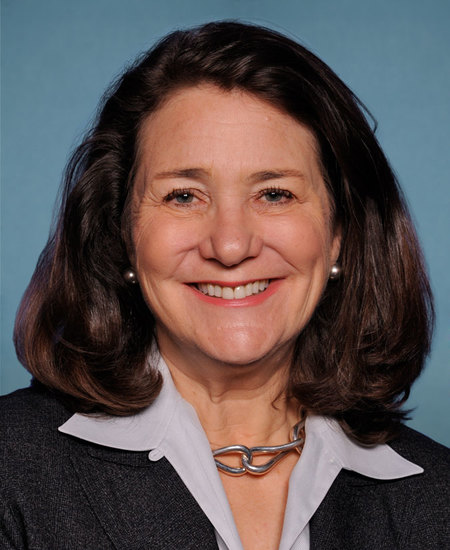
Rep. Diana DeGette
Sponsored bills
Maddy summaryThis bill (HJRES 115) terminates a presidential emergency declaration made on August 11, 2025, which claimed a "crime emergency" in Washington, D.C. It directly affects the District of Columbia by ending federal restrictions that prevented D.C. from using $1 billion in locally-raised funds for public safety, law enforcement, fire services, and schools. The resolution cites that the emergency declaration was legally flawed - section 740 of the DC Home Rule Act does not permit federalizing the Metropolitan Police Department - and notes that D.C. violent crime has reached a 30-year low. The bill formally ends the emergency under the DC Home Rule Act, restoring D.C.'s authority over its own budget and public safety resources.
Maddy summaryHR 4976, the Shielding Students from Wildfire Smoke Act, requires the Environmental Protection Agency to commission the National Academies of Sciences to review existing policies protecting children from wildfire smoke in K-12 schools, childcare centers, and related activities like sports or camps. The review will assess current standards, identify research and policy gaps, and provide recommendations to Congress for better protection, especially in under-resourced settings. This bill does not create new regulations but mandates a formal evaluation of current approaches to safeguard children during smoke events. It directly affects children in educational and childcare environments across the U.S., particularly in communities frequently impacted by wildfires.
Maddy summaryHR 4917, the Expanding the VOTE Act, amends the Voting Rights Act to increase language access for voters. It expands the definition of "voting materials" to include digital formats and requires states to provide language assistance (both written and oral) for minority language groups, with special provisions for American Indian and Alaska Native languages when written translations aren't feasible. The bill creates grants to help jurisdictions provide voting materials in languages that don't currently trigger Section 203 coverage, and mandates a study on lowering population thresholds for language assistance requirements. This directly affects states, local election jurisdictions, and voters who speak minority languages, including those in communities not currently covered by existing language access rules.
Maddy summaryThe Time Off to Vote Act requires employers with 25 or more employees to provide two hours of paid leave for federal elections. Employees can use this leave to vote in person, return mail-in ballots, or perform other voting activities during open polling hours. Employers may set the specific two-hour window (excluding lunch breaks) but cannot deny the leave, retaliate against employees who take it, or cause loss of accrued benefits. Violations could result in civil penalties up to $10,000 per violation, enforced by the Department of Labor.
Maddy summaryThis bill requires the U.S. Department of State to include specific, detailed reporting on reproductive rights in its Annual Country Reports on Human Rights Practices. It mandates descriptions of each country's policies regarding access to contraception, abortion services, and comprehensive reproductive health care, alongside data on pregnancy-related deaths, discrimination against women and LGBTQI+ individuals, and disparities based on race, disability, or other factors. The bill also directs the State Department to consult with civil society organizations and health experts to ensure thorough reporting on these issues. This change aims to align U.S. reporting with international human rights standards and address past omissions of reproductive rights from these reports.
Maddy summaryThe CLEAR ID Act (HR 4843) requires U.S. Immigration and Customs Enforcement (ICE) and other authorized officers conducting civil immigration enforcement actions to visibly identify themselves. Specifically, it prohibits wearing masks that hide identity, mandates clear agency vehicle markings, and requires officers to verbally state their agency and show a badge. The law applies to all "covered immigration officers" from DHS agencies and partner agencies conducting enforcement under immigration law. Exceptions exist for medical needs or approved undercover operations meeting strict safety and legal criteria. The bill directly affects federal, state, and local officers performing immigration enforcement duties.
Maddy summaryThis bill adjusts health insurance subsidies by modifying the premium tax credit structure under the Internal Revenue Code. It replaces previous income thresholds with a sliding-scale formula, increasing subsidies for households earning between 150% and 400% of the federal poverty level - reducing their required premium payments as income rises within these tiers. The changes apply to tax years beginning after December 31, 2025, directly affecting middle-income individuals and families purchasing coverage through health insurance marketplaces. It also repeals specific provisions from a prior reconciliation law related to health care.
Maddy summaryThe College Transparency Act requires the federal government to create a new student data system that collects and shares information about college enrollment, costs, completion rates, and post-graduation outcomes. This system will directly affect colleges and universities (which must submit data), students (whose information is collected with privacy protections), and families (who will access the data to make informed education decisions). The bill mandates the development of a public website providing customizable, aggregate data on student demographics, costs, and outcomes, while prohibiting the collection of sensitive information like health records or political affiliation. The system aims to reduce reporting burdens on institutions by consolidating data collection and making information more transparent for prospective students. It includes strong privacy and security requirements to protect student information, with the data system to be developed within four years of the bill's enactment.
Maddy summaryThis bill removes a barrier preventing most low-income students from accessing SNAP benefits. It amends the Food and Nutrition Act to explicitly allow students enrolled at least half-time in recognized higher education programs to qualify for SNAP, reversing a prior exclusion. The key change eliminates the previous requirement that students meet specific exceptions (now deleted) and adds a new eligibility category under Section 3(m)(5). This directly affects low-income undergraduate and graduate students at colleges and training programs who were previously ineligible. The changes take effect January 2, 2026.