

Maddy summaryThis bill amends federal law to expand funding for police department recruitment efforts. It allows law enforcement agencies to use federal grants for specific recruitment costs like travel, marketing, retention bonuses, and community outreach events. The change specifically targets departments in areas with high violent crime rates or persistent hiring shortages. This directly affects local police departments struggling to hire officers in challenging communities. The bill modifies existing funding rules without creating new programs.
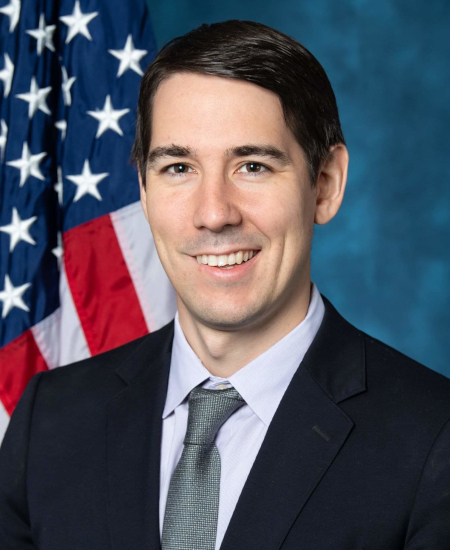
Rep. Josh Harder
Sponsored bills
Maddy summaryThis bill improves the VA Work-Study program for veterans and active-duty military members by expanding eligible work opportunities to include roles with state/local governments and nonprofits that support veterans. It establishes a higher minimum wage standard, requiring payments to meet the highest of federal, state, or local minimum wage rates. The bill also requires electronic time tracking for participants and annual public reporting on program data, including participant demographics, wages, hours worked, and participating schools. These changes apply to work-study payments made on or after January 1, 2026.
Maddy summaryThis bill establishes the John Lewis Civil Rights Fellowship Program within the Fulbright exchange system to honor civil rights leader John Lewis and advance U.S. foreign policy through global civil rights education. It creates a new fellowship for U.S. early- to mid-career professionals, selecting at least 25 annually for 10-month programs to conduct research or intern with approved organizations in countries participating in Fulbright exchanges. Fellows must complete a work plan, attend an orientation in Washington, DC, and present findings at an annual summit, with the State Department covering costs for travel, lodging, and expenses. The program requires annual reports on participant demographics and program effectiveness, and expires seven years after enactment.
Maddy summaryThe Equality Act (HR 15) would amend federal civil rights laws to explicitly prohibit discrimination based on sexual orientation and gender identity in public accommodations, housing, employment, credit, and jury service. It amends the Civil Rights Act of 1964 to include sexual orientation and gender identity as protected characteristics under existing sex discrimination provisions. The bill would require businesses, housing providers, employers, and government entities to provide equal access and services without regard to a person's sexual orientation or gender identity. It includes specific definitions for gender identity and sexual orientation to clarify protections across all covered areas. The law would apply to all entities covered by the Civil Rights Act of 1964, including those receiving federal funding.
Maddy summaryThe Safer Response Act of 2023 increases federal funding for first responder training. It amends the Public Health Service Act to raise annual funding from $36 million (fiscal years 2019-2023) to $56 million (fiscal years 2024-2028). This funding directly supports state and local first responder programs, including police, fire, and emergency medical services. The key mechanism is a specific, multi-year budget adjustment for training initiatives under the Public Health Service Act. The bill focuses solely on increasing financial resources for training, with no additional policy changes described.
Maddy summaryThis symbolic resolution (HRES 517) expresses congressional support for the existing tradition of observing the third Sunday in June as "Father's Day," which has been recognized since 1972. It acknowledges fathers' roles in families and society, citing statistics about fatherhood in the U.S. The resolution specifically urges support for policies like universal paid family leave, affordable childcare, and a permanent child tax credit - though these are framed as recommendations, not new laws. It does not create new legal requirements or change the Father's Day designation itself.
Maddy summaryThe Senior Legal Hotline Act of 2023 creates a federal grant program to fund statewide legal assistance hotlines for older adults. It authorizes $10 million annually (2024-2028) for competitive grants to nonprofit organizations or partnerships that establish free legal hotlines providing telephone-based counseling, referrals, and advocacy to seniors. These hotlines must prioritize older individuals with the greatest economic and social need, coordinate with state agencies and other legal aid providers, and ensure trained staff/volunteers serve all areas of the state. The bill directly affects seniors across all 50 states through expanded access to no-cost legal help for civil issues like housing, benefits, and elder abuse.
Maddy summaryThe American Dream and Promise Act of 2023 would create two pathways to permanent residency for certain immigrants. The "Dream Act" portion would provide conditional permanent resident status to individuals who entered the U.S. as children, have lived continuously in the U.S. since January 1, 2021, and meet educational requirements (such as completing high school, earning a degree, or enrolling in education programs). The "American Promise Act" portion would provide permanent residency to individuals eligible for Temporary Protected Status (TPS) or Deferred Enforced Departure (DED) as of specific dates (January 1, 2017, or January 20, 2021). The bill includes provisions for background checks, fee exemptions for low-income applicants, and processes for removing conditional status after meeting specific criteria like completing higher education or earning income.
Maddy summaryThis bill increases per diem payments for homeless veterans receiving VA services. It raises the daily payment rate from $115 to $200 for certain housing-related services, including emergency responses. The change directly affects homeless veterans who qualify for these VA-funded housing supports. The key provision adjusts the payment rate in Section 2012(a)(2)(B) of the U.S. Code to provide higher funding for services assisting homeless veterans.
Maddy summaryThis bill amends the definition of "major disaster" under the Stafford Act to explicitly include "extreme heat" before "or drought." It directly affects communities experiencing severe heatwaves by allowing such events to qualify for federal disaster assistance, which previously required disasters like floods or droughts. The key change is a technical update to eligibility criteria, enabling affected areas to access federal aid programs like FEMA assistance for extreme heat emergencies. (Procedural bill, summary limited to 2 sentences per guidelines.)