

Maddy summaryThis bill requires states administering Medicaid to develop protocols within 24 months to identify Medicaid beneficiaries who experienced nonfatal opioid overdoses (using available data) and connect them to treatment. It mandates that states notify prescribing providers within 6 months of a fatal opioid overdose (or specified other drug overdose) and provide them with educational materials on appropriate prescribing. States must also ensure providers treating Medicaid beneficiaries have access to patients' history of opioid use disorder, overdose, or substance use disorder. These protocols aim to improve connections to care and promote safer prescribing practices for individuals with substance use history. The bill directly affects Medicaid patients with overdose histories and their healthcare providers.
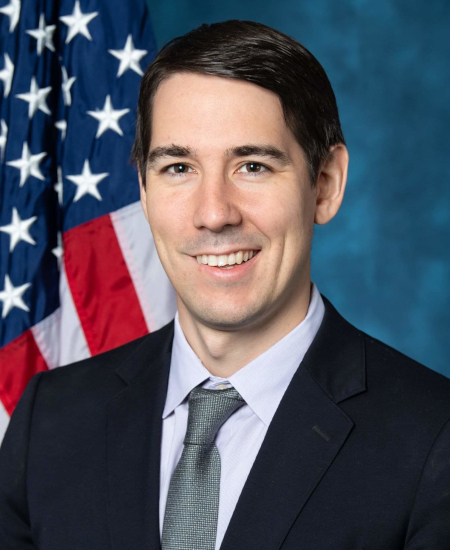
Rep. Josh Harder
Sponsored bills
Smoke Exposure Crop Insurance Act of 2023 This bill requires the federal crop insurance program (FCIP) to provide for the research and development of a policy to insure wine grapes (including wine grapes produced in California, Oregon, and Washington) against losses due to wildfire smoke exposure. (The term policy means an insurance policy, plan of insurance, provision of a policy or plan of insurance, and related materials.) The Federal Crop Insurance Corporation, the agency that finances FCIP operations, must make any resulting policy available that meets specified FCIP requirements. The FCIP must also submit a report to Congress on the research and any resulting policy. The report must include the feasibility of a policy that allows producers to claim an indemnity through post-harvest, post-vinification testing if such testing demonstrates smoke damage that was not detectable prior to harvest.
Fair Access to Agriculture Disaster Programs Act This bill waives the adjusted gross income limitations for payments or benefits under specific Department of Agriculture (USDA) disaster assistance programs for a person or legal entity that derives a portion of their income from agriculture. (Currently, a person or entity is not eligible to receive certain benefits during a crop, fiscal, or program year if their average gross income exceeds $900,000.) Specifically, in the case of an excepted payment or benefit, the adjusted gross income limitation is waived if 75% or more of the average adjusted gross income for the person or entity is derived from farming, ranching, or silviculture activities. These activities include agritourism, direct-to-consumer marketing of agricultural products, and the sale of agricultural equipment owned by such person or entity. The bill applies to the USDA Livestock Indemnity Program; Livestock Forage Disaster Program; Emergency Assistance for Livestock, Honey Bees, and Farm-Raised Fish Program; Tree Assistance Program; and Noninsured Crop Disaster Assistance Program.
Increasing Land Access, Security, and Opportunities Act This bill provides statutory authority for and expands the Farm Service Agency's (FSA's) Increasing Land, Capital, and Market Access Program (the Increasing Land Access Program) for farmers, ranchers, and forest owners. Specifically, the FSA must make competitive grants to, enter into cooperative agreements with, or provide other capital support to eligible entities (e.g., state or local governments, Indian tribes, nonprofit organizations, and institutions of higher education) to provide direct assistance to farmers, ranchers, and forest owners who are (1) historically underserved, or (2) operating in high-poverty areas. The bill specifically excludes from assistance any foreign-based or foreign-owned corporation. The direct assistance may include payments to intended beneficiaries to acquire real property (including air rights and water rights), secure clear title on an heirs' property farmland, and improve or remediate land, water, and soil. Eligible entities may also use grants (1) to provide direct assistance to intended beneficiaries in assessing, purchasing, acquiring, or retaining eligible land; (2) for activities designed to support farm establishment and long-term viability; and (3) to provide technical assistance. The FSA must establish a stakeholder committee and, in collaboration with the committee, develop a process for evaluating proposals and distributing funds to eligible entities. In developing this process, the FSA must consider perspectives from diverse stakeholders, diverse geographic distribution, and diverse farming models, practices, and purposes.
Maddy summaryThis bill prohibits federal involvement in commercial greyhound racing, live lure training, and open field coursing by banning interstate activities related to these practices. It makes it unlawful to conduct betting on greyhound races (including remote gambling), use live animals as bait, or transport animals for these purposes. The law specifically targets the declining greyhound racing industry (now operating at only two tracks in West Virginia), banning federal facilitation of betting, live bait use, and interstate transport of animals for racing or training. It does not affect horse racing or state laws already prohibiting these activities in most states.
Maddy summaryThe FAIR Leave Act (HR 5037) repeals a time limitation on leave for spouses that was part of the Family and Medical Leave Act (FMLA). This provision previously restricted the amount of leave employees could take to care for a spouse with a serious health condition. By removing this restriction, the bill allows workers to take more leave without a prior cap for this specific purpose. The policy change directly affects employees needing leave to support a spouse's medical needs under the FMLA.
Maddy summaryHR 4963, the Tax Fairness for Workers Act, would restore tax deductions for certain employee expenses. It creates an above-the-line deduction for union dues and expenses paid by wage-earning employees, and allows miscellaneous itemized deductions for other work-related expenses (like uniforms or supplies) that were previously disallowed after 2017 tax law changes. These provisions directly affect employees who pay union dues or incur qualifying job-related costs. The bill amends specific sections of the Internal Revenue Code to make these deductions available for taxable years beginning after December 31, 2022. It does not change tax rates or provide new benefits, only reinstating previously eliminated deductions for eligible workers.
Maddy summaryHR 4999, the ALYSSA Act, requires school districts receiving federal education funds to install silent panic alarms in every elementary and secondary school. These alarms, defined as manual devices for signaling life-threatening emergencies (like active shooters or lockdowns), must be used to alert law enforcement during security crises. The bill amends the Elementary and Secondary Education Act to make this requirement a condition for receiving federal funds, directly affecting all local educational agencies that receive such funding. It mandates that schools be prepared for security emergencies through these silent alarm systems, with no mention of funding specifics or implementation details beyond the basic requirement.
Maddy summaryHRES 578 is a non-binding House resolution calling for the immediate release of Eyvin Hernandez, a U.S. citizen and Los Angeles County public defender wrongfully detained by Venezuela since March 2022. The resolution urges U.S. officials, including the President and Secretary of State, to press Venezuela for his release and condemns Venezuela’s practice of detaining U.S. citizens for political purposes. It specifically references Hernandez’s wrongful detention without evidence or fair trial, noting his status as a Department of State-designated wrongfully detained individual. The resolution expresses support for Hernandez and other Americans detained abroad, without creating new legal requirements or funding.
Maddy summaryHR 4911 establishes a 3-year pilot program to improve law enforcement responses to mental health crises. It provides grants of up to $300,000 each to community mental health centers (in each of four U.S. census regions) to place licensed social workers with small law enforcement agencies (under 100 officers). These social workers will coordinate on calls involving mental health issues, aiming to enhance safety for both officers and community members. The program, funded by $2.5 million over three years, expires after three years, requiring the Attorney General to report on outcomes to Congress.