

Maddy summaryThis bill expands eligibility for marriage and family therapists in the National Health Service Corps Loan Repayment Program. It allows therapists to complete a state-accredited postgraduate clinical training program instead of one accredited by the national Commission on Accreditation for Marriage and Family Therapy Education. The change directly affects therapists seeking loan repayment assistance by providing a more flexible pathway to qualify. This policy modification aims to increase participation in the program by reducing accreditation barriers for therapists in specific states.
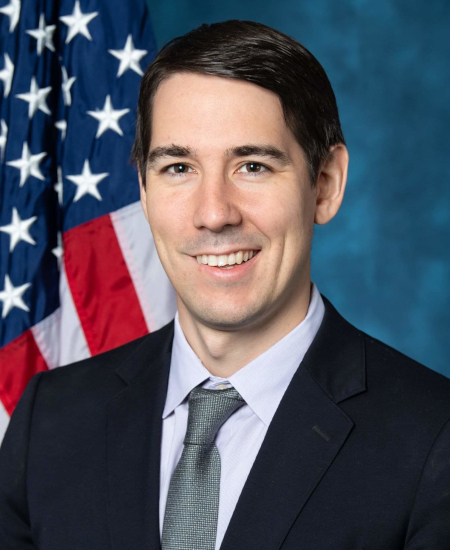
Rep. Josh Harder
Sponsored bills
CONtinuity in Necessary Evaluative Crisis Treatment Act of 2024 or the CONNECT Act of 2024 This bill requires the Substance Abuse and Mental Health Services Administration to award grants to certain crisis centers for providing follow-up care to individuals who receive suicide prevention and crisis intervention services.
Maddy summaryThis bill increases loan limits for farmers under the Farm Service Agency. It raises the maximum farm ownership loan amount from $600,000 to $850,000 (and guaranteed loans from $1.75 million to $3.5 million), and operating loans from $400,000 to $750,000 (guaranteed from $1.75 million to $3 million). It also doubles the microloan cap from $50,000 to $100,000. Additionally, the bill creates a new process allowing distressed guaranteed loans to be refinanced into direct loans if borrowers can't resolve issues with lenders and the farm operation can become financially viable. These changes directly affect farmers and ranchers seeking credit through the Farm Service Agency.
Maddy summaryThis bill creates a new USDA program to directly connect fresh produce producers with community food programs serving low-income individuals. It requires the Secretary of Agriculture to contract with eligible entities (like farms, distributors, and nonprofits) to buy U.S.-grown fresh produce - ensuring at least seven varieties per delivery, locally sourced when possible, and aligned with dietary guidelines - and distribute it to qualifying organizations (such as food banks, schools, and tribal programs) facing food insecurity. The program prioritizes contracts with beginning farmers, socially disadvantaged farmers, veteran farmers, and small/mid-sized family farms, while mandating 30% upfront payment and requiring annual reports on distribution metrics and program effectiveness to Congress. It aims to strengthen local food supply chains, reduce farm waste, and improve access to fresh produce for vulnerable communities.
Maddy summaryThe Affordable Connectivity Program Extension Act of 2024 allocates $7 billion in funding for the Affordable Connectivity Program (ACP) during fiscal year 2024. The ACP provides subsidies to low-income households to help cover the cost of internet service and connected devices like laptops or tablets. This funding ensures the program can continue supporting eligible households throughout the year, with the money remaining available until fully spent. The bill extends existing program funding without changing eligibility criteria or service requirements.
Maddy summaryHRES 946 is a symbolic House resolution recognizing "Gold Shield Families" - defined as the families of fallen police officers, firefighters, EMTs, correction officers, emergency dispatchers, and emergency service providers who died in the line of duty. The resolution formally honors their sacrifices and resilience, affirming that their hardships should not be forgotten. It includes no new funding, regulations, or policy changes; instead, it serves as a commemorative gesture expressing national gratitude. The resolution directs that a copy be sent to the President and made public to publicly recognize these families' contributions.
Maddy summaryHR 1147, the Whole Milk for Healthy Kids Act of 2023, allows schools participating in the National School Lunch Program to offer whole milk as an option during lunch. It amends the school lunch law to explicitly permit schools to serve flavored and unflavored whole milk alongside reduced-fat, low-fat, and fat-free milk choices for students. The bill also requires the Secretary of Agriculture to adjust meal regulations to account for saturated fat from whole milk, ensuring it doesn't count against meal fat limits. This change directly affects participating schools and the students who receive school lunches, expanding their milk beverage options.
Maddy summaryThis bill increases funding for cancer research by directing an additional 25% of the 2022 National Cancer Institute (NCI) budget annually through 2028. It also requires the Health and Human Services Secretary to study the causes of cancer drug shortages - including supply chain issues, FDA approval delays, and lack of generic drugs - and submit a report with solutions to Congress within one year. The key provisions directly affect NCI-funded research programs and aim to improve cancer drug availability for patients and healthcare providers. The bill focuses on concrete policy changes: boosting research funding and mandating a systematic review of drug shortages, without advocating for specific outcomes.
Maddy summaryThis bill reauthorizes and extends funding for programs addressing substance use disorders and opioid addiction, including residential treatment for pregnant and postpartum women, first responder training, and community recovery initiatives. It increases funding levels for these programs, adds xylazine to Schedule III of controlled substances, and requires a study on remote monitoring for patients prescribed opioids. The bill also expands Medicaid coverage requirements for medication-assisted treatment and mandates reporting on mental health condition data alongside substance use disorder data, directly affecting individuals with substance use disorders, healthcare providers, and state and tribal governments.
Maddy summaryHRES 921 is a ceremonial resolution honoring the 30th anniversary of the National Guard Youth Challenge Program. It recognizes the program’s work supporting at-risk youth aged 16-18 by providing free, structured education and discipline through a 5.5-month residential phase (covering life skills, leadership, academics, and physical fitness) followed by a 12-month mentoring phase. The resolution highlights that the program, operating in 28 states and territories, has served over 8,000 cadets annually and helped more than 200,000 youth graduate with academic credentials since its inception. The resolution expresses the House’s reaffirmed commitment to the program’s mission of developing character and preparing youth for societal success.