Codifying Useful Regulatory Definitions Act or the CURD Act This bill provides statutory authority for a definition of natural cheese . Under the bill, natural cheese is defined as cheese that is produced from animal milk or certain dairy ingredients and is produced in accordance with established cheese-making standards.
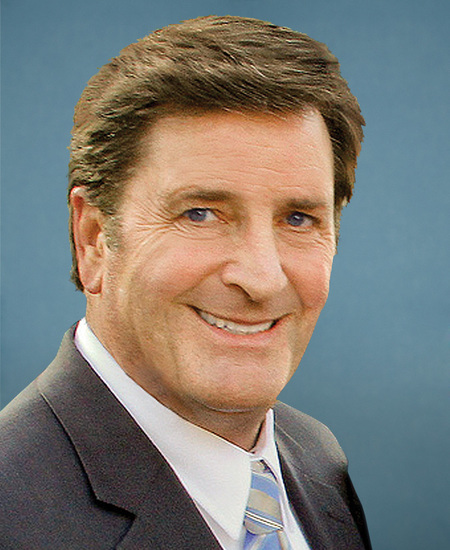
Rep. John Garamendi
Sponsored bills
Medicare IVIG Access Enhancement Act This bill requires the Centers for Medicare & Medicaid Services to establish a five-year demonstration project to evaluate the benefits of providing Medicare coverage and payment for items and services needed for the in-home administration of intravenous immune globulin to treat chronic inflammatory demyelinating polyneuropathy or multifocal motor neuropathy. Beneficiary participation shall be voluntary.
Making Access To Cleanup Happen Act of 2021 or the MATCH Act of 202 1 This bill directs the Department of Agriculture (USDA) to (1) identify a list of emergency watershed protection measures the cost of which may be incurred by a state, local government, or Indian tribe prior to entering into an agreement with USDA under the Emergency Watershed Protection Program; and (2) develop procedures, including appropriate deadlines, to be implemented at the state level, through which such entities may request and incur the cost for additional emergency watershed protection measures. USDA must consider any applicable pre-agreement costs incurred by a state, local government, or Indian tribe for undertaking emergency watershed protection measures as meeting part of its contribution towards the project costs.
Basic Assistance for Students In College Act or the BASIC Act This bill directs the Department of Education (ED) to award planning and implementation grants to institutions of higher education in order to identify and meet the basic needs of students, including food, housing, transportation, and health care. ED must also implement an agreement to (1) share data with other federal agencies in order to identify students who may be eligible for certain federal benefits; and (2) coordinate efforts to enroll those students in federal benefits programs, including Medicaid and the Supplemental Nutrition Assistance Program.
Hastening Arms Limitations Talks Act of 2021 or the HALT Act of 2021 This bill prohibits the obligation or expenditure of funds to conduct an explosive nuclear weapons test that produces yield unless (1) the President details any change to the condition of the U.S. nuclear weapons stockpile from the previous year, and (2) Congress enacts a joint resolution approving the test. Further, the bill declares it to be U.S. policy to lead international negotiations on specific arms-reduction measures.
Supplemental Security Income Restoration Act of 2021 This bill modifies eligibility for, and other components of, the Supplemental Security Income (SSI) program, including by (1) increasing applicable income and resource limits used to determine SSI eligibility, (2) equalizing treatment of married couples when both spouses receive SSI as compared to two unmarried individuals, and (3) eliminating the penalty on SSI applicants or recipients who transfer resources to another individual for less than fair market value.
Orland Project Transfer Act This bill requires the Bureau of Reclamation to transfer title and water rights held by the United States in the Orland Project (located in Glenn, Tehama, and Colusa counties in California) to a qualifying entity. Qualifying entity refers to a state agency, joint action or powers agency, water users association, Indian tribe, or tribal utility authority that operates certain water facilities. The bill specifies four separate transfers related to the Orland Project. These transfers are for (1) the Stony Gorge Dam; (2) the facilities and structures of the project that do not include the Stony Gorge Dam; (3) the irrigation distribution system of the project; and (4) the office building, maintenance yard, and land used to operate and maintain the project. Prior to each transfer, Reclamation must consult with the California Department of Water Resources' Division of Safety of Dams and the qualifying entity to identify any dam safety issues that require remediation. A transferred portion shall not be considered a federal Reclamation project. In addition, the bill outlines the use of proceeds from the sale of water from the Stony Gorge Dam and Reservoir. In particular, proceeds must be used to pay for the costs of safety improvements. The bill authorizes Reclamation to make clerical and typographical corrections to a November 2, 2020, map of the Orland Project. Reclamation must make the map publicly available on its website.

Nullifying Opportunities for Variants to Infect and Decimate Act or the NOVID Act This bill establishes the Pandemic Preparedness and Response Program to coordinate and carry out the U.S. government's global health response to COVID-19, its variants, and other pathogens with pandemic potential. As part of the program, the bill requires, within 30 days, the development of a comprehensive strategy to end the COVID-19 pandemic. The strategy must outline efforts to increase COVID-19 vaccinations worldwide, including through the immediate release of the COVID-19 vaccine doses that the United States committed to sending abroad. The bill also requires a long-term strategy for the program to prevent future pandemics.
Canal Conveyance Capacity Restoration Act This bill authorizes the Bureau of Reclamation to provide financial assistance for various projects in California to mitigate the sinking or settling of the ground (i.e., subsidence mitigation), specifically for projects related to the Friant-Kern Canal, the Delta-Mendota Canal, and certain parts of the San Luis Canal/California Aqueduct.
Paycheck Fairness Act This bill addresses wage discrimination on the basis of sex, which is defined to include pregnancy, sexual orientation, gender identity, and sex characteristics. Specifically, it limits an employer's defense that a pay differential is based on a factor other than sex to only bona fide job-related factors in wage discrimination claims, enhances nonretaliation prohibitions, and makes it unlawful to require an employee to sign a contract or waiver prohibiting the employee from disclosing information about the employee's wages. The bill also increases civil penalties for violations of equal pay provisions. Additionally, the Equal Employment Opportunity Commission (EEOC) and the Office of Federal Contract Compliance Programs must train EEOC employees and other affected parties on wage discrimination. The bill directs the Department of Labor to (1) establish and carry out a grant program to provide training in negotiation skills related to compensation and equitable working conditions, (2) conduct studies to eliminate pay disparities between men and women, and (3) make available information on wage discrimination to assist the public in understanding and addressing such discrimination. The bill establishes the National Award for Pay Equity in the Workplace for an employer who has made a substantial effort to eliminate pay disparities between men and women. It also establishes the National Equal Pay Enforcement Task Force to address compliance, public education, and enforcement of equal pay laws. Finally, the bill requires the EEOC to issue regulations for collecting from employers compensation and other employment data according to the sex, race, and national origin of employees for use in enforcing laws prohibiting pay discrimination.