

Lifting Immigrant Families Through Benefits Access Restoration Act of 2021 or the LIFT the BAR Act of 2021 This bill repeals certain limits on the eligibility of noncitizens who lawfully reside in the United States for federal means-tested programs, including Medicaid, the Children's Health Insurance Program (CHIP), programs funded through Temporary Assistance for Needy Families (TANF) grants, Supplemental Security Income (SSI), and certain nutrition and housing programs.
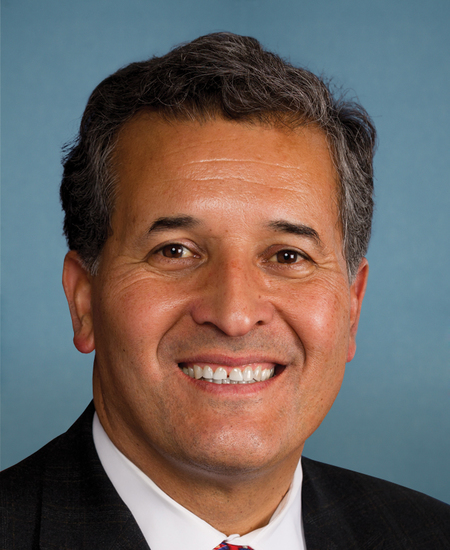
Rep. Juan Vargas
Sponsored bills
Frederick Douglass Trafficking Victims Prevention and Protection Reauthorization Act of 2021 This bill reauthorizes through FY2026 and revises programs and activities to support survivors of human trafficking and prevent such trafficking domestically and abroad. The bill expands and authorizes programs for survivors, including a program to prevent re-exploitation. It also extends through FY2026 a special assessment on certain persons convicted of a human trafficking offense, which funds programs for human-trafficking survivors. Additionally, the bill provides privacy and other protections for survivors, including specified financial protections and protections against retaliation for survivors who pursue civil claims against a perpetrator. The bill also allows courts to reduce sentences for certain individuals who commit human trafficking crimes as minors. To prevent trafficking domestically, federal departments must incorporate anti-trafficking efforts into contracting activities and personnel policies, and the bill supports private sector efforts to address human trafficking in its policies and services. Furthermore, the bill supports the identification, investigation, and prosecution of human trafficking crimes, with an expanded focus on forced labor. To prevent trafficking globally, the bill prohibits access to a trade program for developing countries and otherwise restricts development assistance for countries that fail to meet minimum standards for eliminating trafficking. It also changes the criteria for determining whether a country has met applicable standards. In addition, the bill authorizes sanctions on persons convicted of severe forms of trafficking and requires integration of counter-trafficking activities into foreign assistance programs. The bill also requires reporting by the Government Accountability Office, federal agencies, and states concerning human trafficking.
Judicial Understaffing Delays Getting Emergencies Solved Act or the JUDGES Act This bill requires the appointment of additional U.S. district court judges, converts certain temporary district court judgeships into permanent judgeships, and requires the Government Accountability Office to report on vacant or underused federal courthouses. Specifically, the bill requires the appointment of 39 district court judges on or after January 21, 2025, in specified judicial districts in Arizona, California, Colorado, Delaware, Florida, Georgia, Idaho, Indiana, Iowa, New Jersey, New Mexico, New York, and Texas. Further, 38 district court judges must be appointed on or after January 21, 2029, in specified judicial districts in Arizona, California, Colorado, Delaware, Florida, Georgia, Indiana, New Jersey, New York, and Texas. Additionally, the bill converts certain temporary district court judgeships to permanent judgeships in specified judicial districts in Alabama, Arizona, California, Florida, Kansas, Missouri, New Mexico, North Carolina, and Texas.
Higher Education Dream Act of 2021 This bill prohibits institutions of higher education that receive federal student aid from discriminating against Dreamer students (e.g., students who have been granted Deferred Action for Childhood Arrivals status) based on their immigration status, including charging out-of-state tuition to students who would qualify as residents of the state. The bill also makes Dreamer students eligible for federal financial aid. The bill prohibits the use or publication of certain identifiable information related to such students, subject to civil penalties.
Supreme Court Ethics Act This bill establishes a new statutory requirement for the Judicial Conference of the United States to issue a judicial code of conduct for judges and justices of U.S. courts, including Justices of the Supreme Court. Currently, the Judicial Conference issues a code of conduct for judges of U.S. courts (but not for Justices of the Supreme Court).
Eliminating Debtor's Prison for Kids Act of 2021 This bill directs the Department of Justice to make grants for states to provide mental and behavioral health services to at-risk youth, including juveniles in secure detention facilities or secure correctional facilities in the state. A state that receives a grant must (1) prohibit certain fees from being imposed on juvenile offenders or their parents or guardians; and (2) report, for inclusion in a national report, certain information about fines and fees imposed on adults and juveniles in the criminal justice system.
Daniel Anderl Judicial Security and Privacy Act of 2021 This bill generally prohibits federal agencies and private businesses from publicly posting the personally identifiable information (e.g., home addresses) of federal judges and their immediate family members. It also (1) requires information to be removed upon written request from the federal judge concerned, (2) prohibits data brokers from purchasing or selling such information, and (3) establishes programs to protect such information at the state and local level and to enhance security for judges.
Repatriate Our Patriots Act This bill protects certain veterans of the Armed Forces from removal from the United States and provides such veterans with an expedited procedure for naturalization. The bill applies to special veterans , defined as persons who served in the active Armed Forces who were (1) honorably discharged or released; (2) not convicted of various crimes, including voluntary manslaughter, murder, rape, or terrorism; and (3) not a child abuser or pedophile. Special veterans shall not be removed from the United States, and the Department of Homeland Security (DHS) shall cancel any pending removal proceedings or orders against any such veterans. DHS shall establish a program to permit such veterans who were already removed from the United States to return to as an alien with permanent residence status. Special veterans shall be naturalized upon filing an application, paying the relevant fees, and taking an oath of allegiance. DHS shall take steps to ensure such naturalization applications are pending for no longer than 90 days.
Fair and Equal Housing Act of 2021 This bill prohibits discrimination, in the context of various housing practices, against individuals based on their sexual orientation or gender identity.
The People's Response Act This bill establishes multiple grant programs and requirements to promote qualified approaches to community safety. These are programs or services that are disconnected from carceral institutions (e.g., law enforcement, child welfare services, and immigration enforcement). Specifically, the bill establishes the Division of Community Safety within the Department of Health and Human Services (HHS) to administer the grants and carry out related activities. These include grants for community-based organizations to support qualified approaches to community safety, such as unarmed first responder agencies and 9-1-1 diversion programs; neighborhood-level interventions, including safe passage to school and violence interruption programs; behavioral health treatment, nutrition support, and other public health programs; housing security programs; and programs for youth and families, survivors of violence, and individuals exiting incarceration or criminal supervision. Additionally, the division must administer grants pertaining to qualified approaches for community safety for state and local governments and hiring and training first responders. The bill also establishes an advisory board to oversee the division's activities. Membership on the board must reflect the racial, ethnic, and other demographic diversities of the United States. The board must also include members who have personal experience with the criminal justice system. Furthermore, HHS must set up (1) a federal health response unit to respond to any public health emergency, assist with qualified approaches to community safety, and provide resources for safe and inclusive schools; and (2) an interagency task force to promote qualified approaches to community safety across federal programs.