This resolution recognizes the cultural and historical significance of the Lunar New Year. The resolution expresses, in observance of this Lunar New Year, the Year of the Tiger, the deepest respect of the House of Representatives for Asian Americans and all individuals throughout the world who celebrate this significant occasion. The resolution wishes Asian Americans and all individuals who observe this holiday a happy and prosperous new year.
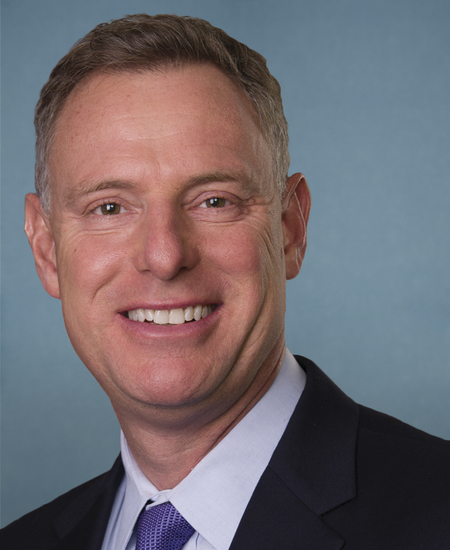
Rep. Scott H. Peters
Sponsored bills
This bill makes emission mitigation projects that support the use of land-based power sources to supply energy to passenger vessels at berth (i.e., shore power) eligible for grants through the Port Infrastructure Development Program. (This program provides competitive grants for projects to improve the safety, efficiency, or reliability of the movement of goods into, out of, around, or within a port.)
National Climate Adaptation and Resilience Strategy Act This bill requires the President to identify or appoint a Chief Resilience Officer that must (1) direct a government-wide effort to build resilience to climate change vulnerabilities in the United States in collaboration with existing federal initiatives and interagency adaptation efforts, and (2) create working groups. The officer and the working groups must jointly submit to the President and Congress a strategy for the government to address such vulnerabilities in partnership with nonfederal partners, a plan to implement the strategy, and updates by specified deadlines.
This resolution expresses support for the goals and ideals of Endometriosis Awareness Month. Endometriosis is a painful condition in which the tissue that normally lines the inside of the uterus grows outside the uterus.
Refuge From Cruel Trapping Act of 2021 This bill prohibits, with specified exceptions, the use or possession of body-gripping traps in the National Wildlife Refuge System. The bill imposes on persons who possess or use such traps in the system (1) for a first offense, a civil fine of up to $500 for each body-gripping trap possessed or used; and (2) for subsequent offenses, a civil fine of up to $1,000 for each body-gripping trap possessed or used, imprisonment for up to 180 days, or both such a civil fine and imprisonment. The bill makes any body-gripping traps that are possessed or used in violation of this bill, and any wildlife captured by the use of such traps, including the pelts and raw fur, subject to civil forfeiture. Persons found to be in violation of such prohibition shall pay all associated court costs.
Leading Infrastructure For Tomorrow’s America Act or the LIFT America Act This bill establishes several programs and incentives to modernize the nation's communications, drinking water, energy, transportation, health care, and other related infrastructure. For example, the bill provides incentives to make broadband internet more accessible and affordable. It also establishes grants to implement next generation 9-1-1 services. In addition, it supports drinking water programs, including the drinking water state revolving fund program. Further, it provides grants to treat perfluoroalkyl or polyfluoroalkyl substances (commonly referred to as PFAS) in drinking water and to replace lead service lines. The bill establishes a variety of programs to support clean energy infrastructure and address climate change, including efforts to (1) modernize the electric grid and make it more resilient, efficient, and secure; (2) increase energy efficiency in buildings; and (3) support renewable energy infrastructure. Further, it provides incentives for vehicle infrastructure, such as incentives to develop infrastructure for electric vehicles and grants to reduce air pollution at ports by electrifying port infrastructure. Additionally, the bill establishes grants and programs for health care infrastructure, including by providing support for the Centers for Disease Control and Prevention, laboratories, and state, local, tribal, and territorial health departments. Finally, the bill reauthorizes grant programs to remediate brownfield sites (i.e., sites contaminated with hazardous substances) through FY2026.

This resolution expresses support for the goals and ideals of Korean American Day and honors the 119th anniversary of the arrival of the first Korean immigrants to the United States.
Responsible Budgeting Act This bill establishes new procedures and requirements for suspending the federal debt limit and considering debt reduction legislation.
Free At-Home Tests for All Act This bill requires the Department of Health and Human Services (HHS) to provide free antigen diagnostic tests for COVID-19 (i.e., rapid tests) to U.S. residents. The bill also automatically grants emergency use authorization for rapid tests approved by certain foreign regulators. Specifically, HHS must purchase a sufficient quantity of rapid tests to provide two tests per week at no cost to each resident for the 12 months following the bill's enactment. The President may use authorities available under the Defense Production Act of 1950 to obtain the tests. That act confers upon the President a broad set of authorities to influence domestic industry in order to provide essential materials and goods needed for the national defense. In addition, HHS must conduct outreach about the availability of free rapid tests to Medicare and Medicaid participants and make the tests available through those programs. The bill also automatically grants emergency use authorization during the public health emergency for rapid tests that are listed for emergency use by (1) the World Health Organization (WHO), or (2) a foreign regulator that is a stringent regulatory authority as defined by the WHO for purposes of medicine procurement. The Food and Drug Administration (FDA) may rescind authority for, or otherwise regulate, a rapid test that was automatically authorized. Additionally, the FDA must establish a permanent advisory committee focused on diagnostic and serological testing for public health needs.
Maddy summaryThis bill (H.J.Res. 68) is a symbolic, procedural measure that would require the President to issue an annual proclamation designating a day as "Democracy Day." It directs the President to call on state/local governments and citizens to observe the day through programs and activities, with January 6 referenced as a potential date. The bill does not create new government programs or change existing laws - it only establishes a recurring presidential proclamation. It directly affects federal, state, and local governments by encouraging them to participate in annual observances. The bill has no budgetary impact and remains focused on promoting civic engagement through a designated day.