

Peace Corps Reauthorization Act of 2022 This bill reauthorizes through FY2024 and modifies operations of the Peace Corps. Changes include increasing the readjustment allowance paid to volunteers when their service terminates and providing statutory authority for an executive order that grants returned volunteers noncompetitive eligibility for federal civil-service positions. Additionally, the bill entitles returned volunteers to sixty days of health care benefits. The Peace Corps must also provide volunteers with information about enrolling in U.S. health plans before service termination and mental health care during and after service. The bill also includes provisions to address involuntary termination of Peace Corps service in emergencies, including by expediting re-enrollment of involuntarily terminated volunteers. The Peace Corps must also adequately insure volunteers' safety and must coordinate with the Department of State to periodically update agreements concerning the security of Peace Corps volunteers and staff abroad. The bill also authorizes Peace Corps to recruit domestically based volunteers to serve in the United States at the request of another agency or to provide services in a host country virtually, modifies the Peace Corps National Advisory Council's membership and functions, expands whistleblower protections for volunteers, increases the rate of pay that applies to a volunteer's workers compensation claim, requires Peace Corps to implement a zero tolerance drug use policy regarding volunteer involvement with illegal drugs, and emphasizes the use of the internet in Peace Corps programs. Furthermore, the bill requires reporting, including on the provision of mental health services to volunteers.
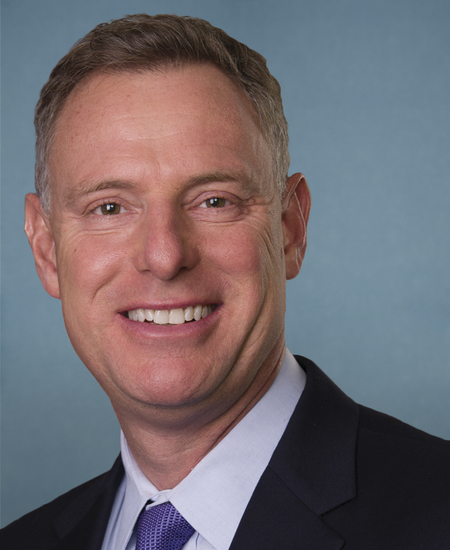
Rep. Scott H. Peters
Sponsored bills
Loan Forgiveness for Educators Act of 2022 This bill expands the Teacher Loan Forgiveness program. Among other provisions, the bill (1) renames the program the Educator Loan Forgiveness program, (2) expands program eligibility to early childhood educators and program directors serving in early childhood education programs and school leaders serving in public high-need schools, and (3) establishes a program in which the Department of Education cancels monthly student loan payments during qualifying service and provides complete loan forgiveness after five years of service.
Improving Seniors' Timely Access to Care Act of 2022 This bill establishes several requirements and standards relating to prior authorization processes under Medicare Advantage (MA) plans. Specifically, MA plans must (1) establish an electronic prior authorization program that meets specified standards, including the ability to provide real-time decisions in response to requests for items and services that are routinely approved; (2) annually publish specified prior authorization information, including the percentage of requests approved and the average response time; and (3) meet other standards, as set by the Centers for Medicare & Medicaid Services, relating to the quality and timeliness of prior authorization determinations.
Supporting Medicare Providers Act of 2022 This bill extends a payment increase under Medicare's physician fee schedule through the end of 2023 (currently set to expire at the end of 2022).
Nationwide Right To Unionize Act This bill provides authorization for labor agreements to require membership in a labor organization as a condition of employment regardless of state law (thus preempting state laws that prohibit such agreements).
Hong Kong Business Integrity and Transparency Act This bill requires the Department of Commerce to submit periodic reports to Congress on the protection of consumer information in the possession of U.S. firms operating in Hong Kong. The report must include information on requests by the government of Hong Kong for consumer information, content takedowns, or law enforcement assistance.
Reese's Law This act requires the Consumer Product Safety Commission (CPSC) to establish a product safety standard with respect to batteries that pose an ingestion hazard (i.e., button cell or coin batteries) and consumer products containing the batteries. Specifically, the batteries and consumer products with these batteries must include a warning label that clearly identifies the hazard of ingestion and instructs consumers to keep the batteries out of the reach of children, seek immediate medical attention if a battery is ingested, and follow any other consensus medical advice. Consumer products containing the batteries must also include a battery compartment that eliminates or adequately reduces the risk of injury from battery ingestion by children who are six years of age or younger. Additionally, such batteries, if sold separately or included separately with a product, must comply with federal child-resistant packaging regulations. The act exempts from these requirements (1) toy products that are in compliance with certain existing battery accessibility and labeling requirements, and (2) batteries that are in compliance with the marking and packaging provisions of the American National Standards Institute (ANSI) Safety Standard for Portable Lithium Primary Cells and Batteries. The act also provides for compliance with the requirements by relying on a voluntary standard that is approved by the CPSC before it establishes the standard required by this act.
Madeleine K. Albright Democracy in the 21st Century Act This bill establishes programs to promote democracy abroad, authorizes Department of State and U.S. Agency for International Development (USAID) democracy programs from FY2023 through FY2027, and addresses related issues. The State Department must establish programs (1) to defend democracy globally, including by enhancing the ability of the State Department and USAID to respond quickly and flexibly to democratic openings and backsliding; (2) to support efforts to enhance government transparency and other activities related to reducing corruption; and (3) for democracy research and development, such as activities to drive innovation in State Department, USAID, and National Endowment for Democracy (NED) responses to complex challenges to democracy. The bill establishes the Democracy in the 21st Century Fund, to be administered by the State Department, to support the programs established by this bill and other related activities. U.S. government assistance for democracy programs shall not be subject to the prior approval of any foreign government. The bill also protects the identities of implementing partners of certain State Department, USAID, and NED assistance programs in countries that are undemocratic or have engaged in gross violations of civil and political rights, including by exempting the names of partners for democracy programs in such countries from Freedom of Information Act requests. The President must report to Congress a comprehensive strategy to promote democracy abroad.
No Cost for Monkeypox Testing Act of 2022 This bill requires specified public health care programs and private health insurance to cover, through December 31, 2023, testing for monkeypox without imposing cost-sharing, including deductibles, coinsurance, and copayments. (Monkeypox is a viral disease that is endemic to parts of Africa and causes symptoms similar to, but less severe than, smallpox.) The bill also establishes procedures for uninsured individuals to access such testing at no cost.
Save Our Sequoias Act This bill provides for the conservation of giant sequoia trees ( Sequoiadendron giganteum ) in California, including by providing statutory authority for the Giant Sequoia Lands Coalition; directing the coalition to submit a Giant Sequoia Health and Resiliency Assessment; declaring an emergency on certain public lands and allowing officials to carry out protection plans during the emergency to respond to the threat of wildfires, insects, and drought; directing the Department of the Interior to develop and implement a Giant Sequoia Reforestation and Rehabilitation Strategy; and establishing a variety of programs and funds to support the conservation of giant sequoias.