

Maddy summaryHR 1720, the Ocean Pollution Reduction Act II, directly affects the City of San Diego's Point Loma Wastewater Treatment Plant by imposing stricter discharge limits under federal water pollution rules. It requires the plant to maintain a deep ocean outfall (300+ feet deep, 4+ miles from shore) and sets decreasing annual limits on total suspended solids pollution, starting at 12,000 metric tons in 2024 and reducing to 9,942 metric tons by 2029. The bill also mandates 80% removal of suspended solids monthly, 58% removal of biochemical oxygen demand annually, and requires 10 years of ocean monitoring data before new permits. Additionally, it sets a target for producing 83 million gallons per day of water suitable for potable reuse by 2037.
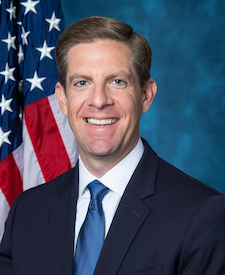
Rep. Mike Levin
Sponsored bills
Maddy summaryHR 3396, the Fire Department Repayment Act of 2023, requires the Secretaries of Agriculture, Interior, Homeland Security, and Defense to establish standard procedures for federal fire suppression cost share agreements within one year. It mandates reviewing existing agreements to align them with local cooperative fire protection agreements and conducting second-level reviews after wildfires, involving state and local fire organizations. The bill directly affects fire departments and agencies participating in these cost-sharing arrangements under the Reciprocal Fire Protection Act. Key changes include standardized procedures for agreement management and post-wildfire reviews to ensure cost-sharing compliance.
Maddy summaryHR 3269, the Law Enforcement Innovate to De-Escalate Act, exempts specific less-than-lethal projectile devices from federal firearm taxes and National Firearms Act restrictions. The bill defines these devices as those firing projectiles at under 500 feet per second and designed not to cause death or serious injury. This directly affects law enforcement agencies using such devices and manufacturers producing them, by removing tax burdens and registration requirements. The key change is creating a clear legal exemption for these devices under federal law, streamlining their use for de-escalation purposes.
Maddy summaryThis bill creates a new Medicare payment model for emergency medical services (EMS) that allows coverage when ambulance providers deliver critical care on-site without transporting patients to a hospital. It directly affects Medicare beneficiaries receiving such on-site emergency care and ambulance providers who would previously not be reimbursed for non-transport services. The key provision requires Medicare to pay for these services at rates matching what would have been paid for transport, based on state protocols and emergency call responses, for a 5-year trial period. A report due 4 years after implementation will evaluate impacts on patient outcomes, system efficiency, and regional access.
Maddy summaryHR 8796, the "Stop Comstock Act," removes outdated restrictions from federal law that previously banned the distribution of materials related to contraception and abortion as "obscene" or "indecent." The bill amends Title 18 and the Tariff Act by deleting references to "indecent," "immoral," "unlawful abortion," and "procuring abortion" from provisions governing obscene materials. It clarifies that the law only prohibits "obscene materials" in commerce, eliminating broad restrictions on reproductive health information. This directly affects internet platforms, healthcare providers, and individuals sharing reproductive health resources by removing legal barriers to their distribution.
Maddy summaryThis bill requires Medicare Advantage plans to implement electronic prior authorization systems by 2027 and publish detailed data on their approval and denial rates for medical services by 2026. It directly affects Medicare Advantage plans (private insurers offering Medicare coverage) and their enrollees (seniors 65+), mandating transparency about prior authorization decisions, processing times, and appeal outcomes. Key provisions include requiring plans to report annual statistics on request approvals/denials, average processing times, and use of technology, with this data published publicly by the Centers for Medicare & Medicaid Services. The bill also sets timelines for plan responses to prior authorization requests and mandates reports to Congress on implementation and impacts.
Maddy summaryHR 7017 adjusts the calculation for the health care insurance tax credit under the Internal Revenue Code. It allows taxpayers to reduce their tax credit amount by the Medicare premiums paid by household members (including themselves) for Medicare Parts A, B, C, or D, or Medicare supplemental coverage. This change directly affects households where members pay Medicare premiums and qualify for the tax credit. The adjustment applies to coverage months starting after December 31, 2024.
Maddy summaryHR 6790 establishes National Institutes of Health centers to advance research, early detection, and public awareness of rare kidney diseases, with a focus on rural and underserved communities. It mandates a federal study on genetic testing barriers, treatment patterns, and public awareness for rare kidney diseases affecting disproportionately impacted populations, including barriers to insurance coverage and access to specialists. The bill also funds nephrology training programs to increase specialists serving these communities and requires experiments to delay or prevent the need for dialysis and transplants. Total funding of $7 million is authorized for fiscal years 2024-2028 to support these research, education, and early intervention efforts.
Maddy summaryThis bill updates Medicare physician payment rules to improve stability and accuracy. It raises the budget neutrality threshold from $20 million (pre-2025) to $53 million in 2025, with annual indexing after 2026, to prevent excessive payment adjustments. The bill requires the Medicare program to correct budget neutrality payments based on actual service utilization data (not estimates) starting in 2025, and mandates updating direct cost inputs (like staff wages and equipment prices) every 5 years. It also caps annual changes to the physician payment conversion factor at 2.5% to limit sudden payment shifts, directly affecting Medicare physicians and healthcare providers receiving these payments.
Maddy summaryThis bill creates a Medicare buy-in option for retired or disabled first responders aged 50-64 who have lost employer health coverage. It allows them to enroll in Medicare Part A, B, and D (including prescription drug coverage) before age 65, with premiums calculated based on Medicare's average per-person costs. The coverage counts as "minimum essential coverage" under the Affordable Care Act, qualifying individuals for ACA premium tax credits and cost-sharing subsidies. It also establishes an oversight board and outreach grants to assist enrollment, while ensuring the program doesn't reduce benefits for existing Medicare beneficiaries or harm Medicare trust funds.