Maddy summaryThis bill designates the U.S. Postal Service facility at 201 East Battles Road in Santa Maria, California, as the "Larry Lavagnino Post Office Building." It updates all official references in federal laws, documents, and records to use this new name for the building. The change affects only the postal facility’s official designation and has no impact on postal operations or services. The bill was enacted on January 4, 2025, following approval by both chambers of Congress.
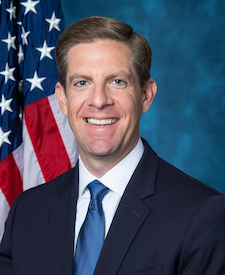
Rep. Mike Levin
Sponsored bills
Maddy summary# Summary of the EXPLORE Act Legislative Text This is a comprehensive legislative text (likely the "EXPLORE Act" - Enhancing Recreation Opportunities for People of All Abilities, and Veterans) that establishes several key initiatives to improve outdoor recreation access across Federal lands. ## Key Focus Areas: ### 1. Accessibility for People with Disabilities (Title II - Access America) - Requires comprehensive assessments of outdoor recreation facilities on Federal lands within 5 years - Mandates development of 3 new accessible trails per region for each agency (Forest Service, National Park Service, BLM, USFWS) within 1 year - Requires development of 2 new accessible recreation opportunities per region within 1 year - Requires making accessibility information available on public websites within 7 years - Requires development of accessible features including trail bridges, parking, and restrooms ### 2. Military and Veterans Programs - Requires educational materials for military members/veterans on accessing Federal lands free of charge within 2 years - Establishes Military Veterans Outdoor Recreation Liaisons within relevant agencies within 1 year - Requires a National Strategy for Military and Veteran Recreation within 1 year - Creates a pilot program for veteran employment in conservation positions - Promotes partnerships with organizations providing outdoor recreation for veterans ### 3. Youth Access - Requires a strategy to increase youth recreation visits to Federal lands within 2 years - Extends the "Every Kid Outdoors" program until September 30, 2031 - Focuses on increasing opportunities for underserved youth ### 4. Recreation Permitting Modernization (Title III) - Defines special recreation permits and establishes fee structures - Creates categories for different types of recreation permits - Establishes a process for application and review of permits - Includes provisions for multijurisdictional trips across different Federal lands The legislation aims to improve access to outdoor recreation for people with disabilities, veterans, and youth while modernizing the permitting process for recreational activities on Federal lands. It requires specific timelines for implementation and includes detailed definitions and requirements for each component of the bill.
Maddy summaryHR 40 would establish a 15-member commission to study the legacy of slavery and systemic discrimination against African Americans in the United States, and develop proposals for reparations. The commission would examine historical and ongoing effects of slavery, discriminatory policies (including redlining and educational disparities), and recommend remedies through education and potential reparations. Composed of members appointed by the President, House Speaker, and Senate President pro tempore, the commission would have 18 months to submit a report to Congress, with $20 million authorized for its work. This legislation creates a study process but does not provide reparations directly.
Washington, D.C. Admission Act This bill provides for the establishment of the State of Washington, Douglass Commonwealth, and its admission into the United States. The state is composed of most of the territory of the District of Columbia (DC), excluding a specified area that encompasses the U.S. Capitol, the White House, the U.S. Supreme Court building, federal monuments, and federal office buildings adjacent to the National Mall and the U.S. Capitol. The excluded territory shall be known as the Capital and serve as the seat of the government of the United States, as provided for in Article I of the Constitution. The state may not impose taxes on federal property except as Congress permits. The bill provides for the DC Mayor to issue a proclamation for the first elections to Congress of two Senators and one Representative of the state. The bill eliminates the office of Delegate to the House of Representatives. The bill applies current DC laws to the state. DC judicial proceedings and contractual obligations shall continue under the state’s authority. The bill also provides for specified federal obligations to transfer to the state upon its certification that it has funds and laws in place to assume the obligations. These include maintaining a retirement fund for judges and operating public defender services. The bill establishes a commission that is generally comprised of members who are appointed by DC and federal government officials to advise on an orderly transition to statehood.

Maddy summaryHR 169, the Prevent Family Fire Act of 2025, creates a 10% tax credit for manufacturers selling qualifying safe firearm storage devices. The credit applies to the first retail sale of each device per year, capped at $400 per device, and excludes sales tax. A qualifying device must be designed to prevent unauthorized access or render firearms inoperable using an integrated combination, key, or biometric lock (excluding devices built into firearms or under recall). The credit is available for taxable years beginning after the bill's enactment through 2032, with annual reporting required by the Treasury.
Maddy summaryThis bill (HR 1555, Public Law 118-211) designates the U.S. Postal Service facility at 2300 Sylvan Avenue in Modesto, California, as the "Corporal Michael D. Anderson Jr. Post Office Building." It directly affects the postal facility and all official references to it, requiring future documents to use the new name. The bill has no policy provisions - its sole purpose is to honor Corporal Michael D. Anderson Jr. through this commemorative naming. It was passed by Congress and signed into law on January 2, 2025.
Maddy summaryThis bill, HR 1097 (Everett Alvarez, Jr. Congressional Gold Medal Act of 2023), authorizes the award of a Congressional Gold Medal to Everett Alvarez, Jr., in recognition of his service as a U.S. Navy pilot and Vietnam War prisoner of war. It directly honors Alvarez, who was the first U.S. pilot shot down in the Vietnam War, spent over 8.5 years in captivity, and later served in the Peace Corps and Veterans Administration. The bill’s key mechanism is directing the U.S. Mint to strike a gold medal bearing his name and image, with bronze duplicates available for sale to cover costs. It does not create new policies or affect any group beyond the honoree.
Maddy summaryThe Co-Location Energy Act allows renewable energy projects (solar and wind) to be developed on existing federal energy leases for oil, gas, coal, and geothermal resources. It requires leaseholders' consent before the Secretary of the Interior can authorize evaluations or issue permits for these projects. The bill streamlines environmental reviews for such developments by directing the Secretary to determine if they qualify for categorical exclusions under the National Environmental Policy Act. This primarily affects current leaseholders of federal energy lands and renewable developers seeking to co-locate projects on those sites.
Maddy summaryThe INNOVATE Act establishes a new "fifth mission" for the Veterans Health Administration (VHA) to foster innovation in healthcare, directly affecting veterans, VHA operations, and private sector partners. It creates an Office of Innovation with authority to partner with private entities - especially early-stage businesses - through streamlined hiring (bypassing civil service rules for up to 250 staff), an Innovation Acceleration Fund, and agreements granting access to VHA data, facilities, and expertise (with fee discounts for veteran-owned businesses). Key provisions include advance market commitments guaranteeing purchases of vet-specific healthcare technologies (e.g., for PTSD, toxic exposure, or prosthetics) and new "other transactional" agreements for research without standard procurement rules. The bill aims to accelerate development of healthcare solutions benefiting veterans while modeling innovation for broader U.S. healthcare systems.
Maddy summaryHR 7070, the Wildfire Response Improvement Act, updates federal wildfire response and recovery policies. It requires FEMA to make fire management assistance available for emergency stabilization regardless of the declared incident period (Section 2), and to add wildfire-specific recovery guidance to its Public Assistance Guide covering debris removal, water toxicity, and emergency measures (Section 3). The bill also mandates FEMA to review and update cost-effectiveness criteria for wildfire mitigation projects (like defensible space, nature-based infrastructure, and smoke impact reduction) under the Stafford Act, prioritizing projects based on these revised standards (Section 4). These changes directly affect communities recovering from wildfires and FEMA's process for funding recovery and mitigation efforts.