

Servicemembers and Veterans Empowerment and Support Act of 2021 This bill modifies and implements policies and procedures related to Department of Veterans Affairs (VA) health care and benefits for veterans who have experienced military sexual trauma (MST), which is generally defined as physical assault of a sexual nature, battery of a sexual nature, or sexual harassment that occurred while the veteran was serving in the military. The VA must revise its regulations to update the definition of MST to include matters relating to technological abuse. In the case of any veteran who claims that a covered mental health condition (e.g., post-traumatic stress disorder) based on MST was incurred or aggravated by active service, the VA must accept specified diagnoses and evidence as proof of service-connection. The VA may not deny a veteran's claim of compensation for a covered mental health condition based on MST without first (1) advising the veteran that nonmilitary evidence and behavioral evidence may constitute credible corroborating evidence, and (2) allowing the veteran an opportunity to furnish the corroborating evidence or advise the VA of potential sources of such evidence. The Veterans Benefits Administration must conduct an annual special focus review on the accuracy of the processing of claims for disability compensation for disabilities relating to MST. Additionally, the bill (1) expands access to mental health care at VA facilities for survivors of MST, and (2) requires the VA and the Government Accountability Office to report on access to such care for MST survivors.
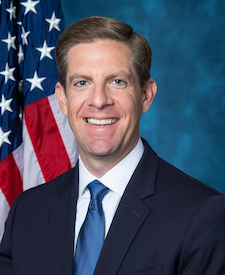
Rep. Mike Levin
Sponsored bills
This resolution expresses that the House of Representatives applauds the Biden administration for reaffirming the U.S. commitment to the Paris Agreement on climate change and to our collective responsibility to globally combat climate change; encourages the Biden administration to implement measures to ensure global climate change remains a top priority for this and future administrations and to cement the United States as a global leader in the fight to mitigate its most severe consequences; voices strong commitment as legislators toward achieving the climate goals of the Paris Agreement, fulfilling the forthcoming pledges from the COP26 in Glasgow, Scotland, and advancing other international efforts to keep global warming to no more than 1.5 degrees Celsius and realize global net-zero carbon emissions by 2050 using a whole-of-government approach; and recognizes the critical responsibility of the United States and other developed nations to ensure all societies have the capabilities to transition to a clean energy economy, the resources to protect against climate-induced disasters, and the necessary assistance to endure climate-related challenges to food security, regional migration, and public health.
Sustainable International Financial Institutions Act of 2021 This bill directs specified international financial institutions to use the influence of the United States to advance the cause of reducing greenhouse gas emissions and transition the global economy to a clean energy economy. It also prohibits the United States from providing direct or indirect assistance to any country or entity to support any fossil fuel activity.
Social Security 2100: A Sacred Trust This bill makes changes to Social Security benefits, taxes, and other aspects of the program, including by raising the primary insurance amount, increasing the maximum taxable earnings that are subject to Social Security payroll taxes, and requiring Social Security account statements to be mailed unless the individual recipient opts for electronic delivery.
Original National Domestic Violence Awareness Month Resolution of 2021 This resolution supports the goals and ideals of National Domestic Violence Awareness Month. Further, it expresses the sense of the House of Representatives that Congress should continue to raise awareness of and support programs to end domestic violence.
Public Service Freedom to Negotiate Act of 20 21 This bill provides minimum collective bargaining rights and procedures for public employees and prohibits strikes by certain public safety workers. The Federal Labor Relations Authority (FLRA) shall determine for each state whether the laws of such state substantially provide for each of the minimum standard collective bargaining rights and procedures specified by this bill, including the right of public employees and supervisory employees to self-organize, form or join a labor organization, or collectively bargain. The FLRA must issue rules and take actions to establish and administer bargaining rights and procedures for those states that do not substantially provide for them. No employers, emergency services employees, or law enforcement officers may engage in a lockout, strike, or any other organized job action that is likely to result in a measurable disruption of the delivery of emergency or public safety services. Furthermore, no labor organization may be the cause of a violation of such prohibition.
State, Local, Tribal, and Territorial Fiscal Recovery, Infrastructure, and Disaster Relief Flexibility Act This bill allows states, tribes, territories, and localities to use certain COVID-19 relief funds for new categories of spending, including for natural disasters and infrastructure projects. It also makes changes to expenditure deadlines and other aspects of this funding. Specifically, recipients may use funds for emergency relief from natural disasters and associated negative economic impacts of natural disasters. In addition, recipients may use a portion of their COVID-19 relief funds for designated infrastructure projects, such as nationally significant freight and highway projects. Furthermore, the bill allows recipients to expend COVID-19 relief funds on these types of infrastructure projects until September 30, 2026. Under current law, recipients must expend the funds by December 31, 2024. Other changes in the bill include (1) modifying eligibility and allocation requirements for funding set aside for counties and Indian tribes that are near public lands, (2) allowing Indian tribes an additional year to expend their COVID-19 relief funds, and (3) establishing a process for government entities to decline COVID-19 relief funds and requiring any declined funds to be used to reduce the federal deficit.
Manufacturing Assistance to Determine Emissions Act or the MADE Act This bill requires the Environmental Protection Agency to establish a program to enhance the transparency and availability of life-cycle assessment data on products made from certain material, such as aluminum, steel, and concrete. Life-cycle assessments examine the greenhouse gas emissions and other environmental impacts associated with all stages of the product's life cycle.
Jerry Lewis VA Clinic Act This bill designates the community-based outpatient clinic of the Department of Veterans Affairs in Redlands, California, as the Jerry Lewis Department of Veterans Affairs Clinic or the Jerry Lewis VA Clinic.
This concurrent resolution recognizes the disparity between wages paid to Latina women, and its impact on women, families, and the nation and reaffirms Congress' commitment to supporting equal pay and to narrowing the gender wage gap.