Employee Retention Tax Credit Reinstatement Act This bill provides for a reinstatement of the employee retention tax credit through 2021. The credit was established to compensate employers whose businesses were negatively impacted by the COVID-19 pandemic for wages paid to their employees.
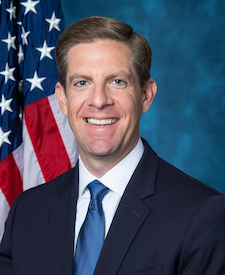
Rep. Mike Levin
Sponsored bills
This resolution expresses that the International Atomic Energy Agency (IAEA) plays an indispensable role in strengthening nuclear security and safety around the globe. The resolution also reaffirms that the United States has a vital interest in preventing the spread of nuclear weapons and securing nuclear materials.
This resolution commemorates the 75th anniversary of the founding of the United Spinal Association and recognizes its efforts on behalf of people with spinal cord injuries and neurological disorders.
Middle Class Mortgage Insurance Premium Act of 2021 This bill increases the adjusted gross income threshold for the phaseout of the mortgage insurance premium tax deduction and makes such deduction permanent.
More Opportunities for Veterans Education Act or the MOVE Act This bill extends the delimiting period (the period after which no benefits may be paid) for the use of educational assistance benefits for certain individuals who first used benefits under the Veteran Readiness and Employment program.
Stopping Grinch Bots Act of 2021 This bill makes it unlawful to use automated tools (i.e., bots) to intentionally bypass a website's security measures in order to purchase and resell its products or services in interstate commerce.
Immunization Infrastructure Modernization Act of 2021 This bill directs the Department of Health and Human Services (HHS) to take actions to improve data sharing and other aspects of immunization information systems. These are confidential, population-based databases that maintain a record of vaccine administrations. Specifically, HHS must develop a strategy and plan to improve these systems, including systems supported by the Centers for Disease Control and Prevention; designate data and technology standards for use in these systems; and award grants to health departments and other government agencies to improve their systems. As a condition of receiving the grants, recipients must use the designated standards. However, HHS may waive this condition in some circumstances. HHS must also report to Congress on these activities.

Increasing Penalties for Offshore Polluters Act This bill generally enhances civil and criminal penalties for certain water pollution, including oil spills and discharges of other hazardous substances.
Aviation Noise and Emissions Mitigation Act This bill requires the Environmental Protection Agency to establish pilot grant programs to measure and mitigate aircraft and airport noise and emissions (e.g., greenhouse gases and toxic pollutants) in communities near airports and air flight pathways.
Access to Birth Control Act This bill requires pharmacies to comply with certain rules related to ensuring access to contraceptives. Specifically, pharmacies must provide without delay a customer with any contraceptive or related medication that is in stock. If the contraceptive is not in stock, the pharmacy must immediately inform the customer and either order the contraceptive or refer the customer to a pharmacy that has it in stock. Laws in some states provide pharmacists with the right to refuse to dispense contraceptive-related drugs on religious or conscience grounds. Pharmacies may refuse to provide a contraceptive to a customer (1) if the customer lacks a valid prescription for a prescription contraceptive or is unable to pay for the contraceptive, or (2) based on a pharmacy employee's professional clinical judgment. The bill also establishes a private cause of action and civil monetary penalties for violations of the bill.