

Maddy summaryThis bill transfers approximately 1,261 acres of federal land in Riverside County, California (administered by the Bureau of Land Management) into trust for the Pechanga Band of Indians, making it part of their reservation under federal management. The land must remain open space, be used only for cultural/wildlife preservation, and cannot be used for any gambling (including class II or III gaming). The bill preserves existing water rights and service agreements, requires tribes to report MOU terminations to Congress and the Interior Department, and prohibits development that conflicts with open space or conservation goals.
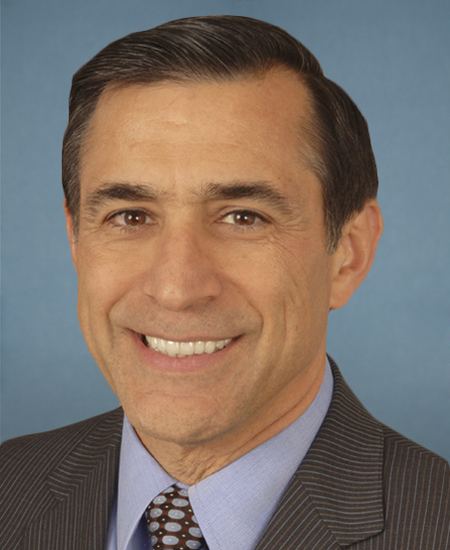
Rep. Darrell Issa
Sponsored bills
Maddy summaryHR 5437, the *Protection of Lawful Commerce in Stone Slab Products Act*, prohibits lawsuits against manufacturers and sellers of stone slab products (like countertops) for injuries caused by silica dust exposure during third-party fabrication (e.g., cutting or grinding by fabricators). It directly affects stone slab manufacturers and sellers by shielding them from civil liability when injuries result from fabricators violating workplace safety laws. The bill’s key provision bans such lawsuits in federal or state courts and requires dismissal of pending cases. It aims to protect this industry, which employs thousands, from claims they cannot control, emphasizing that safety regulations apply to fabricators - not the original sellers.
Maddy summaryThis bill, known as the Robert Lodge Medal of Honor Act, authorizes the President to award the Medal of Honor to Robert Lodge. It directly affects Lodge by recognizing his acts of valor as an Air Force member during the Vietnam War on May 10, 1972. The legislation specifically overrides existing time limits that usually prevent such awards decades after service. By doing so, it ensures Lodge receives the nation's highest military decoration for his bravery.
Maddy summaryThis bill authorizes the U.S. Development Finance Corporation to make investments in Venezuela, a country previously designated as a "country of concern" under the BUILD Act. By removing Venezuela from this specific list, the legislation lifts the restrictions that had barred the agency from providing financial support to the nation. The measure directly affects the Development Finance Corporation by expanding its scope of eligible countries and impacts potential investors and businesses seeking opportunities in Venezuela. Essentially, it changes the legal status of Venezuela to allow for new economic engagement through this federal development finance entity.
Maddy summaryThis bill authorizes the President to award the Medal of Honor to Sergeant Rafael Peralta for his heroic actions during the Second Battle of Fallujah in Iraq on November 15, 2004. The legislation specifically directs that he receive the nation's highest military decoration for pulling an enemy grenade under his body to shield fellow Marines from harm, even though he was already mortally wounded. To ensure this award can be granted, the bill overrides existing time limits on posthumous medal presentations that would otherwise prevent the recognition. Ultimately, the act serves to formally recognize Sergeant Peralta's conspicuous gallantry and intrepidity in the face of extreme danger.
Maddy summaryThis bill transfers ownership of three specific land parcels totaling approximately 836 acres into federal trust for the Barona Group of Capitan Grande Band of Mission Indians. Once taken into trust, the land will become part of the tribe's reservation and be managed by the Secretary of the Interior under standard federal regulations for Indian trust property. The legislation includes specific conditions to preserve existing public access for recreation and conservation, maintain current water rights and service agreements, and protect existing leases and easements. Additionally, the bill explicitly prohibits the use of these lands for any class II or class III gaming activities.
Maddy summaryThe Smithsonian American Women’s History Museum Act authorizes the creation of a new Smithsonian museum dedicated to women’s history, to be located within the National Mall Reserve in Washington, D.C. If the site is managed by another federal agency, the bill requires that agency to transfer the land after notifying Congress and relevant committees. The museum must ensure exhibits and programs accurately represent diverse women’s experiences by consulting a broad range of experts and community voices. The Smithsonian will submit biennial reports to Congress detailing how the museum meets these representation standards.
Maddy summaryHR 8901, the Securing Innovation and Research from Adversaries Act, prohibits federally funded researchers and institutions from collaborating with entities on specific U.S. government restricted lists, such as those related to national security risks or forced labor. The bill defines research collaboration broadly to include joint projects, data sharing, co-authorship, and personnel exchanges, and it requires agencies to issue guidance for standardized compliance. While the law generally bans these partnerships, it allows federal agency heads to grant case-by-case waivers if the collaboration is essential for national security or critical scientific purposes, provided they report the decision and justification to Congress within 30 days.
Maddy summaryThe CAL Repayment Act requires states to immediately use any federal funds received for unemployment insurance to repay outstanding advances before spending them on other purposes. This rule applies to all states and mandates that they make these repayments within five business days of the funds becoming available. If a state fails to follow this order and uses the money elsewhere first, it must return the full amount to the federal government within five days of being notified. The law takes effect for any unemployment insurance funds awarded after the bill is enacted.
Maddy summaryThis bill establishes a specific deadline of December 31, 2026, for states to ratify the Congressional Apportionment Amendment, which would otherwise have no expiration date. It declares that any state approval received after this date will not count toward the required three-fourths majority needed to add the amendment to the Constitution. The legislation also asserts Congress's authority to set such time limits under Article V of the Constitution.