

Supporting Every at-Risk Veteran In Critical Emergencies Act of 2021 or the SERVICE Act of 2021 This bill authorizes the Office of Community Oriented Policing Services within the Department of Justice to make grants to support the creation and operation of veterans' response teams in state, local, and tribal law enforcement agencies.
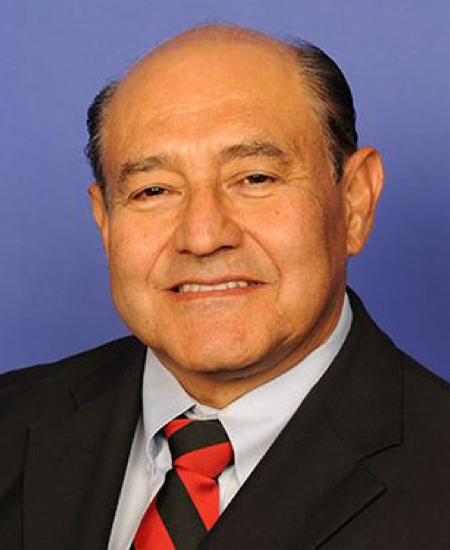
Rep. J. Luis Correa
Sponsored bills
Closing the Bump Stock Loophole Act of 2021 This bill subjects bump stocks to regulation under federal firearms laws. Specifically, the bill adds bump stocks to the list of firearms subject to regulation (e.g., registration and licensing requirements) under the National Firearms Act. Additionally, it includes bump stocks in the list of firearms subject to regulation (e.g., background check requirements) under the Gun Control Act of 1968.
Reduced Costs and Continued Cures Act This bill establishes and alters several programs and requirements relating to the prices of prescription drugs. For example, the bill establishes and alters several requirements under Medicare and Medicaid, including requiring drug manufacturers to issue rebates to the Centers for Medicare & Medicaid Services for covered drugs under Medicare that cost $100 or more and for which the average manufacturer price increases faster than inflation, capping annual out-of-pocket spending under the Medicare prescription drug benefit, and increasing the maximum rebate amount under the Medicaid Drug Rebate Program. The bill also makes changes relating to market exclusivities and manufacturer price concessions for prescription drugs, including authorizing the Federal Trade Commission to initiate proceedings against parties to settlements of patent infringement claims that have anticompetitive effects with respect to drugs or biologics, limiting in certain instances the number of patents that the manufacturer of a biologic can assert in a lawsuit against a company seeking to sell a biosimilar version, and nullifying regulations relating to the treatment of certain Medicare prescription drug benefit rebates from drug manufacturers for purposes of federal anti-kickback laws.
This bill allows funds under the Community Oriented Policing Services grant program to be used to provide training to recruits who agree to serve in law enforcement agencies in their communities.
Lifting Immigrant Families Through Benefits Access Restoration Act of 2021 or the LIFT the BAR Act of 2021 This bill repeals certain limits on the eligibility of noncitizens who lawfully reside in the United States for federal means-tested programs, including Medicaid, the Children's Health Insurance Program (CHIP), programs funded through Temporary Assistance for Needy Families (TANF) grants, Supplemental Security Income (SSI), and certain nutrition and housing programs.
Reduced Costs and Continued Cures Act of 2021 This bill establishes and alters several programs and requirements relating to the prices of prescription drugs. For example, the bill establishes and alters several requirements under Medicare and Medicaid, including requiring drug manufacturers to issue rebates to the Centers for Medicare & Medicaid Services for covered drugs under Medicare that cost $100 or more and for which the average manufacturer price increases faster than inflation, capping annual out-of-pocket spending under the Medicare prescription drug benefit, and increasing the maximum rebate amount under the Medicaid Drug Rebate Program. The bill also makes changes relating to market exclusivities and manufacturer price concessions for prescription drugs, including authorizing the Federal Trade Commission to initiate proceedings against parties to settlements of patent infringement claims that have anticompetitive effects with respect to drugs or biologics, limiting in certain instances the number of patents that the manufacturer of a biologic can assert in a lawsuit against a company seeking to sell a biosimilar version, and nullifying regulations relating to the treatment of certain Medicare prescription drug benefit rebates from drug manufacturers for purposes of federal anti-kickback laws.
Afghan and Iraqi Allies Resettlement Improvement Act This bill addresses the settlement of Afghan and Iraqi special immigrant visa (SIV) holders. (Generally, SIV holders are individuals who received visas due to their work with the U.S. Armed Forces in Iraq or Afghanistan.) The Department of Health and Human Services must survey long-term outcomes, such as employment, housing, and educational attainment, of SIV holders as part of its annual survey of refugees. The Department of State must implement additional ways to deliver information in certain languages (i.e., Dari, Pashto, or Urdu) to prospective SIV holders about resettlement in the United States to assist with their adjustment process. The State Department and the Department of Defense must jointly establish a temporary program to offer SIV holders employment as translators, interpreters, and cultural awareness instructors.
District Court Judgeships Act of 2021 This bill requires the appointment of additional U.S. district court judges and converts certain temporary district court judgeships into permanent judgeships. Specifically, the bill requires the appointment of 203 district court judges in specified judicial districts in Arkansas, Arizona, California, Colorado, Delaware, Florida, Georgia, Idaho, Illinois, Indiana, Louisiana, Maryland, Michigan, Minnesota, Missouri, North Carolina, Nebraska, Nevada, New Jersey, New Mexico, New York, Ohio, Oregon, Pennsylvania, South Carolina, Tennessee, Texas, Utah, Virginia, Washington, Wisconsin, and West Virginia. Additionally, the bill converts certain temporary district court judgeships to permanent judgeships in specified judicial districts in Alabama, Arizona, California, Florida, Kansas, Missouri, New Mexico, North Carolina, and Texas.
Judicial Understaffing Delays Getting Emergencies Solved Act or the JUDGES Act This bill requires the appointment of additional U.S. district court judges, converts certain temporary district court judgeships into permanent judgeships, and requires the Government Accountability Office to report on vacant or underused federal courthouses. Specifically, the bill requires the appointment of 39 district court judges on or after January 21, 2025, in specified judicial districts in Arizona, California, Colorado, Delaware, Florida, Georgia, Idaho, Indiana, Iowa, New Jersey, New Mexico, New York, and Texas. Further, 38 district court judges must be appointed on or after January 21, 2029, in specified judicial districts in Arizona, California, Colorado, Delaware, Florida, Georgia, Indiana, New Jersey, New York, and Texas. Additionally, the bill converts certain temporary district court judgeships to permanent judgeships in specified judicial districts in Alabama, Arizona, California, Florida, Kansas, Missouri, New Mexico, North Carolina, and Texas.
Remote Naturalization Act This bill requires the Department of Homeland Security to establish procedures to provide for remote oath ceremonies for naturalization, including through the use of videoconferencing technology. Under this bill, the option to participate in a remote oath ceremony shall be available to an individual with an approved naturalization application who is unable to attend a ceremony in person, including if in-person ceremonies have been cancelled due to a declared national emergency.