

American Families United Act This bill authorizes the Department of Homeland Security (DHS) or the Department of Justice (DOJ) to exercise discretion in certain immigration cases. Under this bill, DOJ or DHS may, on a case-by-case basis, exercise discretion by declining to remove a non-U.S. national ( alien under federal law) or bar an alien from entering the United States to prevent hardship for the alien's U.S. citizen spouse, parent, or child. This discretion may also be exercised if the alien is the spouse or child of a deceased U.S. citizen. For the purposes of this bill, it shall be presumed that family separation constitutes hardship. However, DOJ or DHS may not exercise this discretion if the alien is removable or inadmissible due to certain grounds, including specified crime- and security-related grounds. This exercise of discretion may be applied to an alien who was ordered removed or denied entry prior to this bill's enactment if the alien files a motion to reopen or reconsider within two years of this bill's enactment.
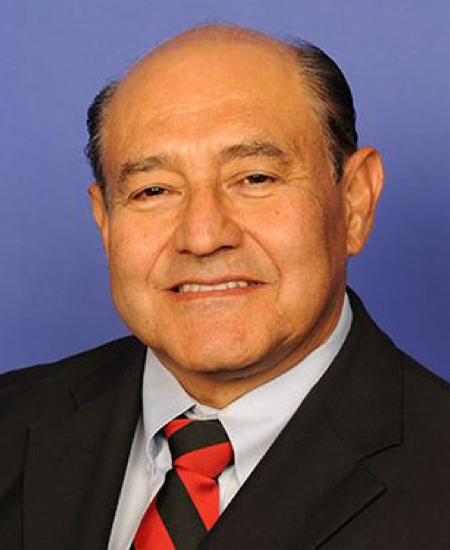
Rep. J. Luis Correa
Sponsored bills
California Clean Coast Act of 2023 This bill prohibits oil and gas exploration and leasing in areas of the outer Continental Shelf located off the coast of California.
Maddy summaryHRES 26 is a symbolic House resolution expressing support for replacing the phrase "Thank you for your service" with "Thank you for our freedom" when acknowledging military members and veterans. It does not change any laws or require government action, but urges the public, Congress, and the President to adopt the new phrase as a way to honor those who protect American freedom. The resolution cites a historical anecdote about a Navy pilot to argue that the revised phrase better reflects the military's role in preserving freedom. It directly affects public messaging and cultural recognition of service members, not legal rights or benefits. The resolution has no binding effect on federal policy or funding.
Maddy summaryHR 1619 requires schools participating in the National School Lunch Program to provide fluid milk substitutes (like soy or almond milk) upon request by a student or their parent/guardian. The bill removes the previous requirement that substitutions needed a medical authority's written statement for most dietary needs, instead allowing requests based on the student's or parent's request alone. It aligns the definition of acceptable substitutes with current Dietary Guidelines for Americans. This change directly affects students with dietary restrictions, making it simpler for schools to accommodate their needs without extra medical documentation.
Maddy summaryThis bill authorizes a Congressional Gold Medal to honor the "Hello Girls" - female telephone operators who served in the Army Signal Corps during World War I. They provided critical battlefield communications in France (connecting 26 million calls), wore military uniforms, and faced combat risks, but were denied veteran benefits for 60 years due to being classified as civilian contractors. The medal recognizes their pioneering service, devotion, and the decades-long struggle to gain military recognition. The award follows similar recognition for other WWII women veterans and aims to correct the historical injustice they faced.
Maddy summaryThis bill requires the Department of Veterans Affairs (VA) to study how cannabis affects veterans with chronic pain or PTSD. It mandates an observational study using VA health records and interviews with enrolled veterans (those using VA healthcare) to measure outcomes like pain levels, opioid use, mental health symptoms, and hospital visits. If the study shows promise, the VA may later conduct clinical trials on cannabis for these conditions. The bill does not change veterans' access to cannabis or VA benefits - it only authorizes research to understand potential effects.
Maddy summaryHRES 219 is a symbolic resolution (not a binding bill) expressing the House’s support for inclusive public schools. It urges schools to adopt historically accurate, diverse educational materials that reflect the nation’s diversity, foster parent-educator partnerships, and eliminate discrimination based on race, disability, LGBTQ+ identity, or other factors. The resolution emphasizes creating safe, well-rounded learning environments that prepare all students for success while protecting students’ civil rights. It directly affects public school districts, educators, families, and students by encouraging practices that promote equity and inclusion.
Maddy summaryThis bill removes federal restrictions that previously limited methadone prescribing for opioid use disorder, allowing certified addiction specialists and program employees to prescribe methadone through pharmacies for up to 30 days per electronic prescription. It directly affects patients with opioid use disorder who can now access treatment more flexibly outside traditional clinic settings, and healthcare providers who gain new prescribing authority. Key provisions include requiring electronic prescriptions, mandating patient informed consent about confidentiality differences, and permitting telehealth for counseling and ancillary services. The bill also requires annual reports to Congress tracking registered providers and patients served.
Supporting Americans with Lower Taxes Act or the SALT Act This bill modifies the cap on state and local tax deductions (the SALT deduction) and provides for Medicare coverage of hearing and vision services. Current law caps the SALT deduction at $10,000 for single taxpayers and married couples filing jointly and $5,000 for married taxpayers filing separately; the cap applies to tax years 2018 through 2025. The bill permanently (1) eliminates any cap for single taxpayers or married couples filing jointly who make less than $400,000 a year ($200,000 for married taxpayers filing separately); (2) increases the cap to $60,000 for single taxpayers or married couples filing jointly who make $400,000 or more a year ($30,000 for married taxpayers filing separately who make $200,000 or more a year); and (3) phases down the cap for filers who make more than $400,000 in a manner such that those who make $1 million or more do not qualify for the deduction. The bill also provides for Medicare coverage of hearing and vision services, including hearing aids, glasses, and contact lenses, beginning in 2025. It also appropriates any amounts received as a result of the bill's changes to the SALT cap to Medicare's Supplementary Medical Insurance Trust Fund and provides for specific fund transfers for FY2024 and FY2025 to support Medicare hearing and vision coverage.
Maddy summaryThe Paycheck Fairness Act (HR 17) strengthens equal pay protections by amending the Fair Labor Standards Act. It prohibits pay discrimination based on sex, pregnancy, childbirth, sexual orientation, gender identity, and sex characteristics. The bill modifies employer defenses for pay differences to require demonstration that any disparity is job-related, consistent with business necessity, and accounts for the entire pay differential. It also prohibits employers from relying on wage history when making hiring decisions or setting pay, enhances penalties for violations, and requires the EEOC to collect compensation data disaggregated by sex, race, and national origin.