

Maddy summaryThis bill requires federal agencies to adjust contract prices to reimburse contractors for paying employees during government funding lapses (e.g., shutdowns). It covers costs for furloughed, laid-off, or reduced-hour workers, or for restoring paid leave used during the lapse, with a weekly cap of $1,442 per employee. Directly affecting federal contractors and their employees who experienced work disruptions due to funding gaps, it mandates agencies to make these adjustments promptly after enactment. Contractors must provide proof of costs, and the Office of Federal Procurement Policy must report on implementation to Congress within a year.
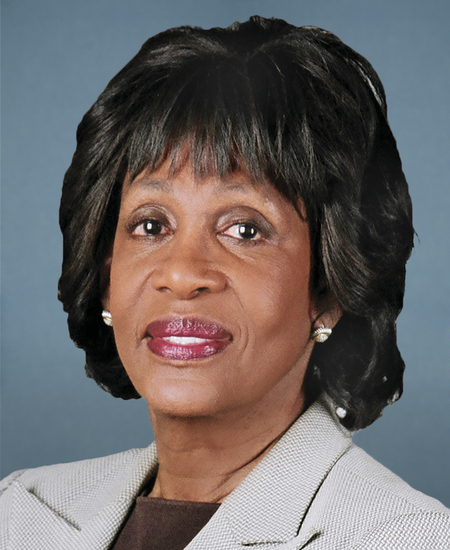
Rep. Maxine Waters
Sponsored bills
Maddy summaryHR 5784 would provide federal grants to public schools (including Bureau of Indian Education schools) to make them more environmentally sustainable and equitable. It prioritizes schools in the most vulnerable communities (based on CDC Social Vulnerability Index) for full funding to become "healthy zero-carbon schools" through energy-efficient retrofits and new construction, while offering reduced funding for less vulnerable schools. The grants require community engagement in planning, mandate hiring from local communities with specific diversity goals, fund social services and mental health support, and include strict energy efficiency standards for all projects. The bill also includes funding for educational equity planning and climate resiliency programs to help schools serve as community centers during disasters.
Maddy summaryThis bill requires federal agencies to mandate that auto manufacturers bidding on vehicle assembly contracts disclose detailed workforce information for each plant involved. Specifically, contractors must provide average and range of hourly wages, temporary worker counts, and any OSHA or National Labor Relations Act violations at each manufacturing location. It also requires written agency permission - and additional disclosures - if a contractor seeks to shift production to a new plant, with notification to affected labor unions. The law directly affects auto manufacturers competing for federal vehicle assembly contracts and aims to increase transparency around labor practices.
Maddy summaryThe Agricultural Worker Justice Act (HR 4978) improves working conditions for agricultural and meatpacking workers through several key provisions. It requires USDA to only purchase from entities paying prevailing wages (based on local rates and collective bargaining agreements), prohibits stock buybacks by USDA-funded companies, and creates a list of companies with labor violations that would be ineligible for USDA contracts. The bill establishes new safety standards for meatpacking plants including restrictions on line speeds (requiring safety inspections before increases), requirements for toilet facilities, and enhanced protections for workers reporting safety concerns. It also mandates a GAO report on racial disparities in meatpacking employment and authorizes $400 million for local food purchase programs. The bill directly affects meatpacking facilities, agricultural businesses receiving USDA funds, and the workers employed in these industries.
Maddy summaryThis bill amends the Higher Education Act to require all U.S. colleges and universities receiving federal financial aid to create detailed anti-harassment policies covering physical, online, and institution-sponsored settings. It mandates policies prohibiting harassment based on race, sex (including sexual orientation and gender identity), disability, religion, and other protected characteristics, including harassment via institutional email, computers, or electronic messaging. The bill also establishes a $50 million annual grant program to fund colleges developing prevention programs, victim support services, and training for students and staff on recognizing and addressing harassment. These policies and grants must comply with existing civil rights laws like Title IX but add specific requirements for reporting and prevention.
Maddy summaryHR 5610 establishes a 15-member Commission to examine historical discrimination against LGBTQ+ service members and veterans. The Commission will document policies targeting LGBTQ+ individuals in the military since WWII, gather testimonies from affected veterans, and analyze impacts on mental health, benefits access, and financial stability. It must hold public hearings, examine how discrimination affected racial minorities and women within the military, and recommend solutions like record corrections, improved benefits for LGBTQ+ veterans, and better diversity training. The Commission will submit a final report to Congress within one year, proposing concrete steps to address past harms and improve inclusion in the military.
Maddy summaryHR 5569, the Child Care Nutrition Enhancement Act of 2023, increases funding for child care nutrition programs. It adds a 10-cent per meal reimbursement for providers participating in the Child and Adult Care Food Program (CACFP), applying to all meals and supplements served. This change directly affects child care centers, family day care homes, and group day care homes that receive CACFP funding. The additional reimbursement is calculated alongside existing payment rates and applies to all meals served after the bill's enactment. The bill modifies specific sections of the Richard B. Russell National School Lunch Act to implement this funding increase.
Maddy summaryHR 5566, the *Supreme Court Tenure Establishment and Retirement Modernization Act of 2023*, establishes an 18-year term limit for all Supreme Court justices. It requires the President to nominate one new justice every two years (during first and third years after presidential elections), with Senate confirmation within 90 days, and prohibits lifetime appointments. Current justices are automatically retired in order of service length as new justices are appointed, while retired justices may temporarily fill vacancies through a randomized process. The bill directly affects all sitting and future Supreme Court justices by restructuring appointments and retirement timelines.
Maddy summaryThis bill establishes a new Office within the Department of Justice to address racial disparities in missing and murdered Black women and girls cases. The Office will collect data on case resolution times, coordinate with law enforcement, and create a public dashboard tracking these cases. It also creates grants for community organizations to provide culturally appropriate services, prevention programs, and training for law enforcement targeting violence against Black women and girls. The bill directly affects Black women and girls who are victims of violence and their communities, focusing on improving data collection and support systems rather than changing criminal laws.
Maddy summaryThis bill extends existing programs that provide payments to counties and states with federal land, primarily to support local schools and communities. It updates key deadlines, extending secure payments through 2026, special project authorities through 2029, and county fund expenditure authority through 2028. A new pilot program allows regional foresters to appoint resource advisory committee members directly, with this authority ending October 1, 2028. These changes directly affect rural counties and states managing federal lands, maintaining current funding mechanisms without altering eligibility or payment amounts.