

Maddy summaryThis bill, HR 2102 (Major Richard Star Act), allows veterans with combat-related disabilities to receive both full military retired pay and veterans' disability compensation simultaneously, without the previous offset that reduced retired pay. It directly affects veterans already eligible for both benefits due to combat-related injuries, removing the requirement that their retired pay be reduced by the disability compensation amount. The key provision amends Title 10 and Title 38 to eliminate the offset rule (sections 5304 and 5305 of Title 38) for these veterans. The change applies to payments starting after the bill’s enactment date, effective for all qualifying veterans. This is a policy change to increase financial support for affected veterans, not a new benefit.
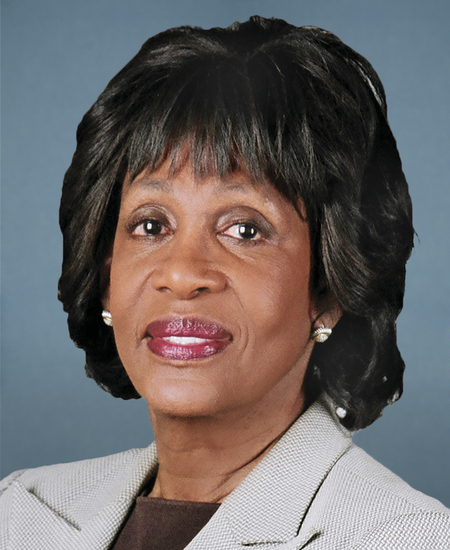
Rep. Maxine Waters
Sponsored bills
Maddy summaryHRES 259 is a House resolution requesting the President to provide documents about access to the Bureau of Consumer Financial Protection (CFPB) systems. It specifically asks for details on individuals from the "Department of Government Efficiency" (DOGE), including named staff like Elon Musk, who were granted access to CFPB systems, accounts, or information. The resolution demands records on the type of access granted, clearance levels, any sensitive data viewed, and documentation like access requests and training records. It also seeks employee headcount data for the CFPB as of specific dates. This is a procedural request for transparency, not a law changing policy.
Maddy summaryThe IDEA Full Funding Act (HR 2598) mandates specific annual federal funding levels for the Individuals with Disabilities Education Act (IDEA), directly affecting schools and students with disabilities nationwide. It requires the federal government to appropriate either a fixed dollar amount or a specified percentage (increasing annually from 4.5% to 40%) of a calculated total - based on the number of eligible students and average per-pupil costs - starting in fiscal year 2026 through 2035. The bill sets clear, escalating funding targets, with the higher of two calculated amounts (dollar figure or percentage) becoming available for obligation each fiscal year. This establishes a binding financial commitment to address long-standing underfunding of special education services under IDEA.
Maddy summaryThe Building Child Care for a Better Future Act (HR 2595) increases federal child care funding to $20 billion for fiscal year 2026 with annual inflation-based increases, plus an additional $5 billion annually for targeted improvements in child care access and quality. It allocates specific portions of funds to Indian tribes (5%) and territories (4%), requiring states and tribes to identify areas with particular child care needs and develop plans to improve workforce, supply, quality, and access through activities like provider training, facility upgrades, and higher wages. The bill mandates regular reporting and evaluations to track how funds improve child care services for low-income families, children with disabilities, dual language learners, and those in rural or high-poverty areas. This legislation directly affects child care providers, low-income families seeking care, and tribal organizations by providing concrete funding mechanisms to address specific child care shortages.
Workplace Violence Prevention for Health Care and Social Service Workers Act This bill requires the Department of Labor to address workplace violence in health care, social service, and similar sectors. Specifically, Labor must issue an occupational safety and health standard that requires certain employers to take actions to protect workers and other personnel from workplace violence. The standard applies to employers in the health care sector, in the social service sector, and in sectors that conduct activities similar to those in the health care and social service sectors. Among other elements, the standard must require each employer to (1) develop a workplace violence prevention plan, (2) promptly investigate incidents of workplace violence, and (3) provide relevant training and education to employees. The bill requires certain hospitals and skilled nursing facilities to comply with this standard as a condition of Medicare participation.
Maddy summaryHR 2586, the Reentry Act of 2025, amends Medicaid rules to allow incarcerated individuals to receive Medicaid coverage during the 30 days immediately before their release from prison or jail. This directly affects people leaving correctional facilities, ensuring they can access health care as they transition back into communities. The bill requires a report within 18 months analyzing current health care standards in prisons, the number of people who would gain coverage, and current discharge practices to improve Medicaid enrollment for newly released individuals. The report will also assess how to better connect people with community health services and addiction treatment after release.
Maddy summaryHR 2553, the Capping Prescription Costs Act of 2025, limits out-of-pocket costs for prescription drugs under health insurance. It sets a $2,000 annual cap per individual or $4,000 per family for covered prescriptions starting in 2026, with annual adjustments based on the medical care CPI. The bill applies directly to people with employer-sponsored group health plans, individual health insurance plans, and plans covered under the Affordable Care Act. It requires insurers and plan sponsors to ensure cost-sharing for prescriptions does not exceed these limits, effective for plan years beginning January 1, 2026.
Maddy summaryHR 2487, the Transgender Health Care Access Act, aims to improve access to gender-affirming care for transgender individuals by funding training and education for healthcare providers. The bill provides $10 million annually for medical schools to develop curricula on gender-affirming care and culturally competent treatment, and $15 million annually for grants to train medical residents, nurse practitioners, and community health centers serving transgender patients. It specifically targets rural providers through $5 million annually for collaborative networks to expand care in underserved areas. The legislation requires a report to Congress within two years detailing progress in improving health equity for transgender populations.
Save America's Forgotten Equines Act of 2025 or the SAFE Act of 2025 This bill permanently prohibits the slaughter of equines (e.g., horses and mules) for human consumption. (Current law prohibits the slaughter of dogs and cats for human consumption. This bill extends the prohibition to equines.) Specifically, this bill prohibits a person from knowingly (1) slaughtering an equine for human consumption; or (2) shipping, transporting, possessing, purchasing, selling, or donating an equine to be slaughtered for human consumption or equine parts for human consumption. The bill subjects a violator to a fine. The bill applies to conduct in or affecting interstate or foreign commerce or within the special maritime and territorial jurisdiction of the United States. However, it does not apply to an activity carried out by an Indian for a religious ceremony. As background, in recent years, the appropriations acts have prohibited the Department of Agriculture (USDA) from using federal funds to inspect horses before they are slaughtered for human consumption. Therefore, there are currently no USDA-inspected horse slaughter facilities in the United States.
Maddy summaryThe Special Government Employees Transparency Act of 2025 limits how long individuals can serve as special government employees (SGEs) in the executive branch to 130 days within any 365-day period. If an SGE exceeds this limit, their agency must reclassify them as a regular civil service employee within 30 days and provide written notice about their new status and appeal rights. The bill also creates a public database listing key details - including name, pay, agency, and dates - of "covered" SGEs (those with duties comparable to GS-11 level or higher, not on advisory committees, and not full-time students). Additionally, agencies must publicly post financial disclosure reports for these covered SGEs, excluding certain reports or national defense information, through existing federal disclosure procedures.