

Maddy summaryThis bill creates a new visa category for temporary workers in mobile entertainment, such as carnival and circus staff who travel across the U.S. It directly affects carnival operators, seasonal workers, and food/concession vendors at fairs and festivals. The key provision requires Department of Labor certification to ensure U.S. workers are not displaced and that hiring foreign workers won’t lower wages or working conditions. It defines "mobile entertainment provider" to include traveling carnivals, circuses, and affiliated seasonal services like food concessions at local events.
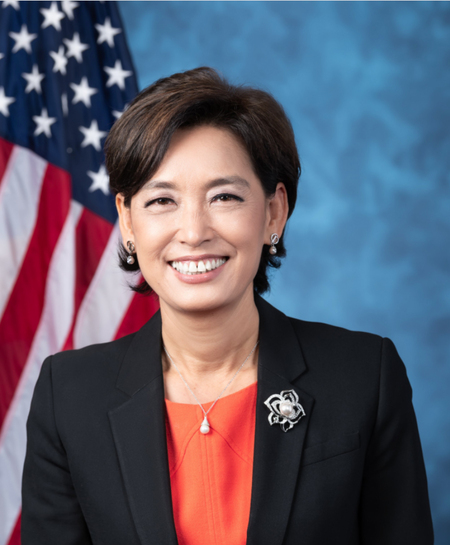
Rep. Young Kim
Sponsored bills
Maddy summaryHCONRES 28 is a symbolic resolution expressing Congress's view that tax-exempt fraternal benefit societies - organizations providing life, health, and accident benefits to members - have long delivered critical community support. It states these societies, with about 7 million members nationwide, generate significant annual value through charitable work and volunteer activities (estimated at over $3.8 billion yearly). The resolution affirms that their tax-exempt status under Section 501(c)(8) of the tax code is essential for sustaining their volunteer-driven model and relieving pressure on government safety programs. As a non-binding expression of congressional sentiment, it does not alter existing laws or create new obligations.
Maddy summaryHR 1748, the Quantum in Practice Act, amends the National Quantum Initiative Act to explicitly include "quantum molecular modeling or simulation" as a priority research area. This change directs federal funding and research efforts toward advancing quantum computing applications for molecular-level simulations. The bill directly affects scientists and researchers working under the National Quantum Initiative Act by expanding their program focus to include modeling chemical processes, materials, and reactions. Key provisions add this specific research category to existing funding priorities, aiming to accelerate breakthroughs in fields like sustainable fertilizers, drug development, and advanced materials. The policy change is purely procedural, redirecting existing program resources without creating new funding.
Correcting Guam's History in the PACT Act This bill expands eligibility for a presumption of service-connection for specified diseases associated with exposure to certain herbicide agents. Under a presumption of service-connection, specific conditions diagnosed in certain veterans are presumed to have been caused by the circumstances of their military service. Health care benefits and disability compensation may then be awarded. Under the bill, service performed in Guam or its territorial waters between August 15, 1958, and July 31, 1980, provides a veteran who has a specified disease that is associated with exposure to certain herbicide agents with eligibility for a presumption of service-connection. (Under current law, the eligible time frame for service in Guam is between January 9, 1962, and July 31, 1980.)
Maddy summaryHR 1503, the Prescription Information Modernization Act of 2023, allows drug manufacturers to provide FDA-approved prescribing information exclusively via digital means (like email or online portals) to doctors and pharmacists, while requiring them to still offer paper copies upon request at no extra cost. The bill directly affects drug manufacturers and distributors, who must implement this change by 2025 (or when regulations take effect), and ensures prescribers and dispensers can choose their preferred format. Key provisions include mandating manufacturers to honor paper requests promptly without additional fees and requiring the Health Secretary to issue implementing regulations within one year. The law aims to modernize how medical information is shared while maintaining accessibility for healthcare providers.
This resolution expresses support for the designation of COVID-19 Victims and Survivors Memorial Day to memorialize the lives lost to the COVID-19 pandemic.
Maddy summaryHR 1491, the Small Business Energy Loan Enhancement Act, increases the maximum loan amount for energy-related small business loans under the Small Business Investment Act of 1958 from $5.5 million to $10 million. This directly affects small businesses seeking financing for energy efficiency or renewable energy projects by doubling their potential loan access. The bill requires the Small Business Administration to submit annual reports to Congress detailing which industries and geographic areas received these enhanced loans. These changes aim to expand access to capital for qualifying energy projects without altering eligibility criteria.
Maddy summaryHRES 198 is a non-binding House resolution recognizing the Girl Scouts of the United States of America on its 111th anniversary. It celebrates the organization’s role in providing girls with safe, inclusive spaces for leadership development, skill-building, and community engagement through programs like STEM education, outdoor activities, and civic initiatives. The resolution specifically acknowledges Girl Scouts’ 111-year legacy, congratulates Gold Award recipients, and encourages continued support for their mission. As a ceremonial resolution, it does not create new policies, allocate funds, or directly affect any individuals or organizations.
Maddy summaryHR 1379, titled the *Access to Small Business Investor Capital Act*, simplifies reporting requirements for investment companies that hold shares in business development companies (BDCs). The bill allows registered investment companies (like mutual funds) to exclude BDC-related fees and expenses from their standard "Acquired Fund Fees and Expenses" calculations in registration statements, instead disclosing these costs in a footnote. This change directly affects investment companies managing portfolios with BDC investments and the BDCs themselves, reducing administrative complexity. The provision modifies existing SEC disclosure rules under the Investment Company Act of 1940 without creating new capital access for small businesses.
Maddy summaryThe TABS Act of 2023 would rename the Consumer Financial Protection Bureau (CFPB) to the Consumer Financial Empowerment Agency (CFEA) throughout U.S. federal law. This bill would change the agency's name in the Consumer Financial Protection Act of 2010 and over 25 other federal statutes, including the Dodd-Frank Act and Truth in Lending Act. The bill does not alter the agency's responsibilities, authority, or budget structure - only its name. This is a procedural change affecting all federal documents, regulations, and references to the agency.