

Maddy summaryHRES 280 is a non-binding House resolution expressing support for designating November 22, 2023, as "Kimchi Day." It acknowledges kimchi's cultural significance as a traditional Korean dish with a 2,000-year history, its recognition by UNESCO as intangible cultural heritage, and its health benefits. The resolution highlights Korean American contributions to U.S. society and growing popularity of kimchi in American cuisine. This symbolic gesture does not create new law or policy but formally supports a cultural observance.
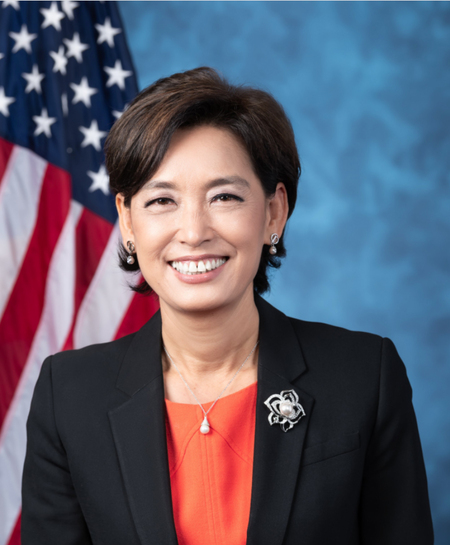
Rep. Young Kim
Sponsored bills
Maddy summaryHR 1465, "Violet’s Law," requires federal research facilities to establish standards for placing eligible animals (dogs, cats, primates, guinea pigs, hamsters, rabbits) no longer needed for research with animal rescue organizations, sanctuaries, shelters, or individuals. Federal departments and agencies operating such facilities must create these placement standards within one year of the law's enactment. The law mandates that animals must be vet-certified as healthy (free of infectious disease or physical issues) before placement and prohibits facilities from using animals for commercial trade, breeding, or public exhibitions. This policy directly affects federal research facilities and aims to provide permanent homes for research animals through defined, safe pathways.
Covenant School Heroes Congressional Gold Medal Act This bill provides for the award of Congressional Gold Medals to Officer Michael Collazo and Officer Rex Englebert of the Metropolitan Nashville Police Department in recognition of their exceptional bravery and valor in confronting an active shooter at The Covenant School in Nashville, Tennessee.
Maddy summaryThis bill requires the Veterans Affairs Secretary to expand or modify an existing national cemetery (under National Cemetery Administration control) before Arlington National Cemetery reaches capacity, ensuring it provides full military honors using the same standards and eligibility criteria that applied to Arlington as of March 31, 2023. It directly affects veterans and their families seeking burial with full military honors at national cemeteries nationwide. The bill also mandates a joint report within one year to Congress on expanding cemetery capacity and assessing whether interment criteria should recognize exceptional service, including impacts on women, non-combat veterans, and other groups. The key mechanism is preserving current military honors standards at alternative cemeteries to prevent Arlington's capacity limits from disrupting existing burial practices.
Maddy summaryHR 1139, the GUARD VA Benefits Act, amends federal law to strengthen penalties for individuals or organizations charging veterans unauthorized fees when helping with VA benefit claims. It directly affects veterans seeking assistance with VA claims and the representatives (like advocates or attorneys) who might charge them fees. The bill adds a new provision making it a violation to solicit, charge, or receive any fee for preparing, presenting, or prosecuting VA claims, punishable by fines under Title 18. This change specifically targets unauthorized fee-charging while excluding fees covered under existing exceptions in sections 5904 or 1984 of the law.
Maddy summaryHR 1831 would award Billie Jean King a Congressional Gold Medal to honor her lifelong advocacy for equal rights in sports and society. The bill directs the Secretary of the Treasury to strike the medal and have it presented by congressional leaders, recognizing her pivotal role in advancing women's equality through tennis (including founding the Women’s Tennis Association and securing equal prize money) and her broader impact on society through initiatives like Title IX advocacy.
Maddy summaryThis bill directs the U.S. State Department to oppose classifying China as a "developing country" in all international treaties and organizations, and to actively work toward reclassifying China as "upper middle income," "high income," or "developed" where possible. It requires a report within 180 days identifying treaties where China might receive special treatment based on its current status. The State Department must pursue this reclassification in relevant international bodies (like the WTO) and ensure China no longer receives preferential treatment tied to its developing-country status. The bill affects how China engages with global trade and climate agreements, directly changing its international economic classification.
Maddy summaryHR 1806, the Small LENDER Act, reduces reporting burdens for small lenders by creating a phased transition period for new data collection rules under the Equal Credit Opportunity Act. It requires regulators to give qualifying small lenders a 3-year period to comply with new rules and a subsequent 2-year "safe harbor" period during which they aren’t penalized for non-compliance. A "small business lender" is defined as one originating at least 500 small business loans (defined as loans to entities with $1 million or less in annual revenue) in each of the two prior calendar years. This directly affects small lenders meeting these volume thresholds, easing their administrative burden without changing existing lending standards.
Maddy summaryHR 406 extends U.S. legal immunities to the Association of Southeast Asian Nations (ASEAN) under the same provisions that apply to other international organizations the U.S. engages with through treaties or congressional authorization. This would grant ASEAN diplomatic protections and legal standing comparable to existing international bodies, facilitating smoother interactions between ASEAN and U.S. entities. The bill is procedural, modifying legal recognition without changing U.S. foreign policy or substantive relations with Southeast Asia. It directly affects ASEAN's operational status under U.S. law.
Maddy summaryHR 1794 authorizes the minting of commemorative coins to honor the 2028 Los Angeles Olympic and Paralympic Games. It specifies four coin types ($5 gold, $1 silver, half-dollar clad, and proof silver $1) with defined weights, sizes, and mintage limits (e.g., up to 100,000 gold coins). A surcharge is added to each coin sale (e.g., $35 for gold coins), with all surcharge funds directed to the U.S. Olympic and Paralympic Properties to support legacy programs and the Games' operations. The coins must be issued only during 2028 and are legal tender, though the bill focuses solely on commemorative coinage, not policy changes.