

Maddy summaryHR 3556, the "Increasing Financial Regulatory Accountability and Transparency Act," requires major financial regulatory agencies (FDIC, Federal Reserve, Comptroller of the Currency, and National Credit Union Administration) to provide more detailed transparency about their regulatory activities. The bill mandates semi-annual reports to Congress containing specific data about financial institutions' conditions, supervisory actions, and enforcement measures, with additional confidential reports identifying institutions with less than satisfactory ratings. It also requires agencies to notify Congress before making certain regulatory decisions and establishes new experience requirements for the Federal Reserve's Vice Chairman for Supervision. The bill aims to enhance congressional oversight of financial regulation through increased transparency and more detailed reporting requirements.
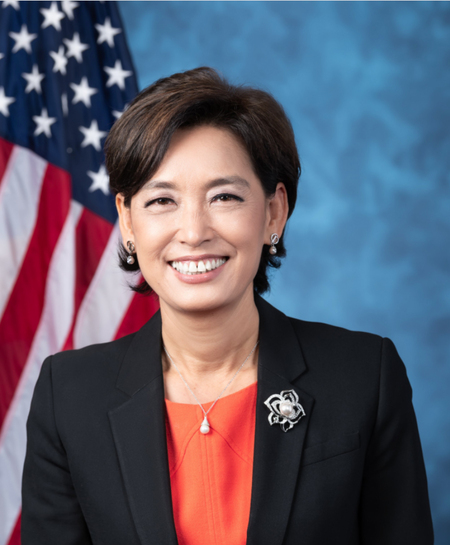
Rep. Young Kim
Sponsored bills
Maddy summaryThis bill directs the GAO to study whether designating Mexican drug cartels as Foreign Terrorist Organizations would help combat fentanyl trafficking (Section 2). It authorizes the Treasury Secretary to require U.S. financial institutions to implement specific anti-money laundering measures against entities or transactions linked to illicit fentanyl and narcotics financing (Section 3). These measures could include enhanced reporting or transaction restrictions for financial institutions operating outside the U.S. that facilitate fentanyl-related money laundering. The bill also mandates updated guidance for financial institutions on identifying Chinese money laundering schemes tied to fentanyl trafficking (Sections 4-5).
Maddy summaryHR 2367, the Truck Parking Safety Improvement Act, creates a federal grant program to address commercial truck parking shortages on highways. It provides competitive grants (totaling $175M-$320M over three years) for projects like building new rest areas, expanding parking at ports or truck stops, or improving safety at existing facilities. The program requires all funded parking to be free, publicly accessible to all truck drivers, and maintained without user fees. This directly affects commercial truck drivers, motor carriers, and highway safety by aiming to improve parking access, reduce traffic congestion, and enhance safety on federal-aid highways.
Maddy summaryThe ROUTES Act requires federal agencies to reopen recreation sites (like trails and campgrounds) on Interior lands (e.g., national parks, wildlife refuges) or National Forest System lands within two years after a natural disaster (such as wildfires or floods) ends. It speeds up repairs by allowing agencies to bypass standard environmental reviews for specific recovery activities, including removing hazard trees, fixing erosion, and restoring drainage. The bill directly affects the public who use these sites and the agencies managing them (Interior and Agriculture Departments), ensuring faster access after disasters. Agencies must also report annually on reopened sites versus those still closed due to disaster damage.
Maddy summaryHR 4235 creates a 4-year federal pilot program to test new wildfire prevention and response technologies. It requires federal agencies managing public lands (like the Forest Service and FEMA) to partner with private companies, nonprofits, or universities to test innovations in areas like early detection systems, communication tools, and safety equipment during real wildfire activities. The program prioritizes emerging technologies such as AI, 5G networks, and remote sensing, with agencies reporting annually on tested technologies, costs, and recommendations for wider adoption. The pilot aims to evaluate how these technologies can improve wildfire mitigation efforts across federal land management. The program expires four years after its establishment.
Maddy summaryHR 3396, the Fire Department Repayment Act of 2023, requires the Secretaries of Agriculture, Interior, Homeland Security, and Defense to establish standard procedures for federal fire suppression cost share agreements within one year. It mandates reviewing existing agreements to align them with local cooperative fire protection agreements and conducting second-level reviews after wildfires, involving state and local fire organizations. The bill directly affects fire departments and agencies participating in these cost-sharing arrangements under the Reciprocal Fire Protection Act. Key changes include standardized procedures for agreement management and post-wildfire reviews to ensure cost-sharing compliance.
Maddy summaryThe Save Our Sequoias Act establishes a coordinated approach to protect giant sequoia groves in California from wildfires, insects, and drought. It creates a Giant Sequoia Lands Coalition including federal agencies, state governments, and the Tule River Indian Tribe to assess grove health, develop protection projects, and recommend forest management activities. The bill streamlines implementation of certain projects through categorical exclusion from environmental reviews, authorizes $10-40 million annually for conservation efforts, and establishes a fund for philanthropic support of sequoia protection.
Maddy summaryThis bill establishes specific water allocation requirements for Central Valley Project (CVP) agricultural contractors based on water year types, guaranteeing at least 100% of contract water in Wet and Above Normal years, 50% in Dry years, and other specified percentages in other conditions. It requires CVP and SWP operations to follow the Preferred Alternative and Biological Opinions, with strict conditions for reconsultation during severe drought periods (requiring 4 consecutive years of D3/D4 drought). The bill also includes infrastructure provisions for the Shasta Dam enlargement project and includes a 7-year sunset provision for its main operational requirements. These provisions directly affect CVP contractors, SWP contractors, and water management agencies in California.
Maddy summaryThe AGOA Extension and Enhancement Act of 2024 extends the African Growth and Opportunity Act (AGOA) through September 30, 2037, maintaining duty-free access for eligible sub-Saharan African countries to the U.S. market. It requires beneficiary countries to develop and publish biennial utilization strategies outlining how they will better leverage AGOA benefits, with the U.S. providing trade capacity building assistance for implementation. The bill establishes a biennial review process to assess countries' ongoing eligibility based on criteria including anti-corruption standards, human rights compliance, and terrorism cooperation. It also creates a mandatory graduation process for high-income countries that maintain high-income status for five consecutive years, with limited exceptions for potential free trade agreement negotiations. The legislation includes new reporting requirements for the U.S. government on AGOA implementation and potential trade agreements with sub-Saharan African nations.
Maddy summaryHR 8586, the TOOMAJ Act, mandates U.S. sanctions against Iranian judges and prosecutors in the Islamic Revolutionary Courts who oversee cases involving political prisoners. It requires the President to annually determine and impose sanctions - using existing authorities like Executive Order 13818 - on officials involved in inhumane treatment, torture, or unfair trials of protesters and dissidents. The bill targets those handling cases stemming from Iran's crackdown on the Woman Life Freedom movement, following documented abuses like coerced confessions and executions. It aims to hold accountable judicial figures facilitating human rights violations, as detailed in the UN Fact-Finding Mission's 2024 report.