

Maddy summaryThis bill repeals key provisions of the Protection of Lawful Commerce in Arms Act (PLCAA), which previously shielded gun manufacturers and dealers from civil lawsuits. It allows gun trace data from the federal Firearms Trace System to be used as evidence in civil court cases involving gun violence. Victims of gun violence (or their families) who sue gun manufacturers, dealers, or distributors in state or federal court can now access and rely on this trace information. The bill directly changes the legal landscape by removing a major barrier to holding gun industry entities accountable in civil cases. It does not alter criminal proceedings or affect gun ownership rights.
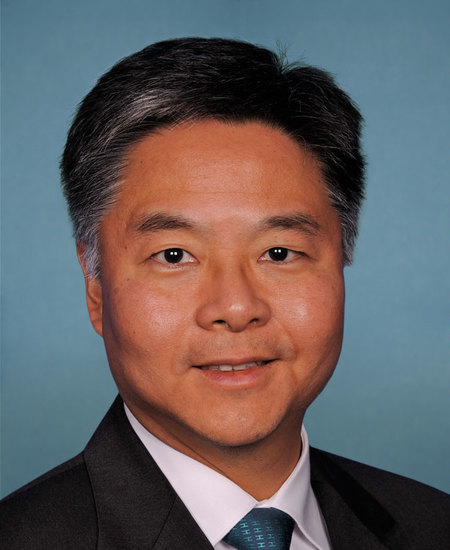
Rep. Ted Lieu
Sponsored bills
Maddy summaryThis resolution (HRES 459) is a symbolic gesture recognizing National Poppy Day, observed the Friday before Memorial Day. It supports the tradition of wearing red poppies as a symbol honoring U.S. military veterans who died in service, referencing the historical connection to World War I poetry and veterans' organizations. The resolution encourages all U.S. citizens, residents, and visitors to wear poppies on this designated day to express appreciation for those who died preserving freedom. It does not create new laws, funding, or obligations, but formally acknowledges the poppy's role in commemorating military sacrifice.
Maddy summaryHR 3694, the VALID Act of 2025, requires lenders to include specific information about VA loans in mortgage disclosures. It amends the National Housing Act to mandate that disclosures state the loan-to-value ratio and clarify that VA loans are available under Chapter 37 of Title 38 (veterans' benefits law), assuming prevailing interest rates. The bill also requires the Federal Housing Finance Agency to add a military service question to the Uniform Residential Loan Application form, placing it above the signature line within six months of enactment. This directly affects veterans and active-duty service members applying for VA-guaranteed mortgages, as well as the lenders processing those applications.
Maddy summaryThis bill updates federal housing law to explicitly prohibit discrimination based on sexual orientation and gender identity. It amends the Fair Housing Act to include these characteristics as protected classes alongside race, color, religion, sex, and other existing categories. The law now covers discrimination against individuals due to their own sexual orientation or gender identity, or because of their association with someone who has these characteristics. This applies to all housing providers, including landlords, real estate agents, and mortgage lenders, making it illegal to deny housing or services based on these factors.
Maddy summaryThe FBI Animal Cruelty Taskforce Act of 2025 establishes a dedicated FBI unit to investigate federal animal cruelty crimes, specifically targeting dogfighting, cockfighting, and "crush videos." This taskforce will create training materials for local law enforcement to help them detect and investigate these offenses. It also requires the taskforce to coordinate with agencies like the Department of Agriculture and U.S. Customs, and to submit annual reports to Congress detailing filed charges, convictions, and unresolved investigations. The bill directly affects local police departments through new training resources and federal agencies through mandated coordination and reporting.
Maddy summaryThis bill requires new passenger cars, SUVs, and light trucks (under 10,000 lbs) to have automatic emergency braking systems that detect cyclists in all lighting conditions and across diverse appearances. The rule must be finalized within 3 years of enactment, with manufacturers required to comply within two model years after the rule's release. It mandates systems that activate at appropriate speeds and recognize vulnerable road users like bicyclists, regardless of skin tone, clothing, or protective gear. The law directly affects vehicle manufacturers and aims to improve safety for cyclists through standardized vehicle technology.
Maddy summaryThe Menstrual Equity For All Act of 2025 requires schools, colleges, correctional facilities, and federal buildings to provide free menstrual products to those who need them. It makes menstrual products covered by Medicaid, prohibits states from taxing these products, and creates grant programs to support low-income individuals. Key provisions include mandating free products in educational settings, requiring employers with 100+ employees to provide them, and expanding Medicaid coverage for these items. The bill directly affects students, incarcerated individuals, homeless people, Medicaid beneficiaries, and low-income families by addressing period poverty through concrete access requirements.
Maddy summaryThis bill reorganizes collective bargaining rules for Veterans Health Administration (VHA) employees by removing existing subsections (b), (c), and (d) from Section 7422 of Title 38 and redesignating the current subsection (e) as (b). It directly affects VA health care employees by altering the structure of their collective bargaining framework. The bill explicitly states it does not change the Secretary of Veterans Affairs' existing authorities over incentive pay or expedited hiring under Section 706 of Title 38. The change is purely procedural, focusing on the internal organization of bargaining rules without introducing new employee benefits or obligations.
Maddy summaryThe FIRE Act would extend workplace safety protections under OSHA and labor rights under FLSA to incarcerated firefighters who work in correctional facilities. It defines "incarcerated firefighter" as someone performing firefighting duties while incarcerated, including in prison work programs, facility maintenance, or emergency response services. The bill requires states and federal prisons to report on workplace safety conditions and provides grants to help states implement these protections. It also establishes an expungement process for certain criminal records of eligible incarcerated firefighters who have completed their sentences. This legislation aims to improve safety for incarcerated firefighters while creating pathways for their successful reentry into communities as firefighters.
Maddy summaryHouse Resolution 442 is a symbolic measure recognizing California's public higher education systems (University of California, California State University, and community colleges) and reaffirming the U.S. commitment to supporting them. It highlights their economic impact - such as generating billions in state revenue and supporting hundreds of thousands of jobs - and their role in providing accessible education, particularly for low-income and underrepresented students. The resolution does not create new policies or funding but formally acknowledges these systems' contributions to California's economy and workforce development. It serves as a statement of support without altering existing programs or obligations.