

Maddy summaryThis resolution designates September 22-28, 2025, as "Asian American and Native American Pacific Islander-Serving Institutions Week" to honor institutions that serve Asian American, Native Hawaiian, and Pacific Islander students. It recognizes these colleges and universities as critical providers of higher education, noting they enroll 46% of AANHPI undergraduates despite comprising only 7% of U.S. institutions. The resolution emphasizes their role in supporting low-income, first-generation students and preserving cultural heritage, while calling for national recognition through community activities during the designated week. It is a symbolic gesture with no funding or policy changes attached.
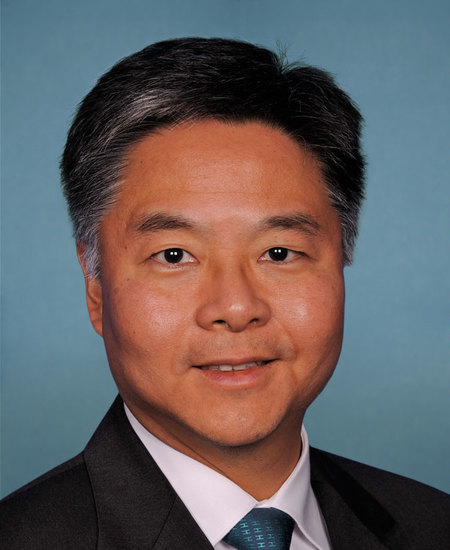
Rep. Ted Lieu
Sponsored bills
Maddy summaryHR 5529, the Fair Housing for Disabled Veterans Act, changes how veteran disability payments are treated when determining eligibility for low-income housing programs. Specifically, it amends the tax code to exclude disability compensation or pension payments (under 38 U.S.C. chapters 11 or 15) from income calculations for low-income housing tax credits and residential rental project bonds. This means disabled veterans applying for these housing assistance programs will not have their disability benefits counted as income, potentially making them eligible for more housing options they otherwise might have been disqualified from. The bill directly affects disabled veterans seeking affordable housing through these federally supported programs.
Maddy summaryThis bill creates a pathway to permanent residency for certain college graduates who entered the U.S. as children under specific nonimmigrant visa categories (excluding H-1B, L-1, etc.). To qualify, applicants must have been lawfully present for 10 years total (including 8 years as a dependent child), graduated from a U.S. college, and not be inadmissible. It also changes how "child status" is determined for immigration purposes - using specific dates instead of age to prevent "age-outs" for dependents of long-term visa holders - and preserves priority dates for family members. These changes apply to individuals who entered the U.S. before age 21 and maintained lawful status under qualifying visas.
Maddy summaryThis bill requires health plans and insurers to create a clear, timely process for patients or doctors to request exceptions when step therapy protocols (which force patients to try cheaper drugs first) might harm them. It mandates approval for exceptions in six specific cases, such as when prior treatments failed, delaying care risks severe harm, or the required drug causes adverse reactions. Plans must respond within 72 hours (24 hours for emergencies) and cover the requested drug for at least one year if approved. Additionally, health plans must report annual data on exception requests, approvals, denials, and reasons to the government for transparency.
Maddy summaryThe GREEN Streets Act (HR 5465) requires states and metropolitan planning organizations to establish and meet new performance targets for reducing greenhouse gas emissions and decreasing vehicle miles traveled on public roads. It mandates that states analyze projects increasing traffic capacity for environmental justice impacts and requires states that miss emissions targets to dedicate specific portions of federal transportation funds to projects like transit expansion, active transportation infrastructure, and transit-oriented development. The bill establishes new definitions for transit accessibility, mode share, and stop distance, and requires covered entities (metropolitan areas with populations over 250,000) to report on progress toward these targets. The legislation aims to shift transportation planning toward more sustainable, equitable, and low-emission infrastructure.
Maddy summaryHRES 746 is a non-binding resolution passed by the U.S. House of Representatives condemning all political violence - including attacks on elected officials, candidates, and public figures - and rejecting rhetoric that dehumanizes opponents. It specifically urges law enforcement to investigate and prosecute such violence, calls on public officials and media to avoid inflammatory language, and references recent incidents like the 2025 assassination of activist Charlie Kirk and targeted shootings of Minnesota legislators. The resolution does not create new laws but formally expresses the House’s commitment to protecting public servants and promoting peaceful political discourse. It directly affects the House’s public stance and serves as a call to action for officials, media, and communities to foster civil engagement.
Maddy summaryThis bill allocates $5 million annually (2026-2030) to states for collecting de-identified stillbirth data through existing health systems, including risk factor analysis. It also provides $1 million yearly to develop standardized guidelines for healthcare providers and public educational materials about stillbirths, requiring consultation with medical professionals, bereavement organizations, and affected families. The bill mandates that all data collection complies with privacy laws and requires the Department of Health and Human Services to publish a public report on stillbirth guidelines within five years. It directly affects state health departments, healthcare providers, and families experiencing stillbirth by improving data quality and access to resources.
Maddy summaryThe Redistricting Reform Act of 2025 requires states to use independent redistricting commissions for congressional redistricting, banning partisan gerrymandering and requiring plans to comply with constitutional and Voting Rights Act standards. The bill establishes ranked criteria for redistricting, prioritizing population equality, voting rights protections, and community preservation over partisan advantage. It mandates multi-partisan commission composition with public input and transparency requirements, with states facing court-developed plans if they miss deadlines. The law would apply to redistricting after the 2030 census, affecting all 50 states' congressional district maps.
Maddy summaryHJRES 123 is a congressional disapproval resolution targeting a specific rule by the Centers for Medicare & Medicaid Services (CMS). It seeks to nullify CMS's June 2025 rule titled "Patient Protection and Affordable Care Act; Marketplace Integrity and Affordability," which was published in the Federal Register (90 Fed. Reg. 27074). If passed, the resolution would block this rule from taking effect under procedures outlined in Title 5, U.S. Code. The bill directly affects the CMS regulation governing the Affordable Care Act's health insurance marketplace, not the broader law itself.
Maddy summaryHJRES 122 proposes a constitutional amendment that would grant Congress and states explicit authority to regulate campaign contributions and spending intended to influence elections. It would allow for reasonable, viewpoint-neutral limits on how much money candidates and others can raise or spend, as well as enable public financing systems to reduce private wealth's influence in campaigns. The amendment would permit distinguishing between individuals and corporations in campaign finance rules, potentially banning corporate spending to influence elections. It explicitly states this amendment would not affect the freedom of the press.