

Maddy summaryThe American Energy Independence and Affordability Act extends multiple clean energy tax credits that were set to expire between 2025 and 2026. It specifically extends residential clean energy credits through 2034, clean electricity investment credits for wind and solar through 2032, and clean vehicle credits for electric vehicles through 2032. The bill also reinstates special rates for sustainable aviation fuel and modifies requirements for energy-efficient home improvements. These provisions directly affect homeowners installing solar panels, businesses investing in clean energy infrastructure, and manufacturers producing clean energy equipment.
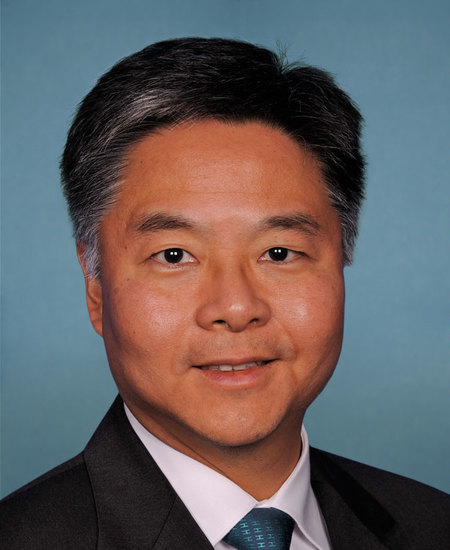
Rep. Ted Lieu
Sponsored bills
Maddy summaryThis bill amends the tax code to allow businesses to claim charitable tax deductions for donating specific food-related equipment to hunger-relief organizations. It creates a new category called "qualified property," covering fully functional food storage equipment (like industrial freezers), transportation vehicles (delivery trucks), and meal preparation tools (industrial ovens, packing machinery). Donors can deduct up to 25% of the equipment's fair market value, with annual limits of $500 for transport equipment and $15,000 for preparation equipment. The changes apply to tax years beginning after December 31, 2025, and only affect donations to organizations whose primary mission is distributing food to people in need.
Maddy summaryHR 5835, the REPO Implementation Act of 2025, establishes a mechanism to use frozen Russian sovereign assets held abroad for Ukraine's benefit. It creates a "Ukraine Support Fund" to hold these assets without confiscation and requires the U.S. Treasury to invest them in U.S. government obligations. The bill mandates quarterly transfers of at least $250 million from the fund to Ukraine for assistance, with final amounts spent when less remains. It also requires the President to report to Congress on Russian assets held by foreign countries (including G7/EU members) and urges diplomatic efforts to secure similar asset repurposing from those nations.
Keep Air Travel Safe Act This bill provides continuing appropriations for the Transportation Security Administration (TSA) during any period in which there is a lapse in appropriations for TSA. It also requires the continuing appropriations to be funded using certain unobligated funds that were provided to U.S. Immigration and Customs Enforcement by the One Big Beautiful Bill Act. The bill provides the appropriations for TSA to continue all programs, projects, or activities (including the costs of direct loans and loan guarantees) that were funded in the preceding fiscal year. The appropriations provided by this bill are available from the first day of a lapse in appropriations for TSA until the earlier of the date on which the applicable regular appropriations bill for the fiscal year becomes law or a joint resolution making continuing appropriations becomes law, or the date that is 180 days after the first day of a lapse in appropriations.
Maddy summaryHRES 797 is a non-binding resolution expressing concern about the rising number of book bans in U.S. schools and libraries. It cites PEN America data showing 6,870 book bans affecting 3,751 titles between July 2024 and June 2025, with books about race, LGBTQ+ experiences, and marginalized communities disproportionately targeted (e.g., *The Handmaid’s Tale*, *Maus*, *This Book Is Gay*). The resolution calls on schools to follow best practices for book challenges, protect students’ access to diverse materials, and return books removed from military schools under recent executive orders. It directly addresses students, educators, librarians, and authors impacted by censorship, emphasizing that such bans threaten free expression and democratic values.
Maddy summaryHRES 795 is a non-binding resolution condemning Hamas for the October 7, 2023, attacks that killed over 1,200 people, took 251 hostages (including Americans), and involved sexual violence. It demands Hamas immediately surrender and release all remaining hostages - specifically noting 48 people still held, including two U.S. citizens. The resolution also affirms Israel’s right to self-defense, calls for humanitarian aid to reach Palestinians, and condemns global antisemitism following the attacks. As a symbolic congressional statement, it does not create new laws or alter policies.
Maddy summaryHR 5705 requires the federal government to reimburse state agencies for funds they use to maintain participation in the WIC program during a government shutdown. It directly affects states that cover WIC costs using their own money when federal funding lapses. The bill establishes a process where states can seek reimbursement from the federal government after the shutdown ends. This ensures states aren’t burdened with costs for a federal funding gap that impacts nutrition assistance for women, infants, and children.
Maddy summaryHR 5673, titled "Stop the Trump Electricity Price Hikes Act," would reinstate financial assistance awards terminated by the Department of Energy under a May 15, 2025, secretarial memorandum. It directly affects recipients of these awards - likely energy or infrastructure projects - that had their funding cut, by restoring their financial support as if the terminations never occurred. The key mechanism requires the Department to treat all such terminated awards as valid and continuing, overriding prior termination actions. This bill does not address electricity pricing, consumer rates, or introduce new energy regulations.
Maddy summaryHR 5689, the "Shutdown Guidance for Financial Institutions Act," requires federal banking regulators (like the Fed and FDIC) to issue guidance within 180 days of enactment. The guidance directs financial institutions to help consumers and businesses affected by government shutdowns - such as furloughed federal workers, District of Columbia employees, or contractors with reduced income - by offering flexible payment options, modifying loan terms, and preventing temporary payment difficulties from harming credit scores. Regulators must also issue a press release within 24 hours of a shutdown starting to notify institutions and the public. The bill mandates a post-shutdown report to Congress within 90 days and potential guidance updates if issues arise.
Maddy summaryThis bill prohibits the removal of most federal civil service employees during government shutdowns caused by funding gaps. It prevents the President or agency heads from terminating these employees (including through layoffs) while discretionary funding is not in place. The protection specifically excludes political appointees, defined as those in leadership roles like cabinet positions, senior executive service roles, or "schedule C" policy positions. The law aims to stabilize the permanent workforce during funding disruptions.