

Maddy summaryHR 2937, the PROTECT 911 Act, creates federal resources and grants to support the mental health of 911 operators (public safety telecommunicators). It requires the Secretary to develop evidence-based best practices for preventing and treating PTSD and related disorders among these workers, and to create educational materials for mental health professionals about their unique workplace stressors. The bill also authorizes grants for states and local emergency communications centers to establish or enhance evidence-based wellness programs, including peer-support initiatives, to address job-related mental health challenges. These programs aim to improve support for 911 operators who handle emergency calls in 911 centers.
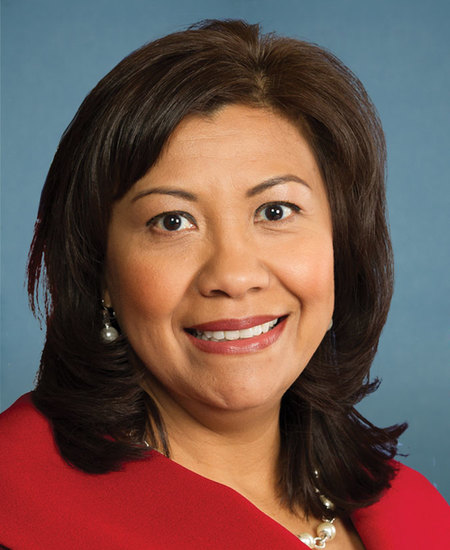
Rep. Norma J. Torres
Sponsored bills
Maddy summaryHR 2949, the Working Families Task Force Act of 2025, establishes a federal task force to examine challenges facing working families and develop policy recommendations. The task force, led by the Secretary of Labor and including representatives from 9 agencies (like Health, Education, Housing, and Small Business), will meet quarterly to study issues such as affordable childcare, livable wages, housing access, healthcare costs, and workforce training. It must submit a report to Congress within 180 days, detailing findings, stakeholder consultations, and recommendations for improving working families' quality of life. This bill creates a research and coordination mechanism but does not enact new laws or funding.
Maddy summaryHRES 332 is a resolution designating April 11-17, 2025, as "Black Maternal Health Week" to raise awareness about maternal health disparities affecting Black women and birthing people in the U.S. It references CDC data showing Black women are 2-3 times more likely to die from pregnancy-related causes than White women and that the U.S. has the highest maternal mortality rate among developed nations. The resolution emphasizes the need to address systemic inequities contributing to these outcomes without creating new laws or funding. It serves as a symbolic recognition to amplify community-led efforts, such as those by the Black Mamas Matter Alliance, rather than implementing policy changes.
Maddy summaryHR 2906, the SERVICE Act, requires federal agencies to submit a detailed report to Congress and the Government Accountability Office (GAO) before reducing their workforce by more than 5% in a fiscal year. The report must analyze financial impacts (including pay, benefits, and replacement costs), mission effects on specific offices/services, and the agency’s analytical basis for the reduction. The GAO must then review the report within 180 days and assess whether it includes all required elements and credible supporting data. This 210-day review period applies to all agencies covered under the law, directly affecting federal workforce planning decisions. The bill aims to ensure transparency and evidence-based decision-making around federal staffing changes.
Maddy summaryHR 2837 establishes an Advisory Council under the Department of Health and Human Services to improve access to existing resources for victims of gun violence. The council, composed of federal agency heads and appointed victims/support professionals, will assess needs, identify effective programs, and compile a public resource hub with contact information for medical, financial, mental health, legal, and government support services. It requires a detailed report within 180 days of enactment and a follow-up report within two years, focusing on gaps in current assistance and coordination. The bill directly affects individuals defined as victims of gun violence (including those wounded, threatened, witnessing incidents, or related to victims) and aims to connect them to existing federal, state, and nonprofit resources without authorizing new funding. The council will sunset after five years.
Maddy summaryHR 2820, the California Clean Coast Act of 2025, prohibits new oil and gas leasing and related activities in federal waters off California's coast starting from its enactment date. This directly affects oil and gas companies seeking to develop new offshore resources in California’s outer Continental Shelf areas. The bill preserves existing leases issued before the law’s effective date but bans all future preleasing, leasing, and related activities in those waters. It represents a permanent federal policy change for California’s coastal offshore regions, with no impact on current leaseholders.
Maddy summaryHRES 322 is a symbolic resolution supporting National Public Safety Telecommunicators Week. It recognizes the critical role of public safety telecommunicators - those who handle emergency calls, provide life-saving guidance during crises, and support first responders - and urges the public to acknowledge their contributions. The resolution does not create new laws or policies but formally honors these professionals through congressional recognition. It directly affects no individuals or entities through legislative action, serving only as a statement of appreciation.
Maddy summaryThe American Family Act (HR 2763) establishes a new refundable child tax credit that provides monthly payments to eligible families with children. It would pay $300 per month for each child under age 6 and $360 per month (120% of $300) for each child age 6 or older, with income limits of $150,000 for joint filers and $112,500 for other filers. The bill creates a "period of presumptive eligibility" to determine eligibility for monthly payments, allowing families to receive advance payments based on information from previous tax returns. This would directly affect millions of families with children who meet the income requirements, providing more consistent financial support throughout the year rather than an annual tax credit.
Maddy summaryHR 2753, the Hands Off Medicaid and SNAP Act of 2025, is a procedural bill that would prevent Congress from using budget reconciliation to cut Medicaid or SNAP benefits. It amends the Congressional Budget Act to block reconciliation bills or amendments that reduce Medicaid enrollment/benefits (under Social Security Act Title XIX) or SNAP eligibility/benefits (under the Food and Nutrition Act of 2008). This rule would apply until January 20, 2029, and only affects the budget reconciliation process, not the programs themselves. The bill does not change current benefit levels or eligibility rules for Medicaid or SNAP recipients.
Maddy summaryThe Raise the Wage Act of 2025 gradually increases the federal minimum wage from $9.50 to $17.00 per hour over six years, with annual adjustments based on median wage growth. It raises the base wage for tipped workers from $6.00 to $17.00 per hour, phasing out their separate minimum wage structure by 2029. The bill also eliminates special minimum wage certificates for disabled workers after 2029, requiring employers to pay the standard minimum wage. These changes apply to most covered workers, including tipped employees and those under 20, with specific transition timelines for each group.