

Maddy summaryThe Public Service Freedom to Negotiate Act of 2024 establishes federal minimum standards for collective bargaining rights for public employees and supervisory employees. The Federal Labor Relations Authority will determine if each state's laws "substantially provide" for these rights, and if not, federal standards will apply to that state. These standards include the right to self-organization, collective bargaining, recognition of labor organizations, and procedures for resolving disputes. The bill preserves existing collective bargaining agreements and excludes certain employee categories like emergency services workers from some provisions.
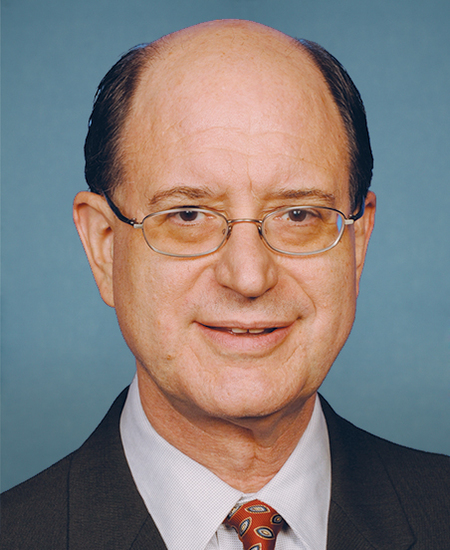
Rep. Brad Sherman
Sponsored bills
Maddy summaryThis bill requires the Secretary of State to host a U.S.-Africa Leaders Summit every four years (or more often), bringing together African government leaders, civil society, business, diaspora, women, and youth leaders to strengthen cooperation. It also directs the hosting of a smaller "U.S.-Africa City Summit" every four years (two years after the main summit) in African or U.S. cities to foster subregional engagement. A dedicated implementation unit within the State Department will track commitments made at these summits, coordinate with other federal agencies, and publish quarterly progress reports online. The bill does not create new funding but depends on available resources and directly affects U.S. diplomatic operations and African stakeholders participating in the summits.
Maddy summaryHR 8001 requires the President to submit annual reports to Congress on Houthi capabilities, attacks threatening Red Sea/Gulf of Aden shipping, and violations of the UN arms embargo against Yemen. It mandates detailed assessments of Houthi military capacity, Iranian support, weapons systems, and the economic impact of attacks on global trade. The bill authorizes sanctions - including asset blocking and visa bans - against foreign entities supporting Houthi attacks on international shipping or supplying weapons to the Houthis. These sanctions directly affect foreign individuals and organizations deemed responsible for aiding Houthi aggression in the Red Sea region. The law expires five years after enactment.
Maddy summaryHR 3246, the Sanction Russian Nuclear Safety Violators Act of 2023, imposes U.S. sanctions on Russian individuals or entities that endangered the Zaporizhzhia Nuclear Power Plant’s safety or Ukrainian operational control since Russia’s 2022 invasion of Ukraine. Key provisions require the President to block assets and deny visas to targeted foreign persons, with exceptions for humanitarian aid and efforts to restore Ukrainian control of the plant. The bill directly affects Russian officials and Rosatom personnel involved in the plant’s operations, aiming to address safety risks highlighted by the IAEA.
Maddy summaryHRES 1228 is a ceremonial resolution passed by the U.S. House of Representatives to formally recognize May as Asian American, Native Hawaiian, and Pacific Islander (AANHPI) Heritage Month. It celebrates the historical contributions of AANHPI communities to the United States, citing their diverse cultural impact and key milestones like the completion of the transcontinental railroad. The resolution does not create new laws or policies but encourages the public to observe the month through educational programs and events. It directly affects all Americans by promoting awareness of AANHPI history and achievements, while acknowledging ongoing challenges like anti-Asian hate crimes.
Maddy summaryThe Blockchain Integrity Act imposes a 2-year moratorium (starting 6 months after enactment) prohibiting financial institutions from handling funds routed through digital asset mixers or sent to them. This directly affects banks and financial services companies that process cryptocurrency transactions. The bill requires the Treasury Secretary to study digital asset mixers, privacy coins, and related technologies, including their use in both criminal activity and legitimate scenarios like journalist payments. The study must report on tracking capabilities, international approaches, and specific illicit activities like sanctions evasion and human trafficking, with findings due to Congress within 18 months.
Payment Choice Act of 202 3 This bill requires retail businesses to accept cash as a form of payment for on-site sales of $500 or less, and it prohibits them from charging cash-paying customers a higher price compared to customers not paying with cash. Businesses covered by this bill are those engaged in the business of selling or offering goods or services at retail to the public that accept in-person payments at a physical location. The bill provides for enforcement through preventative relief, damages, and civil penalties.
Maddy summaryThis bill names a specific United States Postal Service facility at 24355 Creekside Road in Santa Clarita, California, as the "William L. Reynolds Post Office Building." It directly affects the physical location of this post office by changing its official designation. The key provision is a simple name change, with all existing references to the building in federal documents automatically updated to reflect the new name. This is a ceremonial designation with no policy or funding changes.
Maddy summaryThis resolution (HRES 1199) commemorates the 50th anniversary of Turkey's 1974 military invasion and ongoing occupation of northern Cyprus. It formally condemns Turkey's continued occupation, calls for the immediate withdrawal of its 35,000 troops, and demands the removal of over 200,000 Turkish settlers from the occupied territory. The resolution also urges Turkey to assist in repatriating displaced Cypriot refugees and to cooperate on resolving the fate of missing persons, including U.S. citizens. As a symbolic congressional statement, it does not create binding law but expresses the House's position on the Cyprus issue.
Maddy summaryThis bill directs the Department of Education to use the International Holocaust Remembrance Alliance (IHRA) definition of antisemitism when enforcing Title VI of the Civil Rights Act in federal education programs. It clarifies that discrimination against Jewish individuals based on actual or perceived shared ancestry or ethnic characteristics may violate Title VI protections, requiring agencies to consider antisemitism intent during investigations. The law affects schools and universities receiving federal funds by guiding how they handle discrimination complaints related to antisemitism. It does not create new legal standards or expand the Department of Education's authority, as explicitly stated in the bill.