

Maddy summaryThe Sarah Katz Caffeine Safety Act would require restaurants and retail food establishments with 20 or more locations to label menu items containing 150 milligrams or more of caffeine per serving with a "High caffeine" warning. It would mandate that packaged foods and dietary supplements with more than 10 milligrams of caffeine display the exact caffeine content, whether naturally occurring or added, along with a safety advisory about daily limits (400 milligrams for healthy adults). The bill directs the FDA to review caffeine safety in food and beverages, and the NIH to study caffeine's effects on vulnerable populations including children, pregnant women, and those with heart conditions or mental health conditions. It also requires a public education campaign about caffeine safety and a GAO study on the marketing of caffeinated beverages to children and teens, with reports due within 6 months and 180 days respectively.
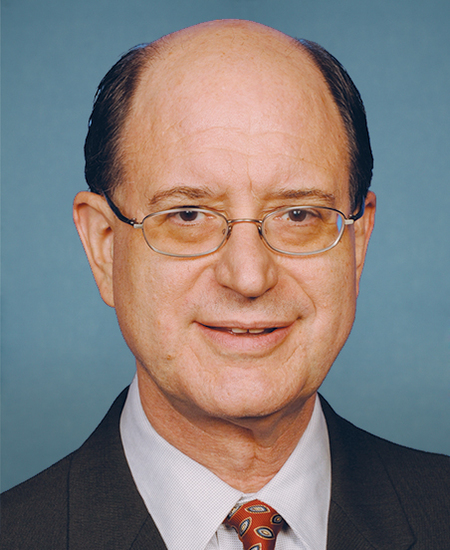
Rep. Brad Sherman
Sponsored bills
Maddy summaryHR 2487, the Transgender Health Care Access Act, aims to improve access to gender-affirming care for transgender individuals by funding training and education for healthcare providers. The bill provides $10 million annually for medical schools to develop curricula on gender-affirming care and culturally competent treatment, and $15 million annually for grants to train medical residents, nurse practitioners, and community health centers serving transgender patients. It specifically targets rural providers through $5 million annually for collaborative networks to expand care in underserved areas. The legislation requires a report to Congress within two years detailing progress in improving health equity for transgender populations.
Save America's Forgotten Equines Act of 2025 or the SAFE Act of 2025 This bill permanently prohibits the slaughter of equines (e.g., horses and mules) for human consumption. (Current law prohibits the slaughter of dogs and cats for human consumption. This bill extends the prohibition to equines.) Specifically, this bill prohibits a person from knowingly (1) slaughtering an equine for human consumption; or (2) shipping, transporting, possessing, purchasing, selling, or donating an equine to be slaughtered for human consumption or equine parts for human consumption. The bill subjects a violator to a fine. The bill applies to conduct in or affecting interstate or foreign commerce or within the special maritime and territorial jurisdiction of the United States. However, it does not apply to an activity carried out by an Indian for a religious ceremony. As background, in recent years, the appropriations acts have prohibited the Department of Agriculture (USDA) from using federal funds to inspect horses before they are slaughtered for human consumption. Therefore, there are currently no USDA-inspected horse slaughter facilities in the United States.
Maddy summaryHRES 265 is a symbolic House resolution condemning the Trump administration for allegedly using the Signal messaging app to share highly sensitive or classified military information, directly affecting officials including Vice President Vance, Secretary of Defense Hegseth, and Secretary of State Rubio. The resolution cites risks to national security, noting foreign adversaries like China and Russia have previously accessed U.S. classified data. It calls for investigations into unauthorized communications, mandates review of classified information procedures, and demands accountability for any violations of federal laws governing classified data handling. The resolution does not create new laws but formally expresses disapproval of the administration's communication practices.
Maddy summaryThis bill mandates a 12-month study by the Government Accountability Office (GAO) to analyze the feasibility of a federal program that would buy properties from homeowners in high-risk wildfire areas before or after disasters. The study must examine existing buyout programs, develop definitions for terms like "disadvantaged community," and recommend how to implement such a program, including land use after buyouts and eligibility mapping. It does not create a new program or provide immediate relief but requires a report to Congress within one year detailing findings and cost analysis. The bill directly affects future policy decisions, not current homeowners.
Maddy summaryHR 2427, the Stop Disaster Price Gouging Act, prohibits businesses from significantly increasing prices for essential goods and services during declared disasters. It limits price hikes to 10% for items like food, lodging, and home repairs within 30 days (or 180 days for reconstruction services), and bans prices 50% above pre-disaster costs for essentials. Exceptions include legitimate cost increases (e.g., supplier costs or seasonal adjustments) and pre-agreed rental terms. The Federal Trade Commission enforces the law, while states and individuals can also sue violators for damages or injunctions. Violations face civil penalties up to $25,000 per violation, with recovered funds directed to disaster-affected communities.
Maddy summaryThis resolution requests the President and Secretary of State to share specific documents with the House of Representatives by April 9, 2025. It seeks all records created after January 20, 2025, related to U.S. military strikes on Yemen's Houthis and the disclosure of classified information to journalist Jeffrey Goldberg via Signal. The documents include Signal chat transcripts, strike details, legal justifications, coordination with allies, and any new security reforms following the incident. This procedural request directly affects the executive branch and aims to obtain records about sensitive national security communications.
Maddy summaryThis bill would require federal firearms licensees to prohibit sales of specific high-capacity rifles and shotguns to people under 21. It targets semiautomatic centerfire rifles and shotguns capable of holding more than 5 rounds in their magazines, raising the age limit from 18 to 21 for these weapons. Exceptions apply for active military members and certain government employees authorized to carry firearms. The law directly affects gun retailers and individuals under 21 seeking to purchase these specific firearms. It modifies existing federal gun sale rules without changing age requirements for other firearms.
Maddy summaryThis bill designates Uyghurs and other Muslim minority group members from Xinjiang who have experienced or fear persecution for peaceful political, religious, or cultural expression as "persons of special humanitarian concern" for refugee resettlement. It provides for Priority 2 processing under the refugee system, waives the presumption that applicants are immigrants, and excludes them from numerical visa limits. The bill requires regular reporting on refugee applications from Xinjiang, including wait times and denial reasons, and encourages other countries to make similar accommodations for Xinjiang refugees. The provisions apply to individuals who fled Xinjiang due to detention, forced labor, family separation, or other human rights abuses documented in the bill's findings. The bill would expire 10 years after enactment.
Protecting Students with Disabilities Act This bill prohibits the use of appropriated funds to eliminate the Department of Education's (ED's) oversight of the Individuals with Disabilities Education Act (IDEA). (The IDEA authorizes grant programs that support special education and early intervention services for children with disabilities. Currently, the IDEA is administered by the Office of Special Education Programs in the Office of Special Education and Rehabilitative Services in ED.) Specifically, the bill prohibits the use of appropriated funds to eliminate, consolidate, or otherwise restructure any office within ED that administers or enforces programs under the IDEA. Further, appropriated funds may not be used to (1) terminate, reassign, or alter the responsibilities of any personnel of any such office; or (2) contract with, or delegate to, any entity outside of ED to administer or enforce IDEA programs. (On March 20, 2025, President Donald Trump signed an executive order titled Improving Education Outcomes by Empowering Parents, States, and Communities , calling for the closure of ED and giving authority over education to the states. Further, the Trump Administration has announced plans to transfer ED's oversight of services for students with disabilities to the Department of Health and Human Services.)