

Maddy summaryHR 5073, the INFORM Act of 2025, requires immigration authorities to notify the immediate family of a detained individual within 24 hours if they are transferred to a different detention facility. This applies directly to immigrants held under U.S. immigration law and their immediate family members, defined as parents, children, spouses, and certain extended family like step-relatives or domestic partners. The law mandates that notifications include the reason for the transfer and full contact details (name, address, phone number, and point of contact) for the new facility. It establishes a specific timeline and content requirement for these notifications to improve transparency during detention transfers. The bill focuses on procedural changes for facility transfers, not on altering detention policies or immigration eligibility.
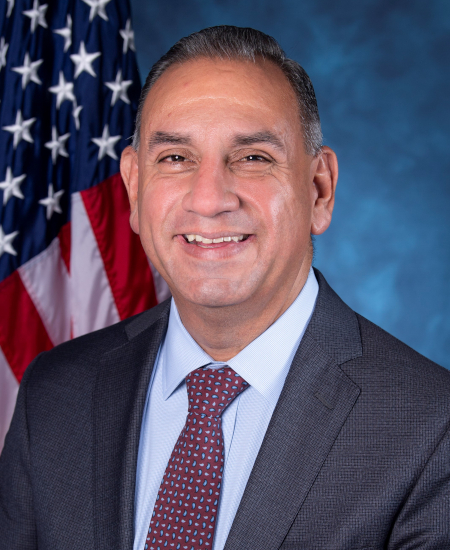
Rep. Gilbert Ray Cisneros, Jr.
Sponsored bills
Maddy summaryHRES 657 is a non-binding House resolution affirming that the retirement age for Social Security and Medicare should not be raised, referencing President Trump’s 2024 pledge. It states the House’s position that current eligibility ages must be preserved, rejecting proposals to delay access to benefits for seniors. The resolution highlights that raising retirement ages would disproportionately impact workers in physically demanding jobs and lower-income communities who rely on these programs for income and healthcare. As a symbolic statement - not a law - it expresses support for maintaining existing benefits but does not change policy or create new obligations.
Maddy summaryThis bill extends the expiration date for a provision allowing certain vehicles to use High Occupancy Vehicle (HOV) lanes without meeting standard occupancy requirements. Specifically, it amends federal law to change the deadline from September 30, 2025, to September 30, 2031. The change directly affects drivers and vehicle operators who currently qualify for this exemption under existing rules. It is a procedural reauthorization, not a policy change, maintaining the current HOV lane exemption rules for an additional six years.
Maddy summaryHR 4966 prohibits grocery stores from selling items at "grossly excessive prices," defined as 120% or more above the average market price over the previous six months (with exceptions for unavoidable cost increases like supply chain issues). It bans using facial recognition or personal data to set different prices for individual customers (e.g., adjusting prices based on shopping history) and requires clear signage if facial recognition is used. Stores over 10,000 square feet must replace electronic shelf labels with physical price tags. The Federal Trade Commission enforces these rules, allowing consumers to seek $3,000 per violation or actual damages, with penalties for willful violations.
Maddy summaryThe PUPP Act of 2025 creates a federal grant program to fund housing for unhoused people who have pets. It authorizes $5 million annually (2026-2030) for grants to local governments, nonprofits, or housing providers to build or retrofit properties that offer both human housing and pet-friendly accommodations. Key requirements include on-site veterinary care for pets (spaying, vaccinations, etc.), supportive services like mental health counseling for residents, and coordination with local animal care providers. This directly affects unhoused individuals with pets - often excluded from standard shelters - and the organizations managing these housing programs.
Maddy summaryThe CLEAR ID Act (HR 4843) requires U.S. Immigration and Customs Enforcement (ICE) and other authorized officers conducting civil immigration enforcement actions to visibly identify themselves. Specifically, it prohibits wearing masks that hide identity, mandates clear agency vehicle markings, and requires officers to verbally state their agency and show a badge. The law applies to all "covered immigration officers" from DHS agencies and partner agencies conducting enforcement under immigration law. Exceptions exist for medical needs or approved undercover operations meeting strict safety and legal criteria. The bill directly affects federal, state, and local officers performing immigration enforcement duties.
Maddy summaryHR 4847 extends deadlines for states to advance federally funded emergency highway projects after a declared disaster. It prevents the federal government from requiring projects to move to construction before the end of the sixth fiscal year following either a state governor's emergency declaration or the president's major disaster declaration. States can request up to one year extensions for these deadlines, with additional extensions possible if the state provides justification. The bill also requires the federal government to update and publicly share emergency relief manuals every two years to guide states on handling disaster-related highway projects. This directly affects states managing federal highway emergency funds following disasters.
Maddy summaryThe CREATE Act increases tax credit limits for film and television productions, raising the annual spending cap from $15 million to $30 million for qualified productions and adjusting related thresholds from $20 million to $40 million. It adds an annual inflation adjustment mechanism to these limits starting in 2026, automatically increasing them based on the cost-of-living index. The bill extends the program's expiration date from December 31, 2025, to December 31, 2030. This directly affects producers of eligible entertainment projects by expanding available tax credits and providing long-term stability for the industry. The changes apply to productions starting in taxable years ending after December 31, 2025.
Maddy summaryThis bill improves how federal agencies transition small business innovations from the SBIR/STTR programs into commercial markets. It requires training for government procurement staff on Phase III (commercialization) processes, including how to use Phase III agreements and sole-source contracts. The bill also mandates agencies to actively promote transitioning SBIR/STTR-developed products to Phase III and simplifies award procedures by requiring standardized contracts and reporting on streamlined processes. It directly affects small businesses participating in SBIR/STTR programs and federal agencies managing these contracts.
Maddy summaryThis bill adjusts health insurance subsidies by modifying the premium tax credit structure under the Internal Revenue Code. It replaces previous income thresholds with a sliding-scale formula, increasing subsidies for households earning between 150% and 400% of the federal poverty level - reducing their required premium payments as income rises within these tiers. The changes apply to tax years beginning after December 31, 2025, directly affecting middle-income individuals and families purchasing coverage through health insurance marketplaces. It also repeals specific provisions from a prior reconciliation law related to health care.