

Maddy summaryThis bill requires most health insurance plans, Medicare Part D, Medicaid, and CHIP to cover vaccines recommended by the CDC's Advisory Committee on Immunization Practices (ACIP) without cost-sharing (like copays or deductibles). It applies to vaccines recommended as of October 25, 2024, including updates through 2029, and covers all such vaccines for the period starting when the bill is enacted until December 31, 2029. The requirement excludes vaccines given within minimum recommended intervals. It directly affects patients, insurers, and government health programs by ensuring no out-of-pocket costs for covered vaccines during this timeframe.
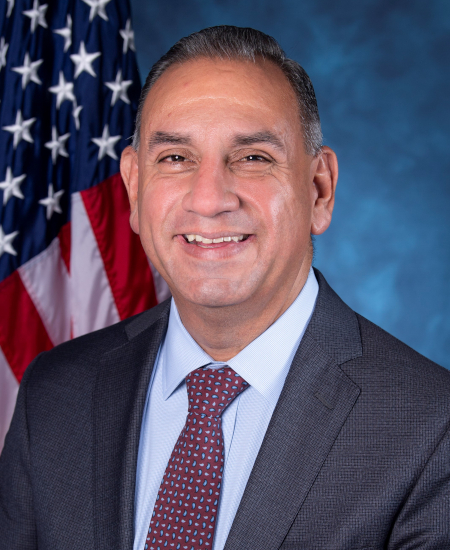
Rep. Gilbert Ray Cisneros, Jr.
Sponsored bills
Maddy summaryThe Tyler Clementi Higher Education Anti-Harassment Act of 2025 requires U.S. colleges and universities participating in federal financial aid programs to create and distribute clear anti-harassment policies covering harassment based on race, color, national origin, sex (including sexual orientation and gender identity), disability, or religion. These policies must explicitly prohibit harassment in all settings - including online, on campus, off-campus housing, and during school-sponsored activities - and outline reporting procedures and support services for victims. The bill also establishes a $50 million annual grant program to fund schools developing prevention programs, victim support services, or staff/student training on recognizing and addressing harassment. Grants are competitive, require annual reporting on effectiveness, and must be used to improve existing efforts without replacing existing civil rights laws like Title IX.
Maddy summaryThe Redistricting Reform Act of 2025 requires states to use independent redistricting commissions for congressional redistricting, banning partisan gerrymandering and requiring plans to comply with constitutional and Voting Rights Act standards. The bill establishes ranked criteria for redistricting, prioritizing population equality, voting rights protections, and community preservation over partisan advantage. It mandates multi-partisan commission composition with public input and transparency requirements, with states facing court-developed plans if they miss deadlines. The law would apply to redistricting after the 2030 census, affecting all 50 states' congressional district maps.
Maddy summaryThe RRLEF Act of 2025 requires applicants for Edward Byrne Memorial Justice Assistance Grant Program funds to certify they do not purchase firearms from "covered licensed dealers." A "covered dealer" is defined as one traced with 25+ firearms used in crimes within two of the last three years. The bill mandates the ATF publicly publish an annual list of these dealers and notify law enforcement if their transferred firearms are used in crimes. This directly affects state/local law enforcement agencies seeking federal grant funding by restricting their firearm purchasing options.
Maddy summaryHR 5425, the Servicemember Retention and Education Advancement Act, requires the Secretary of Defense to study whether to create a uniform policy providing tuition assistance to all Armed Forces members after one year of active duty service. The bill mandates a report to Congress within one year of enactment, detailing the study's findings and any implementation barriers. This is a procedural bill focused solely on initiating a study; it does not create new benefits or change existing law. The study would inform future policy decisions affecting military personnel, but no immediate changes are enacted by this bill.
Maddy summaryThis bill requires the 988 Suicide Prevention Lifeline to establish a dedicated "Press 3" option (via IVR) for LGBTQ+ youth seeking crisis support, directly affecting LGBTQ+ youth who face a four times higher suicide risk than peers. It mandates that at least 9% of funds allocated for the lifeline's services be reserved specifically for these specialized LGBTQ+ youth services. The bill amends existing law to formalize this dedicated resource, building on current services that handled over 1.5 million contacts from LGBTQ+ youth in 2025. This creates a concrete policy change for accessing tailored crisis support without altering other lifeline operations.
Maddy summaryThe FAMILY Act would establish a national paid family and medical leave insurance program that provides wage replacement benefits for workers needing time off for caregiving or medical reasons. It defines "qualified caregiving" to include caring for a family member with a serious health condition, personal medical needs, or recovery from violence (including domestic violence, sexual assault, or stalking). Benefits would be calculated based on earnings, with a minimum monthly benefit of $580 and maximum of $4,000, administered by a new Office of Paid Family and Medical Leave within the Social Security Administration. Eligible individuals would need to have worked for at least 8 quarters in the previous year and file an application with required documentation, while existing state paid leave programs would continue to operate alongside this federal program.
Maddy summaryHR 5309, the Congressional Tribute to Constance Baker Motley Act of 2025, authorizes a posthumous Congressional gold medal for Constance Baker Motley, a pioneering civil rights attorney and judge. The bill directs the Treasury Secretary to strike the medal with her image and name, to be presented to her son, Joel W. Motley III, and her niece, Constance Royster. It also permits the sale of bronze duplicates at cost to cover expenses, with proceeds going to the U.S. Mint fund. This is a commemorative measure with no substantive policy changes, honoring Motley’s legacy as the first African-American woman appointed to a federal judgeship.
Maddy summaryThis bill directs the U.S. President to identify Pakistani officials responsible for undermining democracy and human rights within 180 days of enactment, then impose Global Magnitsky sanctions on them. It targets senior government, military, or security officials found to have committed gross human rights violations or interfered with democratic processes, such as during Pakistan’s 2024 elections or through constitutional changes. Sanctions would include asset freezes and travel bans, with exceptions for humanitarian aid, UN obligations, and national security activities. The bill expires on September 30, 2030, and aims to pressure Pakistan to uphold democratic norms, human rights, and judicial independence.
Maddy summaryThe Empowering Striking Workers Act of 2025 would expand unemployment insurance eligibility to workers unable to work due to labor disputes, including strikes or lockouts. It sets a 14-day waiting period (or earlier if replacements are hired, a lockout starts, or the dispute ends) before benefits begin, treating these workers as "unemployed" under federal law. The bill also removes the standard requirement for these workers to actively seek other employment to qualify for benefits. This directly affects workers involved in labor disputes, such as those on strike or unable to work due to employer lockouts.