

Maddy summaryThis bill reorganizes collective bargaining rules for Veterans Health Administration (VHA) employees by removing existing subsections (b), (c), and (d) from Section 7422 of Title 38 and redesignating the current subsection (e) as (b). It directly affects VA health care employees by altering the structure of their collective bargaining framework. The bill explicitly states it does not change the Secretary of Veterans Affairs' existing authorities over incentive pay or expedited hiring under Section 706 of Title 38. The change is purely procedural, focusing on the internal organization of bargaining rules without introducing new employee benefits or obligations.
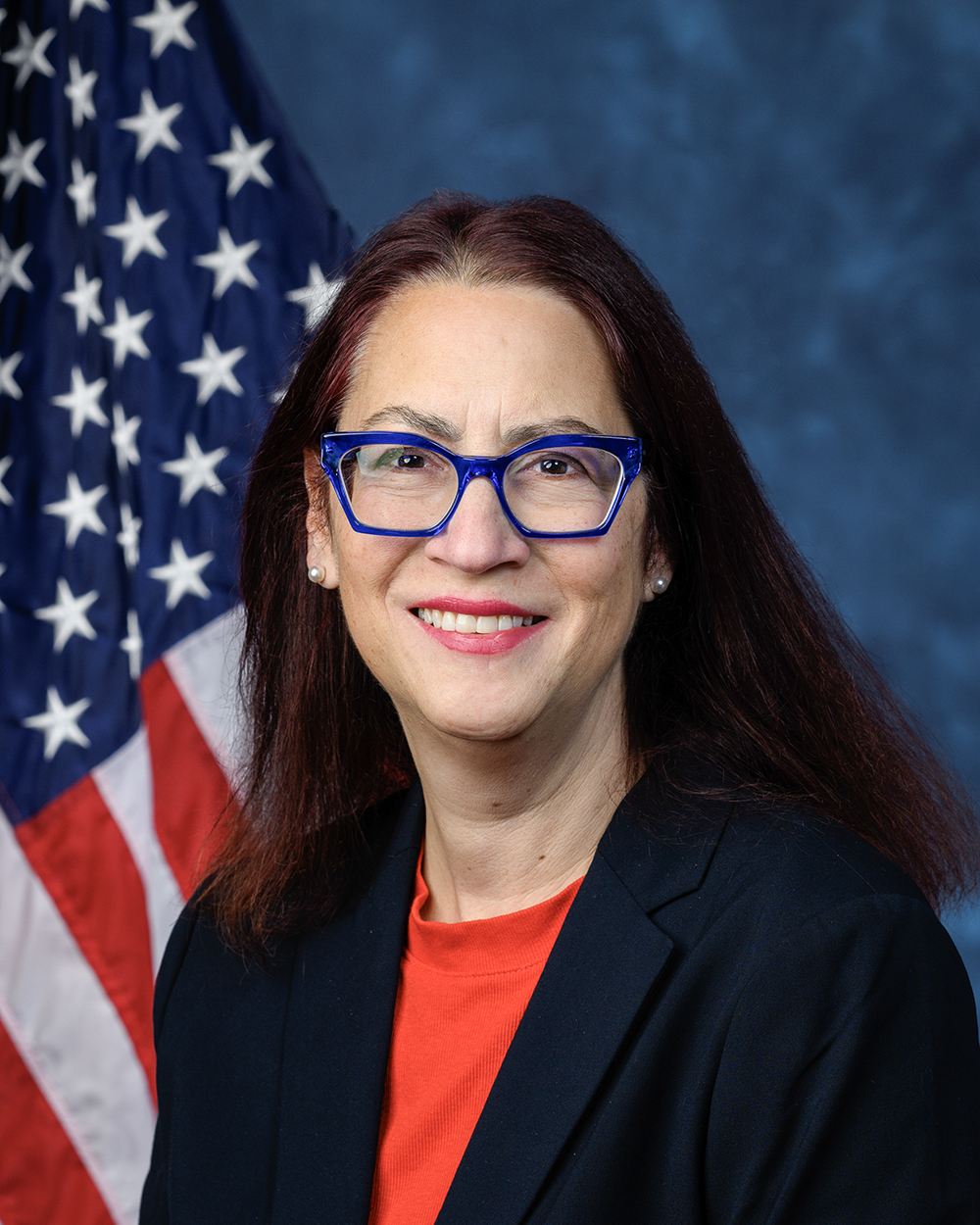
Rep. Laura Friedman
Sponsored bills
Maddy summaryHouse Resolution 442 is a symbolic measure recognizing California's public higher education systems (University of California, California State University, and community colleges) and reaffirming the U.S. commitment to supporting them. It highlights their economic impact - such as generating billions in state revenue and supporting hundreds of thousands of jobs - and their role in providing accessible education, particularly for low-income and underrepresented students. The resolution does not create new policies or funding but formally acknowledges these systems' contributions to California's economy and workforce development. It serves as a statement of support without altering existing programs or obligations.
Maddy summaryHR 3609, the "Remove the Stain Act," would rescind 20 Medals of Honor awarded to U.S. Army soldiers for their actions during the 1890 Wounded Knee Massacre, where unarmed Native Americans (including women and children) were killed. The bill directly affects the official records of these 20 soldiers by removing their names from the Medal of Honor Roll maintained by the military branches. Key provisions include requiring the Secretary of Defense to update the official rolls without requiring recipients to return their medals, and clarifying that this change does not deny any benefits to those individuals. The bill is based on findings that the massacre involved unarmed people and that awarding medals for it undermines the Medal of Honor's integrity.
Maddy summaryHR 3604, the *Reducing Waste in National Parks Act*, requires National Park Service (NPS) units to reduce and eliminate the sale of disposable plastic products (including water bottles, bags, and food containers) where feasible, considering operational factors like cost, waste reduction, and concessioner impacts. Park officials must develop visitor education plans, implement refill stations, and weigh 13 specific factors before eliminating sales, such as infrastructure costs, revenue effects, and public health safety. The program must be evaluated every two years to measure visitor satisfaction, waste collection rates, and safety outcomes. This bill directly affects NPS operations, concessioners, and park visitors who use park facilities.
Maddy summaryThis bill prohibits the U.S. military from discriminating against service members or applicants based on gender identity. It bans policies that would deny service, involuntarily separate members, deny medically necessary healthcare, or require service in a gender different from one's identity. The law defines "gender identity" broadly to include a person's internal sense of gender, appearance, and mannerisms, regardless of sex assigned at birth. It directly affects transgender and gender-diverse individuals currently serving or seeking to serve in the Armed Forces.
Maddy summaryThe College for All Act of 2025 would eliminate tuition and required fees for eligible students at public community colleges and 4-year institutions through a federal-state partnership. The federal government would cover 100% of costs in the first year (2026-2027), gradually decreasing to 80% by 2030-2031, while states would start with 0% and increase to 20% by 2030-2031. Eligible students would include those with family income below $150,000 for single parents or $300,000 for married parents, regardless of immigration status. The bill also includes requirements to maintain instruction funding, improve transfer pathways between community colleges and 4-year institutions, and provide additional support for students after tuition elimination.
Maddy summaryThis bill would establish 18-year fixed terms for all Supreme Court justices, replacing lifetime appointments. It requires the President to nominate one justice every two years (during first and third years after presidential elections), with Senate confirmation within 90 days, and prohibits reappointments after a single term. Current justices would be phased out in order of seniority as new justices are appointed under this schedule. The bill directly affects all sitting and future Supreme Court justices by mandating term limits and a structured appointment process.
Maddy summaryHR 3511, the Preparing for the Future Act, establishes a federal grant program to support students pursuing school psychology degrees. It provides up to $8,000 annually (capped at $16,000 total) for tuition and fees at approved institutions, contingent on maintaining academic standards (e.g., GPA equivalent to 3.25 or high test scores) and agreeing to serve as a full-time school psychologist in a "covered school" for four academic years within eight years of graduation. Covered schools are defined as public or nonprofit elementary/secondary schools with fewer than one psychologist per 500 students and in Title I-eligible districts. Failure to complete the service obligation converts the grant into a repayable federal loan with interest.
Maddy summaryHR 3505, the Barriers to Suicide Act of 2025, creates a federal grant program administered by the Department of Transportation to fund the installation of proven safety barriers and nets on specific high-risk structures. The program provides competitive grants (up to 80% federal funding) to states, local governments, or other eligible entities for projects installing suicide deterrents on bridges, buildings, parking garages, highway-rail crossings, or rail stations. It prioritizes areas with high suicide rates and mandates a study by the Comptroller General to evaluate effective deterrents for non-bridge structures and their costs, with a report due within one year of enactment. The bill authorizes $10 million annually from 2026-2030 for this initiative.
Stronger Communities through Better Transit Act This bill requires the Department of Transportation (DOT) to establish a grant program to support operating projects for public transportation and related service improvements, particularly in underserved communities and areas of persistent poverty. Specifically, the bill requires DOT to allocate funding under the program for urbanized areas, states, and Indian tribes that are recipients of funds under either the Federal Transit Administration's (FTA's) Urbanized Area Formula Funding program or Formula Grants for Rural Areas program. Eligible recipients may use funding for operating costs associated with projects that improve public transportation service for transit-dependent populations and support increased transit ridership (e.g., service expansion, information technology enhancements, and workforce development). DOT must apportion the funding so that recipients receive funds that are proportional to their share of operating costs. The bill also provides for an increased federal cost share for operating assistance for projects or programs carried out in areas of persistent poverty or underserved communities. DOT must set up a multimodal access measurement interface for public agencies to aid transit agencies in determining and reporting on access to jobs and essential services. A grant recipient must (1) report specific information to the FTA for inclusion in the National Transit Database, and (2) survey transit riders and non-riding residents regarding transit service improvements. Further, the bill expands the purposes of the public transportation programs to include supporting public transportation's role in combating climate change through growing/retaining transit ridership.