

Maddy summaryThis bill provides federal funding incentives to states that enact laws prohibiting nonconsensual removal of sexual protection barriers (like condoms or dental dams) during sexual activity. States with such laws can receive up to a 20% increase in funding for their Sexual Assault Services Program grants under the Violence Against Women Act. The funding increase applies for a 4-year period and cannot be awarded more than four times per state. It directly affects states that pass qualifying laws and the federal grant program supporting sexual assault services. The bill does not create new federal penalties but ties existing grant funding to state-level legal protections.
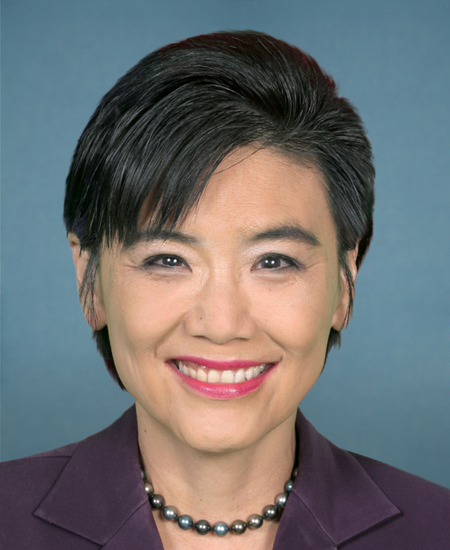
Rep. Judy Chu
Sponsored bills
Maddy summaryThe Protecting America's Workers Act (HR 3036) strengthens workplace safety protections for all employees, including public sector workers and voluntary emergency responders, by expanding coverage under the Occupational Safety and Health Act. Key provisions include enhanced whistleblower protections against retaliation for reporting safety concerns, mandatory employer reporting of work-related injuries and deaths, and increased civil penalties for violations (up to $70,000 per violation). The bill also establishes new rights for victims and families of workplace incidents, requiring employers to preserve evidence after fatalities, and creates procedures for faster resolution of safety complaints through improved inspection and enforcement mechanisms. These changes directly affect employers across all industries, employees reporting safety concerns, and families of workers injured or killed on the job.
Maddy summaryThe Tenants' Right to Organize Act gives tenants receiving housing assistance the right to form and operate tenant organizations without fear of retaliation. It requires public housing agencies and property owners to recognize these organizations, provide meeting spaces, and seriously consider tenant concerns. The bill prohibits adverse actions like lease termination, rent increases, or service reductions for participating in organizing activities. It applies to tenants in housing choice voucher programs and low-income housing tax credit properties, with enforcement through administrative complaints and potential legal action.
Maddy summaryHR 3045, the West Bank Violence Prevention Act of 2025, imposes U.S. sanctions on foreign individuals and entities responsible for violence, displacement, or property destruction in the West Bank. It targets those directly involved in attacks on civilians, forced displacement, or property seizures, including settler leaders or officials of groups engaged in such activities. Key provisions require freezing assets of sanctioned individuals within U.S. jurisdiction and blocking their entry into the United States via visa restrictions. The law applies to foreign nationals meeting specific criteria outlined in the bill, not U.S. citizens or entities.
Maddy summaryThe Victims of Agent Orange Act of 2025 provides U.S. government assistance to Vietnamese residents affected by Agent Orange exposure during the Vietnam War (1961-1975), their children, and Vietnamese Americans with exposure-related health issues. It directs USAID to fund medical care, caregiver support, home repairs, and environmental cleanup of contaminated sites in Vietnam, prioritizing military bases and heavily sprayed areas. The Department of Health and Human Services must also conduct health assessments and establish treatment centers for Vietnamese Americans in the U.S. affected by Agent Orange. The bill requires implementation within 18 months of enactment and mandates quarterly progress reports to Congress.
Maddy summaryHR 2994, the Child and Dependent Care Tax Credit Enhancement Act of 2025, increases financial support for families covering childcare costs. It raises the credit rate to 50% (reduced for higher incomes), boosts the maximum creditable amount from $3,000 to $8,000 per child under 13 (or $6,000 to $16,000 for other dependents), and adjusts these limits annually for inflation starting in 2026. The bill also ensures married couples filing separately calculate their credit as if filing jointly, preventing reduced benefits. It directly affects low- and middle-income taxpayers with childcare expenses who itemize deductions. The changes take effect for tax years beginning after December 31, 2024.
Maddy summaryThis bill limits how much Social Security can withhold from monthly benefits to recover overpayments. It sets a 10% cap on withholdings for cases without fraud (unless the recipient requests a higher rate), affecting Social Security beneficiaries who received more than they were entitled to. The key provision prevents excessive deductions from monthly payments, ensuring recipients retain at least 90% of their benefit for non-fraudulent overpayments. The law applies to overpayments existing after the bill's effective date.
Maddy summaryHRES 341 is a symbolic House resolution expressing support for Earth Day, not a substantive bill. It urges the President to issue an Earth Day proclamation, encourages Americans to address environmental challenges (like climate change and litter), and calls for rejoining the Paris Agreement - though these are non-binding recommendations with no legal force. The resolution references historical environmental legislation (like the Clean Air Act) but does not create new policies, allocate funds, or change regulations. It directly affects no specific group, as it solely serves to affirm environmental values through symbolic recognition. (Note: The document header incorrectly lists "Federal Water Pollution Control Act" as the bill text, but this is a formatting error; the actual resolution is about Earth Day.)
Maddy summaryThe Hunger-Free Future Act of 2025 amends the SNAP program to require that any update to the thrifty food plan must not increase food insecurity. It mandates that adjustments to the diet cost must continue following existing rules while explicitly ensuring updates do not worsen food insecurity, defined as households lacking adequate food due to insufficient money or resources. This directly affects SNAP beneficiaries by setting a new standard for how the program's cost calculations are reviewed. The bill changes the procedural requirement for SNAP re-evaluations without altering benefit amounts or eligibility rules.
Hot Foods Act of 2025 This bill expands the Supplemental Nutrition Assistance Program (SNAP) to permit the use of SNAP benefits to purchase hot foods or hot food products ready for immediate consumption.