

Maddy summaryThe PrEP Access and Coverage Act of 2023 requires private health insurance plans, Medicare, Medicaid, and other public health programs to cover pre-exposure prophylaxis (PrEP) for HIV prevention without cost-sharing, including the medication, related lab tests, and follow-up care. The bill also prohibits life, disability, and long-term care insurance companies from denying coverage or charging higher premiums to people taking PrEP. It establishes public education campaigns to increase awareness of PrEP and PEP (post-exposure prophylaxis) and creates funding for state and community programs to expand access to HIV prevention services, particularly for populations disproportionately affected by HIV including Black, Hispanic/Latinx, and transgender individuals. The legislation specifically addresses current disparities in PrEP access, as data shows only 11% of Black/African American and 21% of Hispanic/Latinx individuals eligible for PrEP received prescriptions in 2022 compared to 82% of White individuals. Coverage requirements for most plans will take effect on January 1, 2025.
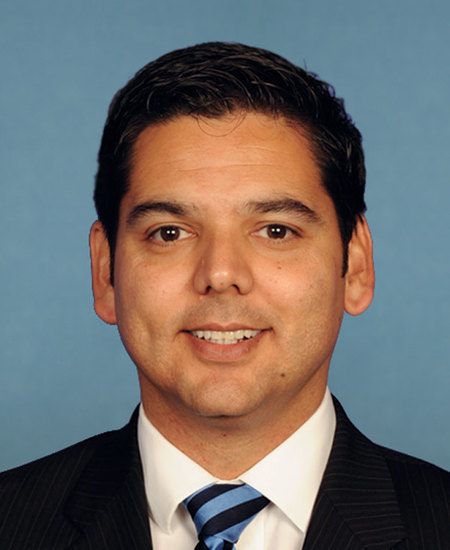
Rep. Raul Ruiz
Sponsored bills
Maddy summaryThis bill prohibits Medicare from paying for certain custom-fitted or custom-fabricated orthotic and prosthetic devices delivered via "drop shipment" (direct shipping without in-person training from a qualified provider). It directly affects Medicare beneficiaries who need these devices, ensuring they receive necessary in-person fitting and training. The bill also expands which healthcare professionals (including physical therapists, occupational therapists, orthotists, and prosthetists) can prescribe these devices and updates definitions to clarify terms like "orthoses" and "prostheses." Final regulations implementing these changes must be issued within one year of the bill's enactment.
Maddy summaryThis bill, the Public Servants Protection and Fairness Act of 2023, amends Social Security to better protect public servants who work in jobs not covered by Social Security (such as certain government positions). It creates a new formula for calculating retirement benefits that combines both covered and noncovered earnings, ensuring public servants receive the higher of two benefit calculations. The bill also provides an additional $150 monthly payment for certain public servants whose benefits were previously reduced by the windfall elimination provision. It improves Social Security account statements to clearly show noncovered earnings and requires a study of how state retirement plans handle these benefits. These changes will apply to benefits starting in 2025.
Maddy summaryThe LIFT the BAR Act removes barriers preventing lawfully present noncitizens from accessing federal benefits like food assistance, Medicaid, and school meals. It repeals specific 1996 welfare law provisions that excluded noncitizens and updates terminology to replace "alien" with "noncitizen" throughout federal law. The bill expands eligibility to include noncitizens in categories such as Deferred Action for Childhood Arrivals (DACA) recipients, individuals with special immigrant juvenile status, and those with pending U-visa applications. This change ensures more noncitizens lawfully present in the U.S. can access essential services without being denied based on immigration status.
Maddy summaryHR 3842, the Expanding Access to Diabetes Self-Management Training Act of 2023, would improve Medicare coverage for diabetes self-management training (DSMT) services for beneficiaries with diabetes. The bill expands provider eligibility to include nonphysician practitioners (like nurse practitioners), increases available training hours (initial 10 hours plus up to 2 hours annually), and requires 100% Medicare coverage with no out-of-pocket costs for beneficiaries. It also mandates a new demonstration project starting in 2025 to test virtual DSMT services, evaluating impacts on health outcomes (like A1c levels), hospitalizations, and program costs. This legislation directly affects Medicare beneficiaries with diabetes and healthcare providers offering DSMT services.
Maddy summaryThis bill requires Medicare to collect detailed cost data from air ambulance providers every three years, including operating costs per base, revenue, and service utilization. It also directs the Government Accountability Office (GAO) to study air ambulance costs, Medicare payment adequacy, geographic variations, and payor mix. The goal is to inform future adjustments to Medicare's payment rates for these services. This directly affects Medicare beneficiaries using air ambulance services and the providers operating them.
Maddy summaryHR 3561, the PATIENT Act of 2023, requires hospitals, health insurance plans, and pharmacy benefit managers to publicly disclose detailed pricing information for healthcare services and drugs. Hospitals must publish standard charges for 300+ shoppable services, including gross charges, payer-specific negotiated rates, and discounted cash prices, with updates required annually. Health plans must provide real-time information on in-network rates, cost sharing, deductibles, and prior authorization requirements for covered services. The bill establishes enforcement mechanisms, including civil monetary penalties for non-compliance, with fines ranging from $300 per day for small hospitals to $5 million for large hospitals that fail to comply with the transparency requirements.
Maddy summaryThe FAMILY Act (HR 3481) would establish a national paid family and medical leave insurance program administered by the Social Security Administration. Eligible workers would receive wage replacement benefits (up to 85% of average earnings, with a maximum of $4,000 monthly) for up to 60 caregiving days per 12-month benefit period for qualifying reasons like caring for a sick family member, personal serious health conditions, or responding to domestic violence. The program would be funded through 0.2% payroll taxes from employees and employers (with self-employed individuals paying 0.4%), with benefits coordinated with existing state programs. The law includes protections against employer retaliation for taking leave and requires employers to maintain health coverage during leave periods.
Maddy summary# Summary of Proposed Immigration Legislation This comprehensive immigration bill proposes sweeping reforms across multiple areas of U.S. immigration policy. The key provisions can be categorized as follows: ## Family Immigration Reforms - Expands eligibility for family-based visas - Creates new pathways for family reunification - Reforms the "child out" rule for H-4 visa holders who age out - Establishes new procedures for sponsors of unaccompanied children ## Employment-Based Immigration - Increases diversity visas from 55,000 to 80,000 - Creates new categories for doctoral STEM graduates - Eliminates per-country limits for employment-based visas - Addresses visa backlogs by creating new categories for beneficiaries with priority dates over 10 years old - Increases visa numbers for certain employment-based categories (e.g., 23.55% instead of 28.6% for certain categories) - Creates a Regional Economic Development Immigrant Visa Pilot Program (10,000 visas annually) ## Diversity and Integration Programs - Creates a United States Citizenship and Integration Foundation to promote citizenship preparation - Establishes pilot programs for immigrant integration at state and local levels - Creates English as a Gateway to Integration grant program ($100 million for 2024-2025) - Creates Workforce Development and Shared Prosperity grant program ($100 million for 2024-2025) - Requires in-state tuition rates for refugees, asylees, and certain special immigrants - Waives English requirements for seniors applying for naturalization ## Immigration Court Reforms - Increases immigration judge numbers by 55 annually through 2028 - Creates a right to counsel for vulnerable individuals (children, victims of abuse, etc.) - Establishes an Immigration Counsel Fund with a $25 surcharge on immigration fees - Requires all noncitizens to receive legal orientation programs - Modernizes court technology for improved efficiency - Creates procedures for ensuring court appearance compliance ## Refugee and Asylum Processing - Expands alternatives to detention for family units - Improves processing for asylum seekers - Creates programs to facilitate safe and efficient repatriation - Establishes reintegration support for repatriated individuals ## Naturalization and Citizenship - Creates citizenship pathways for U.S. high school graduates - Waives English requirements for seniors - Creates a National Citizenship Promotion Program - Establishes naturalization ceremonies at historic locations The bill aims to create a more efficient immigration system, address backlogs in immigration courts, promote immigrant integration, create clearer pathways to citizenship, and reform both family-based and employment-based immigration systems. It represents a comprehensive approach to modernizing U.S. immigration policy.
Maddy summaryThe Protecting Seniors from Health Care Fraud Act of 2023 requires the Department of Health and Human Services to create and distribute annual reports identifying the top 10 health care fraud schemes targeting seniors, along with strategies to combat them. These reports, updated quarterly, will be mailed directly to all Medicare beneficiaries and included in their quarterly Medicare summary notices. The reports must include prevalence trends, protective actions for seniors, and policy suggestions, and will be posted online in both English and Spanish. This law directly affects Medicare beneficiaries (seniors) and mandates government agencies like HHS, the Justice Department, and Medicare administrative contractors to gather and share fraud data from sources like Medicare hotlines and senior protection programs.