

Family and Medical Insurance Leave Act or the FAMILY Act This bill entitles every employee to a family and medical leave insurance (FMLI) monthly benefit payment of two-thirds of the employee's regular pay, limited to a maximum of $4,000, for not more than 60 days of qualified caregiving. The bill establishes the Office of Paid Family and Medical Leave within the Social Security Administration to administer the FMLI program. An FMLI benefit payment must be coordinated with any periodic benefits received under a state or local temporary disability insurance or family leave program. The bill imposes a tax on employers, employees, and self-employed individuals to fund FMLI benefits. It also establishes the Federal Family and Medical Leave Insurance Trust Fund to hold tax revenues.
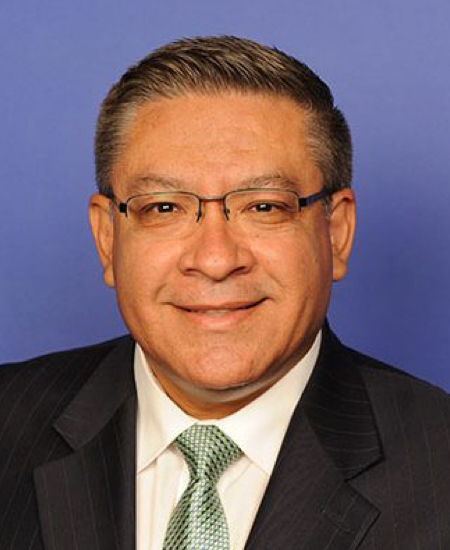
Rep. Salud O. Carbajal
Sponsored bills
Scientific Integrity Act This bill revises provisions regarding the release of scientific research results by federal agencies. Each agency that funds, conducts, or oversees scientific research must (1) adopt and enforce a scientific integrity policy that includes requirements such as that scientific conclusions are not based on political considerations, and (2) submit such policy to the Office of Science and Technology Policy (OSTP) for approval. Each agency must make such policy available to the public and submit such policy to Congress. Agencies and the OSTP must periodically review the policies. The Government Accountability Office shall review implementation of the policies. Each agency shall (1) appoint a Scientific Integrity Officer, (2) establish a process for dispute resolution consistent with the scientific integrity policy, and (3) establish a specified training program for current and new employees.
Safe And Friendly for the Environment Streets Act or the SAFE Streets Act This bill revises the Highway Safety Improvement Program to create special rules for vulnerable road users. The bill defines vulnerable road user as a nonmotorist such as a pedestrian, pedalcylcist, bicyclist, other cyclist, or person on personal conveyance. Specifically, the bill requires states and metropolitan planning organizations (MPOs) with above the median rate of vulnerable road user fatalities and serious injuries to dedicate at least 75% of funds under the program for projects to improve safety for such users, and states and MPOs to create vulnerable road user safety assessments that include locations and corridors where serious injuries and fatalities occur and strategies to reduce safety risks for such users in the corridors.
Transportation Alternatives Enhancements Act This bill revises the surface transportation block grant program (Transportation Alternatives Program) of the Department of Transportation (DOT). The bill requires DOT to set aside 10% of apportioned funds under the program each fiscal year for states, and allows states to allocate funds to counties, metropolitan planning organizations (MPOs), regional transportation planning organizations, and local governments. Funds may be used for certain projects or activities, including the construction, planning, and design of infrastructure-related projects and systems that will provide safe routes for nondrivers, such as children, older adults, and individuals with disabilities, to access daily needs. MPOs that serve an urbanized area with a population of 200,000 or fewer are eligible for funding under the program. The bill also adjusts funding limits for states to improve the ability of applicants to access funding in an efficient and expeditious manner.
FEMA Empowering Essential Deliveries Act or the FEED Act This bill authorizes the Federal Emergency Management Agency (FEMA) to approve state, local, and Indian tribal government plans to partner with small and mid-size restaurants and nonprofit organizations to provide nutritious meals to individuals in need. Specifically, during the period following the President's emergency declaration of March 13, 2020, and under any subsequent major disaster declaration that supersedes it, FEMA may approve plans from state, local, and Indian tribal governments that (1) establish contracts with small and mid-sized restaurants and nonprofits, including faith-based organizations and soup kitchens, to prepare healthy meals for people in need; and (2) provide for partnerships with nonprofit organizations to purchase directly from food producers and farmers. FEMA shall waive federal matching requirements under the Robert T. Stafford Disaster Relief and Emergency Assistance Act during such period.
This resolution recognizes the contributions of frontline workers and other essential personnel and reaffirms the responsibility of Congress to meet the needs of those workers and the elderly during the COVID-19 (i.e., coronavirus disease 2019) pandemic.
Homeownership for DREAMers Act This bill prohibits federal mortgage providers from limiting insurance eligibility on the basis of the mortgagor's participation in the Deferred Action for Childhood Arrivals Program.
Keep Our Promise to America's Children and Teachers Act or the Keep Our PACT Act This bill provides funding through FY2031 for grant programs operated by local educational agencies to provide supplementary educational and related services to low-achieving students and other students who attend elementary and secondary schools with relatively high concentrations of students from low-income families. Additionally, the bill permanently reauthorizes the grant program to assist states and outlying areas in providing special education and related services to children with disabilities.
USPS Fairness Act This bill repeals the requirement that the U.S. Postal Service annually prepay future retirement health benefits.
CHampioning Apprenticeships for New Careers and Employees in TECHnology Act or the CHANCE in TECH Act This bill requires the Department of Labor to enter into contracts with industry intermediaries to promote the development of and access to apprenticeships in the technology sector. The Department of Education (ED) may issue CHANCE in TECH Awards for 21st Century Schools to secondary schools or junior or community colleges that demonstrate high achievement in providing students necessary skills to compete in the 21st century workforce. In making an award, ED must consider the availability of science, technology, engineering, and mathematics (STEM), career and technical education, and computer technology courses at the schools.