

Inspire to Serve Act of 2021 This bill establishes new and expands existing military and national service programs, and revises federal personnel provisions. The bill establishes programs relating to civic education and service learning, including by providing grants supporting these programs for grades K-12 and at institutions of higher education. The bill also establishes the Council on Military, National, and Public Service which must coordinate executive branch policies to promote and expand opportunities for military service, national service, and public service. The Office of Management and Budget must create an online recruitment portal for service organizations. Additionally, the bill expands military service programs, including by expanding the Junior Reserve Officers' Training Corps, establishing pre-service tuition grants in exchange for enlisted service commitments, and creating a pilot program for military departments to partner with community colleges and vocational schools to provide service members with access to technical education programs. Service programs are expanded by increasing the number of specified national service positions, increasing certain living allowances and stipends, and creating new fellowship programs. Federal personnel provisions are revised to, among other things, provide certain national service alumni with noncompetitive eligibility for federal employment.
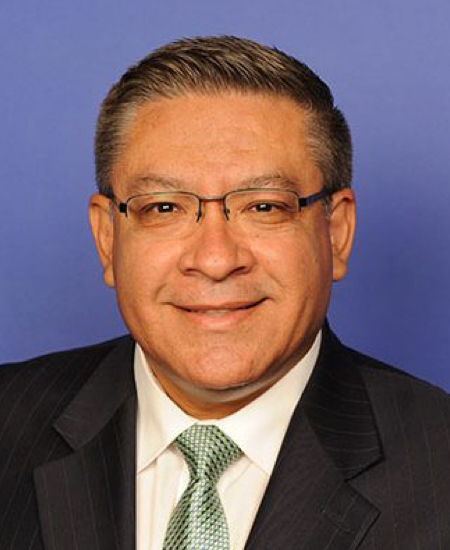
Rep. Salud O. Carbajal
Sponsored bills
Fiscal State of the Nation Resolution This concurrent resolution requires the congressional budget committees to conduct an annual joint hearing to receive a presentation from the Comptroller General regarding (1) the Government Accountability Office's audit of the financial statement of the executive branch, and (2) the financial position and condition of the federal government.
Tim Hart Wildland Firefighter Classification and Pay Parity Act or Tim's Act This bill addresses the pay and benefits of federal wildland firefighters and related issues. Federal wildland firefighter is defined as any temporary, seasonal, or permanent position at the Department of Agriculture (USDA) or the Department of the Interior that maintains certain group, emergency incident management, or fire qualifications and primarily engages in or supports wildland fire management activities. Specifically, (1) the Office of Personnel Management (OPM) must establish one or more classification series for federal wildland firefighter positions, and (2) USDA and the Department of the Interior shall determine each position within USDA and Interior that qualifies as a federal wildland firefighter position. The bill, among other requirements (1) establishes a pay scale for such positions, with annual adjustments; and (2) provides for hazardous duty pay. The OPM must establish guidelines for work schedules. The bill addresses issues regarding wages, unpaid leave to care for a family member, recruitment and retention bonuses, and housing allowances. USDA and Interior shall (1) establish, maintain, coordinate, and operate a voluntary tuition assistance program; (2) establish and maintain a publicly accessible, searchable Federal Wildland Firefighter Cancer and Cardiovascular Disease Database; and (3) establish and carry out a program for mental health awareness and support. Additionally, the bill provides for continuation of firefighters pension coverage in case of disability and pay parity for federal structural firefighters.
This resolution supports the designation of Public Radio Music Day. It also expresses deep appreciation for the role of public radio music stations, particularly during the COVID-19 pandemic, in serving listeners, musicians, and hundreds of communities in the United States.
FEMA Improvement, Reform, and Efficiency Act of 2021 or the FIRE Act This bill addresses the federal government's approach to wildfires. Specifically, the bill authorizes a public mitigation assistance applicant to relocate an eligible structure upon demonstrating that the structure is at risk from future damage and the relocation reduces the risk to the structure, is cost effective, and does not increase risk to adjacent structures. The Federal Emergency Management Agency (FEMA), in coordination with the National Weather Service, must conduct a study on Red Flag Warnings and similar weather and notification methods to implement plans and actions prior to a wildfire that can limit the impact, duration, or severity of the fire. The President must ensure that those providing counseling or case management services to victims of a major disaster are trained to address cultural competency. FEMA must (1) conduct a study and develop a plan to address providing housing assistance to survivors of major disasters or emergencies when presented with challenges such as the lack of proof of ownership, and (2) seek to contract with the National Academy of Sciences to study solutions to address the availability and affordability of insurance for wildfire perils and other related matters. The bill allows Indian tribal governments to apply for grants for equipping, upgrading, and constructing state and local emergency operations centers.
This resolution expresses the House of Representatives' support for the celebration of Filipino American History Month as a testament to the advancement of Filipino Americans and a time to renew efforts toward researching and examining the history of Filipino Americans to give all people of the United States an opportunity to learn about their contributions.
Cady Housh and Gemesha Thomas Student Suicide Prevention Act of 2021 This bill reauthorizes through FY2028, and otherwise revises, grants administered by the Substance Abuse and Mental Health Services Administration (SAMHSA) to support youth suicide early-intervention and prevention strategies. Specifically, the bill requires SAMHSA to award a portion of such grants for statewide training programs on emotional well-being, mental health, and suicide awareness and prevention for elementary and secondary school students and staff.
Childcare Expansion for Military Families Act of 2021 This bill addresses the provision of child care and development services by the Department of Defense (DOD) for children of members of the Armed Forces (military children). First, the bill requires DOD to establish a program to carry out minor military construction projects to construct child development centers, in amounts up to $15 million per project. DOD must establish procedures for the review and approval of requests from the military departments to implement construction projects for child development centers. DOD must conduct a comprehensive assessment of the availability of government-provided early childhood education and infant and early childhood mental health consultation services on and in the vicinity of certain military installations to identify and address the needs of military children. DOD is authorized to conduct one or more demonstration projects to evaluate improved approaches to the provision of educational and infant and early childhood mental health services to military children to evaluate the efficacy of such services to improve social-emotional development outcomes. DOD may authorize the development of a comprehensive professional development curricula for specified purposes. Finally, DOD must evaluate each demonstration project to assess the (1) extent of positive outcomes for military children, (2) improvements in services and continuity of care for such children, and (3) improved military family readiness and enhanced military retention.
Booster Seat Safety Act This bill addresses labeling requirements and testing standards for booster seats used in motor vehicles. Specifically, the bill requires labels on booster seats to include the minimum recommended age (4 years) and weight (40 pounds) for a child to use the seat. It also requires that a label on a car seat or combination car seat list the maximum weight and height limits of the seat, as well as a recommendation to continue using the seat until the child exceeds the listed limits. Additionally, the National Highway Traffic Safety Administration (NHTSA) must either establish a minimum height recommendation for booster seats or a method for manufacturers to use to determine a minimum height recommendation. Once the minimum height or method is established, booster seat labels must also contain the minimum height recommendation. The NHTSA must also establish a standard for side-impact crash tests for booster seats and provide guidelines for creating a testing dummy that approximates a six-year old child for such crash tests. Further, the NHTSA must study systems for tethering child restraint systems in vehicles and make recommendations about using or modifying tether systems to maximize child safety.
Social Security 2100: A Sacred Trust This bill makes changes to Social Security benefits, taxes, and other aspects of the program, including by raising the primary insurance amount, increasing the maximum taxable earnings that are subject to Social Security payroll taxes, and requiring Social Security account statements to be mailed unless the individual recipient opts for electronic delivery.