

Access to Birth Control Act This bill requires pharmacies to comply with certain rules related to ensuring access to contraceptives. Specifically, pharmacies must provide without delay a customer with any contraceptive or related medication that is in stock. If the contraceptive is not in stock, the pharmacy must immediately inform the customer and either order the contraceptive or refer the customer to a pharmacy that has it in stock. Laws in some states provide pharmacists with the right to refuse to dispense contraceptive-related drugs on religious or conscience grounds. Pharmacies may refuse to provide a contraceptive to a customer (1) if the customer lacks a valid prescription for a prescription contraceptive or is unable to pay for the contraceptive, or (2) based on a pharmacy employee's professional clinical judgment. The bill also establishes a private cause of action and civil monetary penalties for violations of the bill.
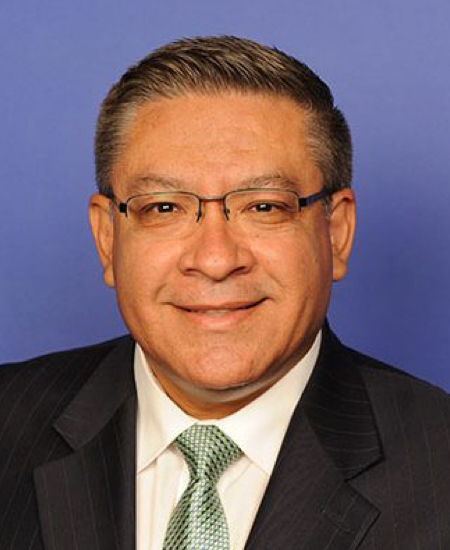
Rep. Salud O. Carbajal
Sponsored bills
IDEA Full Funding Act This bill provides permanent, mandatory funding for the grant program that assists states and outlying areas in providing special education and related services to children with disabilities.
Maddy summaryThis bill removes a temporary expiration date for telehealth coverage in health insurance plans. It amends two sections of the Internal Revenue Code to permanently allow health plans to cover telehealth services without the prior deadline of December 31, 2021. The key change makes existing telehealth coverage rules permanent for health insurance plans under federal tax law. This directly affects health insurance plans that provide telehealth benefits, ensuring they can continue covering these services without needing to renew temporary provisions. The bill does not change what telehealth services are covered, only makes the coverage rules permanent.
Advanced Air Mobility Coordination and Leadership Act This bill directs the Department of Transportation to establish an Advanced Air Mobility (AAM) interagency working group to plan and coordinate efforts related to the safety, operations, infrastructure, physical security, cybersecurity, and federal investment necessary to bolster the AAM ecosystem in the United States. Advanced Air Mobility refers to a transportation system that transports people and property by air between two points in the United States using aircraft, including electric aircraft or electric vertical take-off and landing aircraft, in both controlled and uncontrolled airspace.
Maddy summaryHRES 785 is a symbolic resolution designating November 8, 2021, as "National First-Generation College Celebration Day." It urges all Americans to celebrate this day, recognize the contributions of first-generation college students (those whose parents did not earn bachelor's degrees), and honor the Higher Education Act of 1965. The resolution highlights existing federal programs like TRIO and Pell Grants that support underrepresented students but does not create new laws or funding. As a non-binding resolution, it has no direct policy impact but aims to raise awareness about first-generation students' challenges and achievements.
This resolution expresses support for the goals and values of the 53rd anniversary of the Fair Housing Act and for efforts to strengthen housing protections, particularly during the COVID-19 public health emergency.
Early Childhood Nutrition Improvement Act This bill makes various changes to the Child and Adult Care Food Program, which reimburses child care centers, day care homes, and other sites for meals and snacks provided to low-income individuals. Among these changes, the bill authorizes reimbursements for an additional meal or snack provided to children who are in care for at least eight hours, allows certain child care centers to certify their eligibility on an annual (rather than a monthly) basis, and establishes an advisory committee to make recommendations to reduce unnecessary recordkeeping requirements for program participants.
Honoring Our Promises through Expedition for Afghan SIVs Act of 2021 or the HOPE for Afghan SIVs Act of 2021 This bill authorizes the Department of State and the Department of Homeland Security (DHS) to postpone the medical exam requirement for qualifying citizens or nationals of Afghanistan seeking entry into the United States as special immigrants. Specifically, this bill applies to an existing program that provides special immigrant status to an individual (or the spouse or child of such an individual) who (1) faithfully performed sensitive and trusted duties for the U.S. government or the International Security Assistance Force in Afghanistan on or after October 7, 2001, and (2) has experienced or is experiencing an ongoing serious threat due to the performance of those duties. Under this bill, the State Department and DHS may jointly issue a blanket waiver of any requirement for such individuals to undergo a medical exam before admission into the United States. DHS shall ensure, to the greatest extent practicable, that individuals admitted under such a waiver undergo medical exams no later than 30 days after admission into the United States. Such an individual shall be admitted as a conditional permanent resident. DHS shall remove the conditions once the individual receives and passes a medical examination.
Greyhound Protection Act of 2021 This bill modifies the federal criminal statute commonly known as the Wire Act. Currently, the Wire Act contains four prohibitions on the use of a wire transmission facility (e.g., the telephone or internet) for certain gambling activities. All four prohibitions apply to sports gambling. However, there have been conflicting interpretations of the applicability of the prohibitions to nonsports gambling (e.g., state lotteries). This bill amends the Wire Act to expressly state that the statute does not authorize the use of wire communications to gamble on commercial greyhound racing or permit the transport of animals for commercial dog racing or related activities.
United States Postal Service Shipping Equity Act This bill authorizes the mailing of alcoholic beverages by certain entities in accordance with the delivery requirements otherwise applicable to a privately carried shipment. The authorization applies to an entity (including a winery, brewery, beverage distilled spirits plant, or other wholesaler, distributer, importer, or retailer of alcoholic beverages) that has registered with, obtained a permit from, or obtained approval of an application from the Department of the Treasury. The bill directs the U.S. Postal Service (USPS) to prescribe regulations (1) requiring direct delivery to a duly authorized agent at a postal facility or to the addressee, who must be at least 21 years of age and present a valid, government-issued photo identification at the time of delivery; (2) prohibiting such alcoholic beverages from being for resale or any other commercial purpose; and (3) requiring such entity to certify that the mailing is not in violation of applicable laws or regulations and to provide other information as directed by the USPS. The U.S. district courts shall have jurisdiction to render judgment upon any claim brought by a state, local, or tribal government against the USPS of a violation of state, local, or tribal law regarding the sale, mailing, transportation, or importation of alcoholic beverages into any U.S. state, territory, or district. The USPS shall not be liable for interest prior to judgment or for punitive damages.