

Maddy summaryThe AI for National Security Act amends the National Defense Authorization Act to require the Department of Defense to consider specific artificial intelligence-based cybersecurity tools during procurement. It mandates that the DoD evaluate AI-powered endpoint security systems capable of preventing cyber attacks without constant internet connectivity, and also requires consideration of software supply chain security enhancements. These changes directly affect the Department of Defense's purchasing process and the companies supplying cyber security products to military operations. The bill updates existing procurement rules to prioritize these security features in defense contracting.
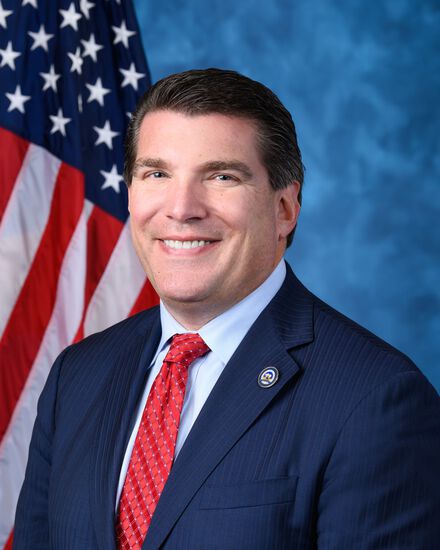
Rep. Jay Obernolte
Sponsored bills
Maddy summaryHR 1043 requires the U.S. Department of the Interior to immediately resume quarterly onshore oil and gas lease sales in specific states, including Wyoming, New Mexico, Colorado, and others. It mandates offering all eligible lands nominated under existing land use plans for leasing, with replacement sales if original sales are canceled or receive insufficient bids. The bill directly affects federal land management practices and oil/gas companies seeking leases on public lands. It specifies that lease sales must occur quarterly in designated states and requires reports to Congress if sales are missed. The legislation focuses on restoring routine leasing processes under existing laws, without altering environmental review requirements.
Establishing Accreditation Grants for Law Enforcement Act of 2023 or the EAGLE Act of 2023 This bill requires the Department of Justice to provide grants to eligible local law enforcement agencies for activities related to obtaining qualified accreditation or recertification. Such accreditation or recertification shall be provided by a professional law enforcement organization involved in developing standards for law enforcement at the national, state, regional, or tribal level, such as the Commission on Accreditation for Law Enforcement Agencies.
Maddy summaryThis bill adds a new section to federal law making murder of law enforcement officers a capital offense. It mandates death or life imprisonment for individuals who murder federal officers during official duties, or state/local officers when the crime involves interstate activity (like using a weapon that crossed state lines). Key provisions include specific aggravating factors considered for sentencing, such as ambush tactics, prior violent advocacy, or ties to extremist groups. The bill explicitly states it does not affect state court jurisdiction over such cases.
Maddy summaryHR 1591 amends the Elementary and Secondary Education Act to increase annual federal funding for impact aid programs that support school districts near military bases, national parks, and other federal properties. It authorizes specific, rising funding levels for four key areas: payments for federal land acquisitions ($90 million in 2024, growing to $150 million by 2029), basic payments to heavily impacted school districts ($1.6 billion in 2024, growing to $2.45 billion by 2029), payments for students with disabilities ($60 million in 2024, growing to $120 million by 2029), and school construction projects ($22.9 million in 2024, growing to $45.4 million by 2029). These appropriations represent incremental steps toward full federal funding for these aid programs, as specified in the bill's text. The bill directly affects school districts located near federal land, providing predictable annual funding increases for their operational and infrastructure needs.
Maddy summaryThis bill requires the U.S. State Department to officially designate four specific Mexican drug cartels (Gulf Cartel, Cartel Del Noreste, Cartel de Sinaloa, and Cartel de Jalisco Nueva Generacion) as foreign terrorist organizations under existing law. It mandates a 30-day report explaining why these groups meet the legal criteria for such designation, including justification if they don't. The report must be submitted to specified congressional committees and may lead to additional cartels being designated based on the findings. The bill also clarifies that this designation won't affect asylum eligibility for individuals fleeing these groups.
Maddy summaryThe Unauthorized Spending Accountability Act of 2023 establishes a process for handling federal programs that have expired authorizations (unauthorized programs). It requires a 10% budget reduction in the first year after authorization expires, followed by 15% reductions in the second and third years. If a program remains unauthorized for three years, it must be terminated unless Congress reauthorizes it with a 3-year sunset provision. The bill creates a Spending and Accountability Commission to review direct spending programs and propose spending reductions that could prevent these budget cuts from taking effect.
Maddy summaryHR 1491, the Small Business Energy Loan Enhancement Act, increases the maximum loan amount for energy-related small business loans under the Small Business Investment Act of 1958 from $5.5 million to $10 million. This directly affects small businesses seeking financing for energy efficiency or renewable energy projects by doubling their potential loan access. The bill requires the Small Business Administration to submit annual reports to Congress detailing which industries and geographic areas received these enhanced loans. These changes aim to expand access to capital for qualifying energy projects without altering eligibility criteria.
This joint resolution proposes a constitutional amendment that prohibits an individual who is not a U.S. citizen from voting in federal, state, or local elections for public office or voting on any ballot initiative or referendum held in the United States.
Maddy summaryHR 1321, the "More Homes on the Market Act," increases the tax exclusion for gains from selling a primary residence. It doubles the exclusion amount from $250,000 to $500,000 for single filers and from $500,000 to $1,000,000 for married couples filing jointly. The bill also adds automatic annual inflation adjustments to these amounts starting in 2023, ensuring the exclusion keeps pace with rising costs. This change directly affects homeowners who sell their primary residence and meet the ownership and use requirements under current tax law. The policy modifies the Internal Revenue Code to make selling a home less financially burdensome for qualifying homeowners.