

Maddy summaryHR 1839, the Combating Illicit Xylazine Act, makes the illicit use and distribution of xylazine a federal crime by adding it to the Controlled Substances Act. The bill broadly defines xylazine to cover numerous chemical variants and prohibits human use or non-licit distribution, while preserving legitimate veterinary and pharmaceutical uses. It requires tracking xylazine in drug supply chains and mandates two reports to Congress within 1 and 4 years on its prevalence, sources, and whether it should be rescheduled. The bill directly affects individuals distributing or using xylazine illicitly, including as an additive to drugs like fentanyl, and aims to address its public health risks. Congress declared illicit xylazine an "emerging drug threat" under existing law.
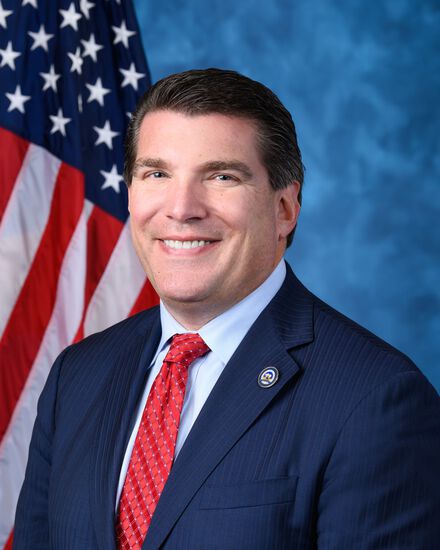
Rep. Jay Obernolte
Sponsored bills
Maddy summaryThe ALIGN Act (HR 2406) permanently allows businesses to deduct the full cost of qualified equipment and machinery in the year of purchase, rather than spreading the deduction over multiple years. This applies to property placed in service after September 27, 2017, directly affecting businesses that make capital investments in eligible assets like manufacturing equipment or commercial facilities. The bill eliminates the previous requirement to depreciate these costs over time, reducing taxable income in the purchase year. It makes a temporary 2017 tax provision permanent, impacting businesses across various industries that purchase qualifying property.
This resolution commemorates the 190 th anniversary of diplomatic relations between the United States and Thailand. It also looks forward to enhancing the ties of friendship between the peoples of Thailand and the United States.
Maddy summaryHR 1139, the GUARD VA Benefits Act, amends federal law to strengthen penalties for individuals or organizations charging veterans unauthorized fees when helping with VA benefit claims. It directly affects veterans seeking assistance with VA claims and the representatives (like advocates or attorneys) who might charge them fees. The bill adds a new provision making it a violation to solicit, charge, or receive any fee for preparing, presenting, or prosecuting VA claims, punishable by fines under Title 18. This change specifically targets unauthorized fee-charging while excluding fees covered under existing exceptions in sections 5904 or 1984 of the law.
Maddy summaryThis bill establishes a special "Ski Area Fee Retention Account" to manage fees collected from ski areas operating on National Forest System land. It requires 80% of these fees to stay at the specific forest unit where the ski area is located (75% for program administration and visitor services, 25% for facility maintenance), with 20% available for broader Forest Service recreation projects. Funds can be used for activities like trail maintenance, visitor signage, avalanche education, and facility repairs but cannot cover wildfire suppression or land acquisition. The bill ensures these fees supplement, not replace, existing funding for forest units.
Maddy summaryThis non-binding resolution states that Congress believes nuclear power is essential as a reliable, clean energy source to support a stable electric grid alongside variable sources like solar and wind. It emphasizes nuclear power's role in achieving clean energy goals, reducing carbon emissions, and advancing U.S. energy independence. The resolution does not create new laws or regulations but formally expresses congressional support for nuclear energy as a necessary component of a "green" grid. It was introduced in March 2023 by multiple lawmakers across party lines.
Let Experienced Pilots Fly Act of 2023 This bill raises the mandatory retirement age for pilots engaged in commercial aviation operations from 65 to 67 years of age, unless the operation takes place in (1) the territorial airspace of a foreign county where such operations are prohibited by the foreign country, or (2) international airspace where such operations are not in compliance with the Annexes to the Convention on International Civil Aviation. The Federal Aviation Administration must also submit a report to Congress on further increasing the age limitation for pilots engaged in commercial aviation operations.
Maddy summaryHR 1360, the American Cybersecurity Literacy Act, directs the Assistant Secretary of Commerce for Communications and Information to create a federal public education campaign. The campaign will teach Americans practical cybersecurity skills, including spotting phishing emails, using strong passwords and multi-factor authentication, securing home devices like smart appliances and Wi-Fi routers, and safely using public Wi-Fi networks. It requires the materials to be available in multiple languages and formats to reach all Americans. The bill focuses solely on raising public awareness, with no new regulations or requirements for businesses or individuals.
Maddy summaryHCONRES 28 is a symbolic resolution expressing Congress's view that tax-exempt fraternal benefit societies - organizations providing life, health, and accident benefits to members - have long delivered critical community support. It states these societies, with about 7 million members nationwide, generate significant annual value through charitable work and volunteer activities (estimated at over $3.8 billion yearly). The resolution affirms that their tax-exempt status under Section 501(c)(8) of the tax code is essential for sustaining their volunteer-driven model and relieving pressure on government safety programs. As a non-binding expression of congressional sentiment, it does not alter existing laws or create new obligations.
Maddy summaryHR 1068, the Securing America’s Critical Minerals Supply Act, amends the Department of Energy Organization Act to define "critical energy resource" as any energy resource essential to U.S. energy systems with a vulnerable supply chain. The bill requires the Energy Secretary to conduct ongoing assessments of these resources, strengthen domestic supply chains through diversification and increased production, develop alternatives, improve recycling technology, and evaluate risks from import reliance. This legislation directly affects the Department of Energy, which must now lead these efforts in consultation with energy sector stakeholders and federal agencies. The key mechanisms focus on preventing supply disruptions for resources critical to energy technologies and systems, without specifying particular minerals or industries.