Maddy summaryHR 7525, the Special District Grant Accessibility Act, requires the Office of Management and Budget (OMB) to issue guidance within 180 days clarifying how federal agencies recognize "special districts" as eligible recipients of federal grants. Special districts - state-created local entities like water districts or fire protection authorities that perform specific government functions - would directly benefit by gaining clearer pathways to access federal funding. Agencies must implement this guidance within one year and report on compliance to Congress within two years. The bill focuses on standardizing agency procedures, not creating new programs or altering grant eligibility criteria.
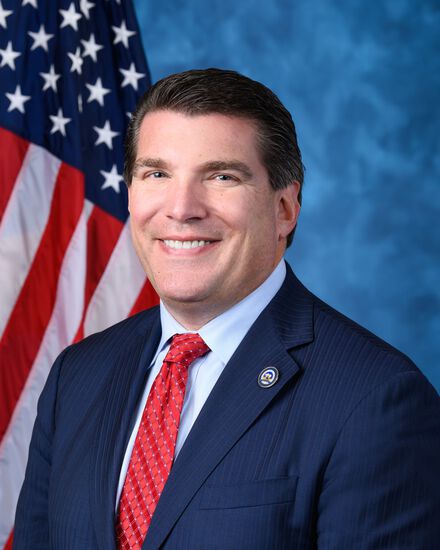
Rep. Jay Obernolte
Sponsored bills
Maddy summaryThe MALDEN Act (HR 6435) updates disaster aid rules for rural areas impacted by wildfires. It requires FEMA to coordinate with state or tribal emergency agencies to help rural communities develop recovery teams, specifically focusing on preventing secondary disasters like mudslides or flooding after wildfires and identifying resources for both immediate and long-term recovery. The bill also mandates that if individual aid is denied under Section 408, FEMA must make case workers available to affected residents in coordination with state or tribal agencies. This directly affects rural communities in wildfire zones by changing how recovery assistance is organized and delivered.
Maddy summaryThis bill directs the National Institute of Standards and Technology (NIST) to enhance U.S. leadership in developing global technical standards for artificial intelligence and emerging technologies. It requires NIST to provide Congress with a briefing on standards opportunities, create a public web portal listing international standards efforts and participation opportunities, and establish a 5-year pilot program to fund U.S.-hosted standards meetings. The pilot offers grants (up to 50% of hosting costs, capped at $5 million total) to eligible organizations developing AI/tech standards or hosting such standards bodies. This directly affects federal agencies (which must report their participation), U.S. industry groups, and standards organizations seeking to host international meetings in the United States.
Maddy summaryThis bill names the U.S. Postal Service building at 333 West Broadway in Anaheim, California, as the "Dr. William I. 'Bill' Kott Post Office Building." It requires all federal documents, maps, and references to update the building's official name to honor Dr. Kott, a former Anaheim physician and community leader. The change applies immediately to all government records and communications involving the facility.
Maddy summaryThis bill designates the U.S. Postal Service facility at 517 Seagaze Drive in Oceanside, California, as the "Charlesetta Reece Allen Post Office Building." It updates all federal references in laws, maps, regulations, and documents to use this new name for the facility. The bill has no policy impact beyond renaming the building and altering official references. It was signed into law on November 25, 2024.
Maddy summaryThis bill designates the United States Postal Service facility at 28081 Marguerite Parkway in Mission Viejo, California, as the "Major Megan McClung Post Office Building." It changes all official references to this specific post office location to the new name. The bill directly affects the USPS facility and any government documents or records referencing it. This is a procedural naming resolution with no policy changes or financial impact.
Maddy summaryHR 1060 designates the United States Postal Service facility at 1663 East Date Place in San Bernardino, California, as the "Dr. Margaret B. Hill Post Office Building." The bill updates all federal references - such as in laws, maps, regulations, and official documents - to use this new name for the building. This is a procedural designation with no policy changes or direct impact on residents or services. The bill was passed by Congress and signed into law on November 25, 2024.
Maddy summaryThis bill redesignates a United States Postal Service facility at 3500 West 6th Street, Suite 103 in Los Angeles, California, as the "Dosan Ahn Chang Ho Post Office." It directly affects the postal service location by changing its official name to honor Dosan Ahn Chang Ho, a Korean independence activist and community leader. The bill amends prior legislation to update references to the facility’s address and name in all federal records and documents. This is a ceremonial naming resolution with no policy changes to postal services or operations.
Maddy summaryHR 7807 creates a federal task force to address U.S. reliance on foreign sources for critical minerals essential to national security, technology, and defense. The task force, established within 90 days, will coordinate across federal agencies, state/local governments, and tribal nations to assess supply chain vulnerabilities - particularly dependence on countries like China - and recommend strategies to boost domestic mining, processing, and international partnerships. It requires regular reports to Congress, including a final report within two years, and mandates consultation with industry stakeholders and environmental experts. The bill directly affects federal departments (like Defense and Energy), state/local governments, tribal nations, and the mining industry, aiming to secure supply chains without immediate regulatory changes.
Maddy summary# Summary of Proposed Higher Education Act Amendments This document outlines significant proposed amendments to the Higher Education Act of 1965, primarily as part of the "College Cost Reduction Act." The key elements include: ## Accreditation Reform - Major overhaul of accreditation standards, requiring accrediting agencies to demonstrate independence from trade associations - New requirements for accrediting agencies to assess student achievement outcomes, including median value-added earnings relative to median total price charged - Introduction of an "Alternative Quality Assurance Experimental Site Initiative" to test non-accredited institutions - Protections for religious institutions, including a new process for appealing accreditation decisions related to religious mission - Removal of "litmus tests" that would require institutions to support specific political viewpoints ## Student Success Initiatives - Establishment of "Postsecondary Student Success Grants" to increase participation, retention, and completion rates for high-need students - Focus on evidence-based practices, with tiered requirements (tier 1, 2, and 3 reforms) - Mandatory inclusion of high-need student populations (low-income, first-generation, military-connected, etc.) - Requirements for institutions to report on completion rates, retention rates, and student demographics ## Regulatory Changes - Repeal of numerous existing regulations including: * Closed school discharges * Borrower defense to repayment * Pre-dispute arbitration * False certification requirements * Ability-to-benefit rules * Financial responsibility regulations - New restrictions on incentive compensation for recruiters - Changes to third-party servicer definitions and regulations ## Transfer and Credit Policies - New requirement that institutions cannot deny transfer credit based solely on the source of accreditation - Requirements for transparent transfer policies - Changes to reverse transfer policies ## Other Key Provisions - Modifications to the National Advisory Committee on Institutional Quality and Integrity (NACIQI) - New definitions for "total price" and "value-added earnings" - Changes to the process for institutions to change accrediting agencies - New requirements for institutions to report on student outcomes The overall focus of these proposed amendments is to reduce regulatory burden on institutions, promote transparency, improve student outcomes (particularly for high-need students), modernize accreditation processes, and protect religious institutions' rights in accreditation decisions.